
Wednesday, November 11, 2026Nov 11

‘COVID toes,’ other rashes latest possible rare coronavirus signs

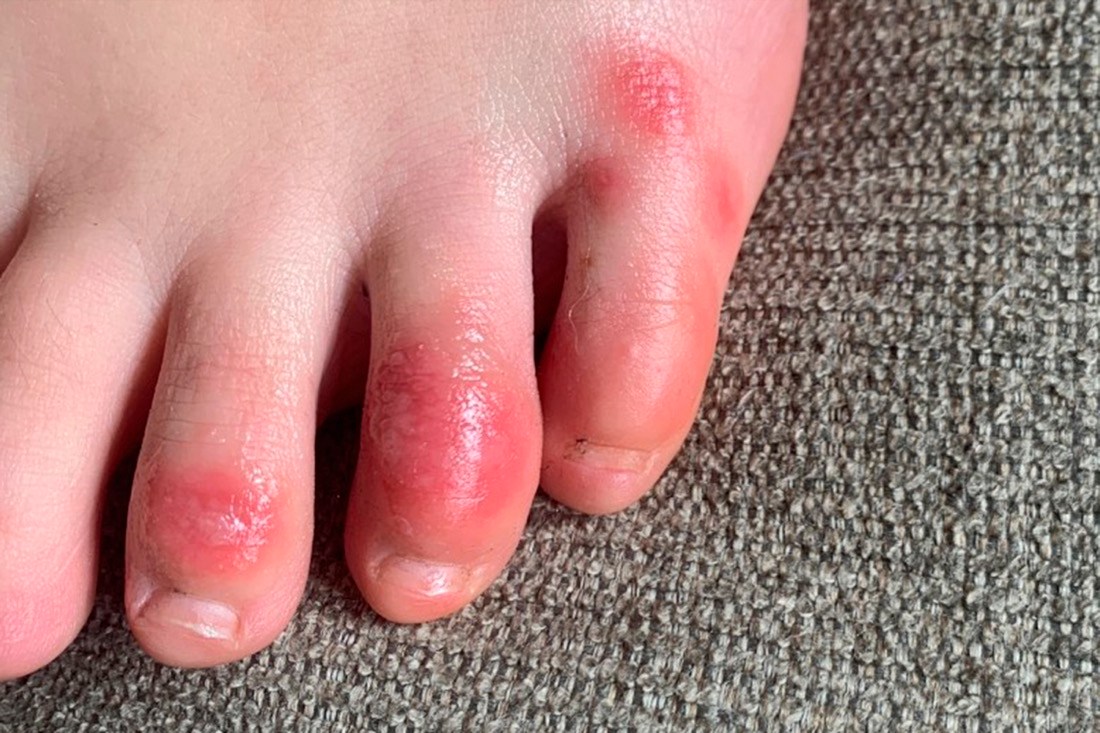
This April 3, 2020 photo provided by Northwestern University shows discoloration on a teenage patient's toes at the onset of the condition informally called "COVID toes." The red, sore and sometimes itchy swellings on toes look like chilblains, something doctors normally see on the feet and hands of people who've spent a long time outdoors in the cold. (Courtesy of Dr. Amy Paller/Northwestern University via AP)
This April 3, 2020 photo provided by Northwestern University shows discoloration on a teenage patient's toes at the onset of the condition informally called "COVID toes." The red, sore and sometimes itchy swellings on toes look like chilblains, something doctors normally see on the feet and hands of people who've spent a long time outdoors in the cold. (Courtesy of Dr. Amy Paller/Northwestern University via AP) This April 3, 2020 photo provided by Northwestern University shows discoloration on a teenage patient's toes at the onset of the condition informally called "COVID toes." The red, sore and sometimes itchy swellings on toes look like chilblains, something doctors normally see on the feet and hands of people who've spent a long time outdoors in the cold. (Courtesy of Dr. Amy Paller/Northwestern University via AP)

Skin doctors suddenly are looking at a lot of toes – whether by emailed picture or video visit – as concern grows that for some people, a sign of COVID-19 may pop up in an unusual spot.

Boston dermatologist Esther Freeman expected to see skin complaints as the pandemic unfolded – various kinds of rashes occur when people get very ill from other viruses.

“But I was not anticipating those would be toes,” said Freeman of Massachusetts General Hospital, who has viewed via telemedicine more toes in the last several weeks than in her entire career.

They’re being called “COVID toes,” red, sore and sometimes itchy swellings on toes that look like chilblains, something doctors normally see on the feet and hands of people who’ve spent a long time outdoors in the cold.

Don’t race to the emergency room if toes are the only worry, said the American Academy of Dermatology.