
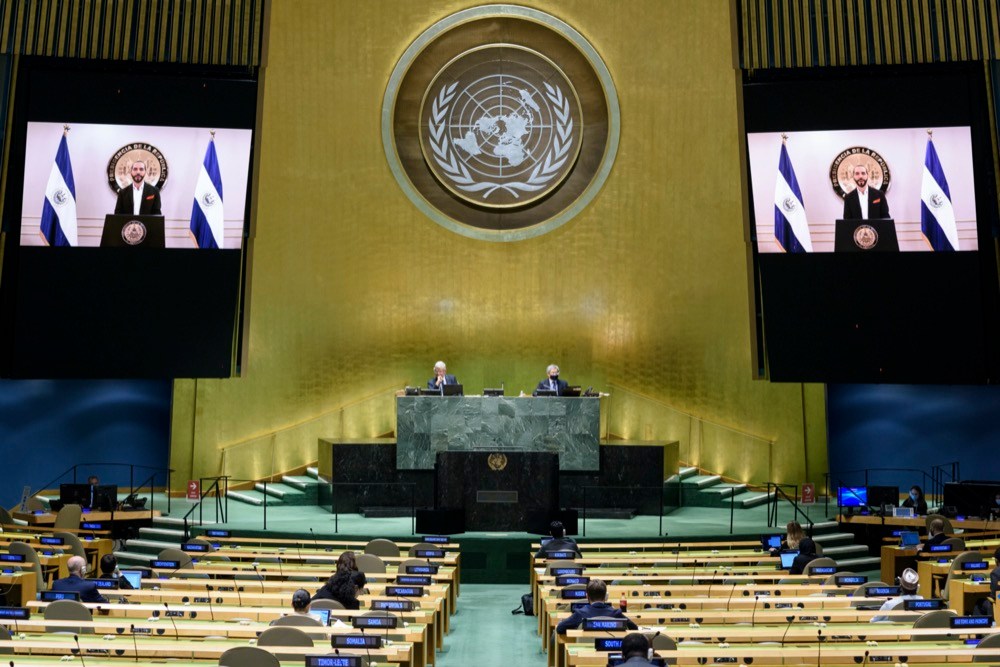
In the space of a few minutes, on a prerecorded video filmed thousands of miles from where it was shown, the tech-savvy president of El Salvador captured the two strikingly different sides of this year’s unprecedented – and virtual – “gathering” of world leaders “at” the U.N. General Assembly in 2020.
On one hand, Nayib Bukele said, humanity holds in its smartphone-clutching hands a 21st-century miracle: “In a world which is almost completely connected, I can say a few words here and be heard in the farthest corners of the world.”
And yet, in the same speech Tuesday, he raised this ever-present doubt: When the people who govern the world were delivering sequestered addresses to the United Nations this past week, was anybody actually listening? “If you don’t believe me,” he said, “ask the first person you see.”
So goes the planet. And so too, it seems, goes the United Nations.
The same dissonance that technology hands us in our daily lives – closer but farther apart, more intimate yet somehow colder – revealed to a COVID-era world over the past week that even the people who collectively govern all of us can’t necessarily transcend the pixels and bits of data that have become foundational to the way human civilization operates.