
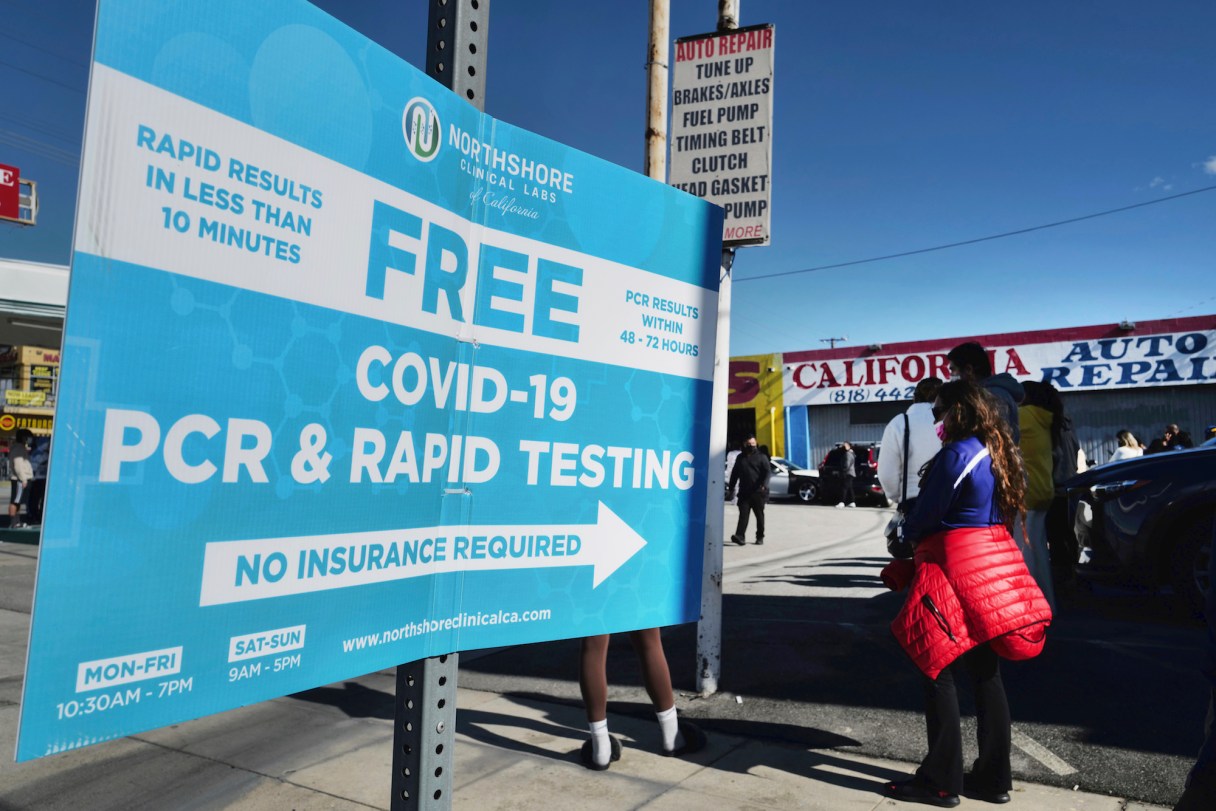
The Georgia Department of Public Health is urging residents to avoid gatherings this New Year’s holiday and to get tested for COVID-19 before attending any events if avoiding them is not possible.
Spokesperson Logan Boss of the 10-county Northwest Georgia Health District, said testing before going out to celebrate the holiday is vital, even as a shortage of rapid tests in North Georgia may make doing so more difficult. Omicron, the latest variant of COVID-19, seems to be less deadly than the delta variant but is “much more transmissible,” he said.
(READ MORE: COVID-19 issues with Vols now could be silver lining at tourney time)
“If you look at case numbers right now, you can see how transmissible omicron is. We are advising caution over New Year’s because of that. People really need to assess their own risk before going out to an event. If you’re fully vaccinated and boosted, that risk may be less, but there is still risk,” Boss said. “On top of that, while the risk to you might be lower, there is still a risk for others. People have to consider what they might pass along to someone whose risk might be higher. If you have a family member who isn’t vaccinated or who may have a weaker immune system, what is the risk to that person? We have to think about that.”
In North Georgia, most people are in that higher risk category. In Catoosa County, 37% of residents are fully vaccinated, and in Walker County, 32% of residents fall into that category. In more rural areas, the numbers can be lower, as in Dade County, where 31% of residents are fully vaccinated.