
Monday, November 9, 2026Nov 9

IMF forecasts 6% global growth this year as economies reopen

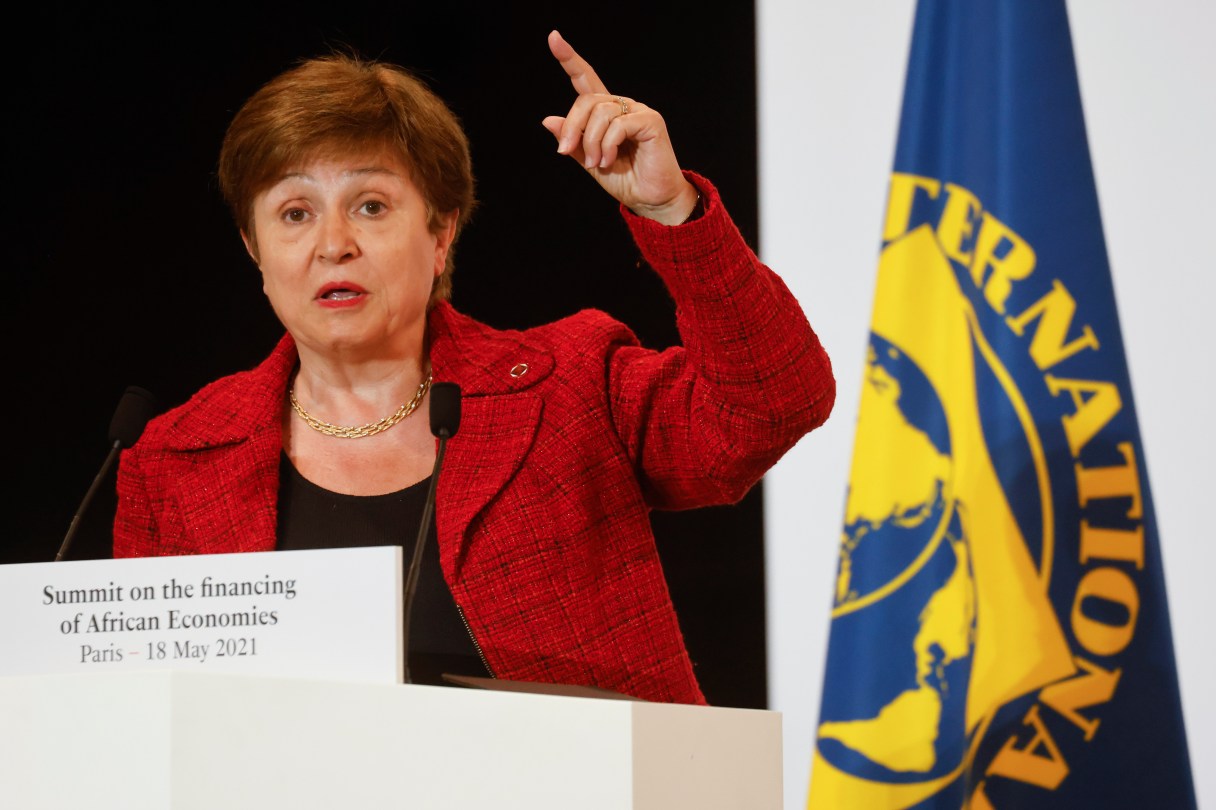
FILE - In this May 18, 2021 file photo, International Monetary Fund (IMF) Managing Director Kristalina Georgieva speaks at the end of the Financing of African Economies Summit, in Paris. The executive board of the International Monetary Fund has approved a $650 billion expansion of the resources of the 190-nation lending institution aimed at providing more support for vulnerable nations as they battle the coronavirus pandemic. Georgieva said in a statement Friday, July 9, that the new support, the largest such expansion in the agency's history, would be a "shot in the arm for the world." (Ludovic Marin, Pool via AP, File)
FILE - In this May 18, 2021 file photo, International Monetary Fund (IMF) Managing Director Kristalina Georgieva speaks at the end of the Financing of African Economies Summit, in Paris. The executive board of the International Monetary Fund has approved a $650 billion expansion of the resources of the 190-nation lending institution aimed at providing more support for vulnerable nations as they battle the coronavirus pandemic. Georgieva said in a statement Friday, July 9, that the new support, the largest such expansion in the agency's history, would be a "shot in the arm for the world." (Ludovic Marin, Pool via AP, File) FILE - In this May 18, 2021 file photo, International Monetary Fund (IMF) Managing Director Kristalina Georgieva speaks at the end of the Financing of African Economies Summit, in Paris. The executive board of the International Monetary Fund has approved a $650 billion expansion of the resources of the 190-nation lending institution aimed at providing more support for vulnerable nations as they battle the coronavirus pandemic. Georgieva said in a statement Friday, July 9, that the new support, the largest such expansion in the agency's history, would be a "shot in the arm for the world." (Ludovic Marin, Pool via AP, File)

The International Monetary Fund is sharply upgrading its economic outlook this year for the world’s wealthy countries, especially the United States, as COVID-19 vaccinations help sustain solid rebounds from the pandemic recession. But the 190-country lending agency has downgraded its forecast for poorer countries, most of which are struggling to vaccinate.

Overall, the IMF said Tuesday that it expects the global economy to expand 6% this year – a dramatic bounce-back from the 3.2% contraction in the pandemic year of 2020. The IMF’s forecast, unchanged from its previous estimate in April, would mark the fastest calendar-year global growth in records dating to 1980.

Beneath the worldwide number, however, a gap between the vaccine haves and have-nots is widening. The IMF expects advanced economies to grow 5.6% this year, an upgrade from the 5.1% it forecast in April, fueled by the swift recovery of consumers and businesses. But it downgraded its 2021 forecast for emerging market and developing countries to 6.3% from its April forecast of 6.7%.

Gita Gopinath, the IMF’s chief economist, told reporters Tuesday that more needs to be done to supply vaccines to poorer nations that lag far behind wealthier nations.

“The recovery is not assured until the pandemic is beaten back globally,” Gopinath said. She asked that wealthy nations quickly fulfill their pledges to supply 1 billion does of the vaccine to developing nations.