
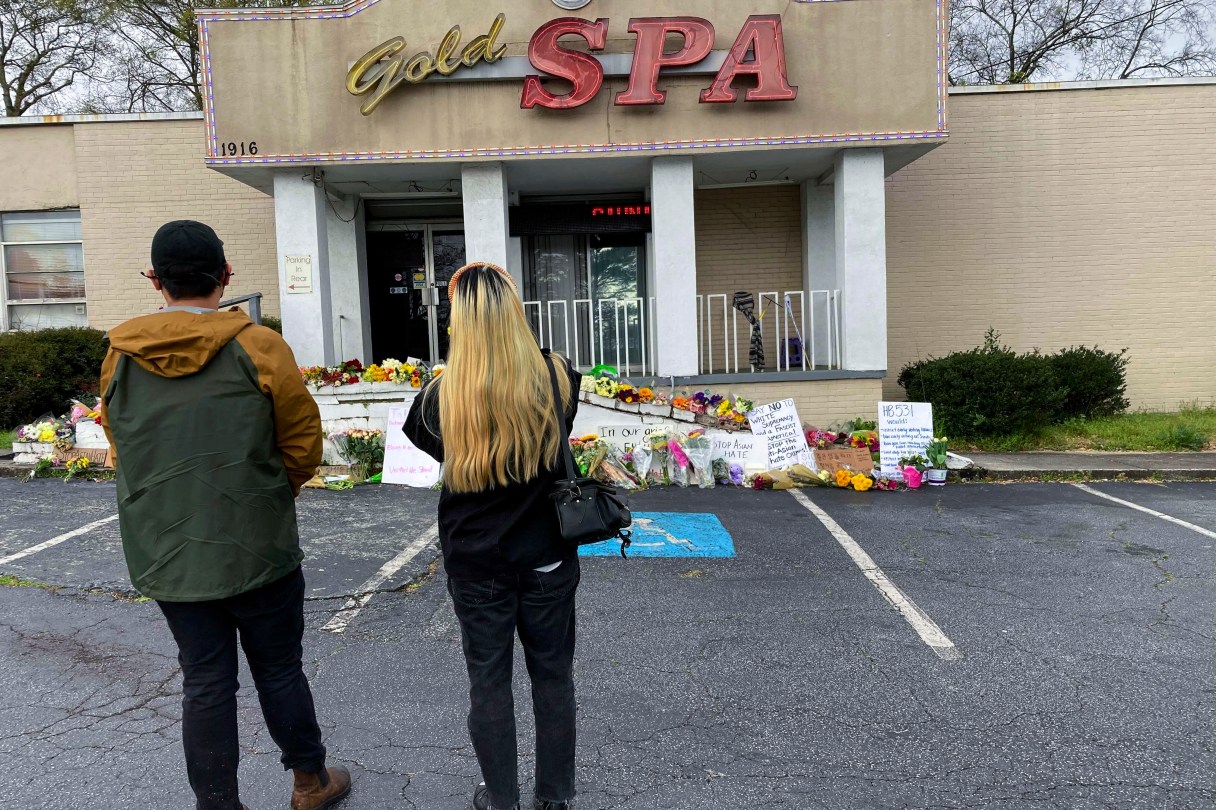
Tuesday’s attack on several Atlanta-area spas that left eight people dead has renewed concerns about violence directed toward Asian Americans amid the pandemic.
The 21-year-old charged in the shootings is white, while six of the eight victims were women of Asian descent. And studies have shown a significant uptick in hate crimes against Asian Americans in large U.S. cities linked to the rhetoric of Donald Trump and often amplified by white nationalist supporters.
But there’s another element in these attacks that deserves scrutiny, and it, too, represents a broad and persistent problem in this country. The man charged in these attacks – the worst mass shooting in the U.S. in nearly two years – purchased a firearm the same day police say he went on his rampage.
Robert Aaron Long, the man charged with eight counts of murder, reportedly strolled into a Cherokee County gun store on Tuesday, put down his money, passed an instant background check and walked out of the store with his weapon. There was no waiting period. There was no mandatory safety class. There was simply a transaction that experts say might have only taken minutes to complete. Voters are more closely scrutinized in Georgia.
Would a waiting period have prevented this horrific crime? It’s impossible to know for sure. But here’s one observation made after the suspect’s arrest that ought to be remembered: When asked about the shooter’s possible motivation, Cherokee County Sheriff’s Capt. Jay Baker said the young man was “having a really bad day.” That suggests Mr. Long was acting impulsively and argues for putting reasonable restrictions on gun sales to address this very possibility. How often do domestic arguments escalate to the point where a quick trip to the local gun store is suddenly a real possibility? How about for those contemplating suicide?