

Thursday, October 29, 2026Oct 29

This story is free to read.

Long bus rides, lack of role models: Panel discussion reconsiders integration of schools in Walker County

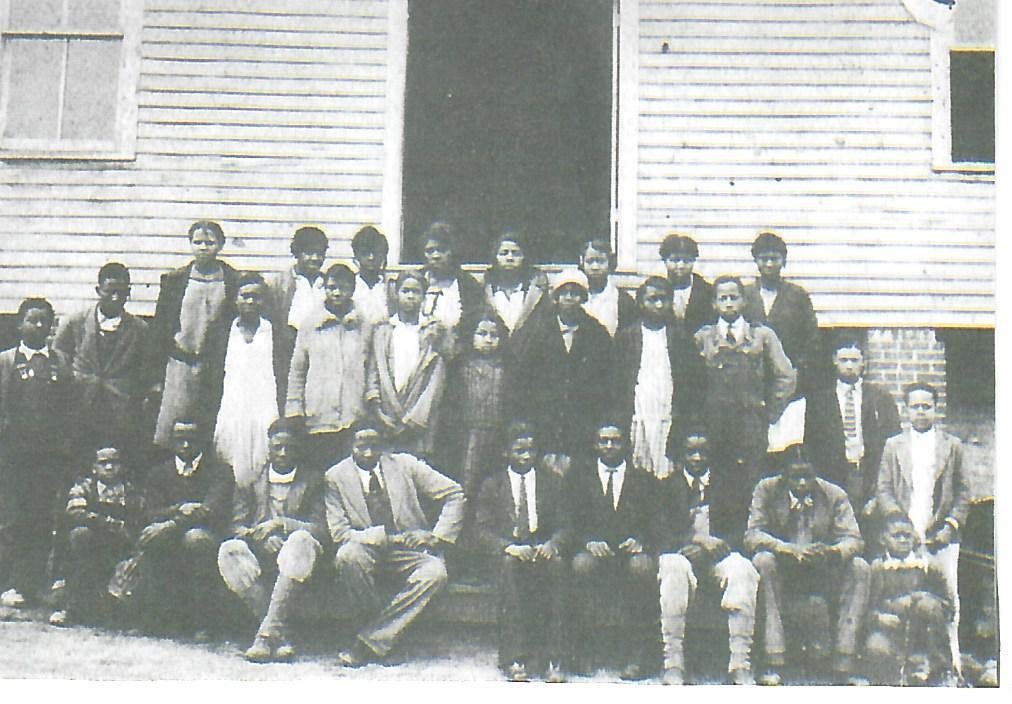
Contributed photo, courtesy of a donation to Walker County African American Historical and Alumni Association and Beverly C. Foster by Hubert Marsh / The North Georgia Baptist Industrial Institute on High Street in LaFayette, Ga., is shown in 1922. Ground was broken for the school, which was for first through ninth grades, in 1 916. In the far right of the top row is teacher and principal, Rosa Belle Glenn, later Rosa Belle Glenn-Clements, who later became principal of Wallaceville Elementary. The institute was organized by the African American North Georgia Baptist Association, which included churches from Walker, Dade, Catoosa and Chattooga counties. The Rev. George Washington Wheeler, once enslaved in Walker or Chattooga county, was the moderator (president) and founder of the association and organizer of many of the Baptist churches in those counties. He required each church in the association to send students to the Institute and help pay their tuition. The students were housed in local LaFayette community homes. After the ninth grade, students attended school in Chattanooga, Chattooga County and as far away as Gainesville, Ga. — wherever had an African American high school and their parents were able to afford the tuition.
Contributed photo, courtesy of a donation to Walker County African American Historical and Alumni Association and Beverly C. Foster by Hubert Marsh / The North Georgia Baptist Industrial Institute on High Street in LaFayette, Ga., is shown in 1922. Ground was broken for the school, which was for first through ninth grades, in 1 916. In the far right of the top row is teacher and principal, Rosa Belle Glenn, later Rosa Belle Glenn-Clements, who later became principal of Wallaceville Elementary. The institute was organized by the African American North Georgia Baptist Association, which included churches from Walker, Dade, Catoosa and Chattooga counties. The Rev. George Washington Wheeler, once enslaved in Walker or Chattooga county, was the moderator (president) and founder of the association and organizer of many of the Baptist churches in those counties. He required each church in the association to send students to the Institute and help pay their tuition. The students were housed in local LaFayette community homes. After the ninth grade, students attended school in Chattanooga, Chattooga County and as far away as Gainesville, Ga. — wherever had an African American high school and their parents were able to afford the tuition. Contributed photo, courtesy of a donation to Walker County African American Historical and Alumni Association and Beverly C. Foster by Hubert Marsh / The North Georgia Baptist Industrial Institute on High Street in LaFayette, Ga., is shown in 1922. Ground was broken for the school, which was for first through ninth grades, in 1 916. In the far right of the top row is teacher and principal, Rosa Belle Glenn, later Rosa Belle Glenn-Clements, who later became principal of Wallaceville Elementary. The institute was organized by the African American North Georgia Baptist Association, which included churches from Walker, Dade, Catoosa and Chattooga counties. The Rev. George Washington Wheeler, once enslaved in Walker or Chattooga county, was the moderator (president) and founder of the association and organizer of many of the Baptist churches in those counties. He required each church in the association to send students to the Institute and help pay their tuition. The students were housed in local LaFayette community homes. After the ninth grade, students attended school in Chattanooga, Chattooga County and as far away as Gainesville, Ga. — wherever had an African American high school and their parents were able to afford the tuition.

A little more than half a century since schools were integrated in Walker County, Georgia, most Black students in the county graduate without ever having a Black teacher.

While most see school integration as largely positive, the lack of Black role models in schools is seen as a negative aspect of the change that still lingers today.

“If Black children in some of our Walker County schools are such a minority that they never have an African American teacher, what can we do to help them have models, adults that are educated and professional that they can look up to?” said David Boyle, president of the Walker County Historical Society, which recently organized a panel discussion focused on the positive and negative effects of integration in Walker County. “It raises questions about things that could still be done to improve the lives of our Walker County citizens.”

The African American schools in Walker County were started and run by African American educators, who were dispersed across all of the schools during integration, said Beverly Foster, president of the Walker County African American Historical and Alumni Association.

“It broke up some community camaraderie,” Foster said of integration’s effect on Black communities.