
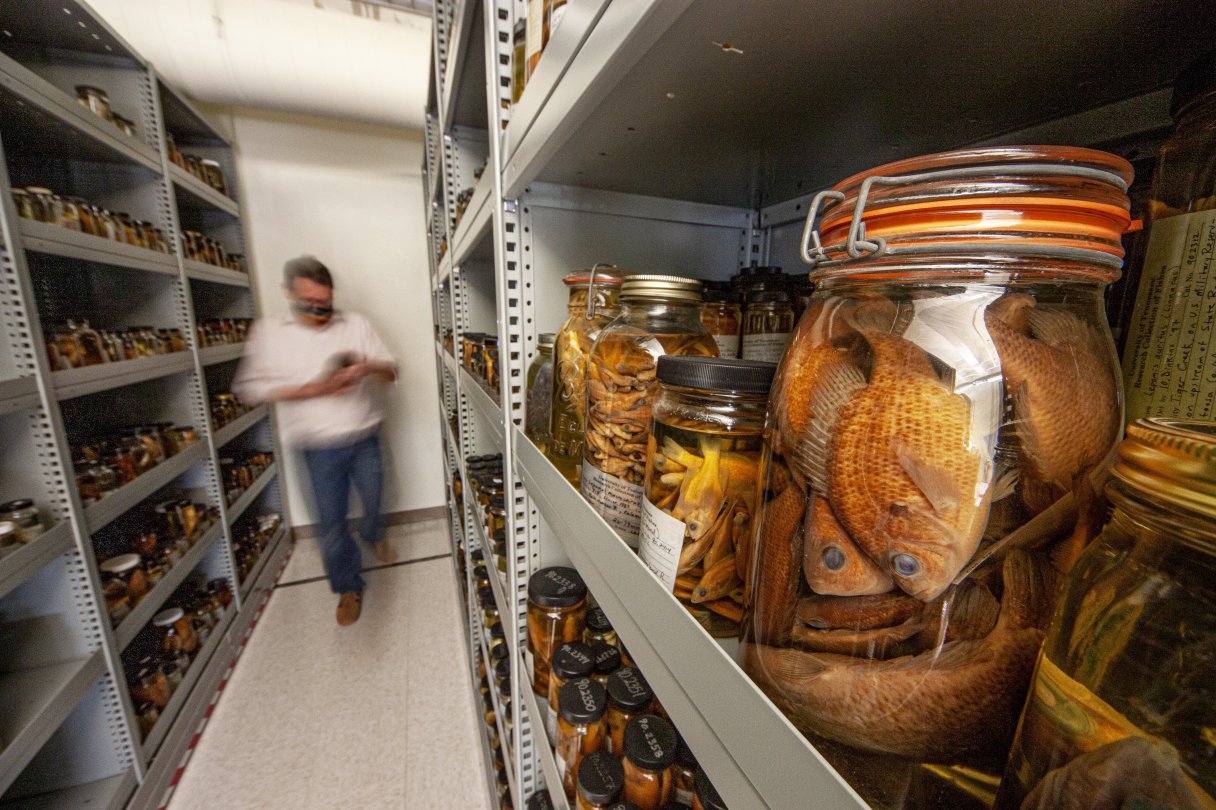

Looking like a cupboard full of preserves made by a river-faring grandmother, the University of Tennessee-Knoxville’s collection of thousands of “pickled” fish could offer a 56-year look back to when microplastics, fish and humans were first becoming connected in the Tennessee River Valley.
Microplastics are the end result of degrading plastic – soft drink bottles, straws, grocery bags and other packaging products thrown on the ground, into water or discarded in landfills – that ends up as tiny particles in freshwater streams where they are ingested by fish, according to the Tennessee Valley Authority.
Until now, there have been no long-term, freshwater studies on microplastics pollution, but TVA and the University of Tennessee in Knoxville are trying to change that.
Scientists on the environmental front are concerned that microplastics can act as super magnets, absorbing concentrated amounts of toxins suspended in public drinking water sources.
A study published in 2019 in the “Environmental Science and Technology” peer-reviewed scientific journal estimated Americans each consume 39,000-52,000 microplastic particles per year. Those numbers increase to 74,000-121,000 when microplastics that are inhaled are included.