
Wednesday, November 11, 2026Nov 11

Reparations draw UN scrutiny, but those who’d pay say little

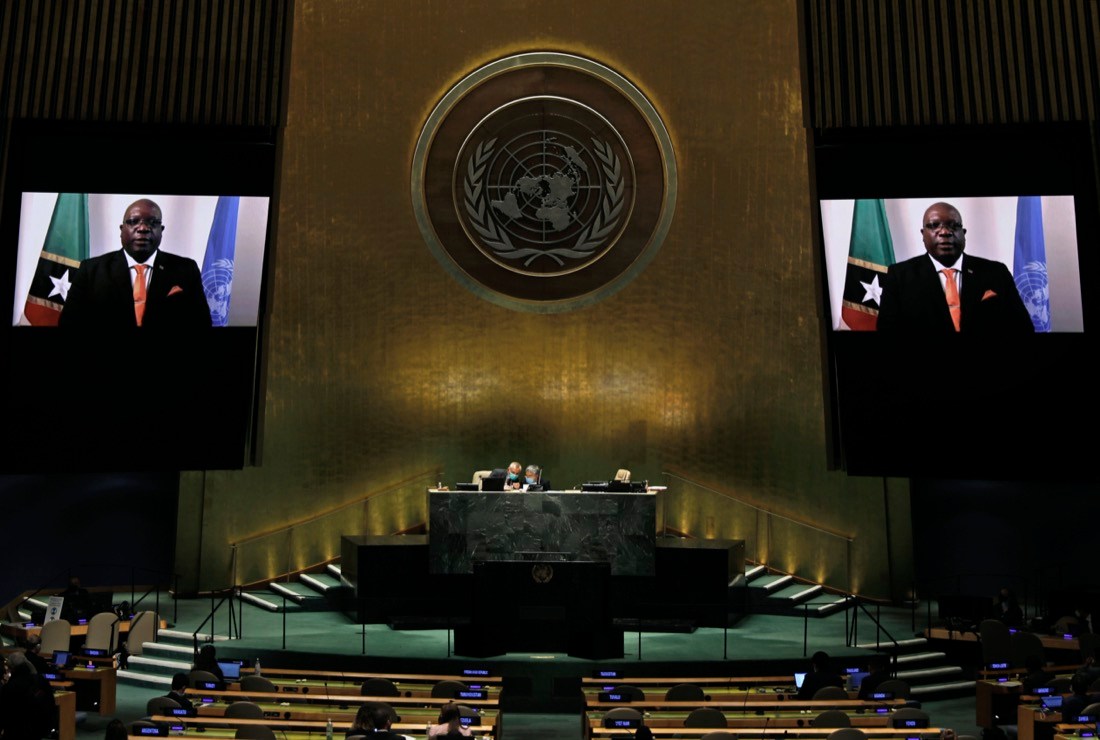
Prime Minister of Saint Kitts and Nevis, Timothy Harris, in a pre-recorded message, addresses the 76th session of the United Nations General Assembly, Friday Sept. 24, 2021, at UN headquarters. At the United Nations General Assembly, African and Caribbean countries that stand to benefit from reparations were backed by other nations, though those most responsible for slavery and colonialism said little about what they might owe to African descendants. (Peter Foley/Pool Photo via AP)
Prime Minister of Saint Kitts and Nevis, Timothy Harris, in a pre-recorded message, addresses the 76th session of the United Nations General Assembly, Friday Sept. 24, 2021, at UN headquarters. At the United Nations General Assembly, African and Caribbean countries that stand to benefit from reparations were backed by other nations, though those most responsible for slavery and colonialism said little about what they might owe to African descendants. (Peter Foley/Pool Photo via AP) Prime Minister of Saint Kitts and Nevis, Timothy Harris, in a pre-recorded message, addresses the 76th session of the United Nations General Assembly, Friday Sept. 24, 2021, at UN headquarters. At the United Nations General Assembly, African and Caribbean countries that stand to benefit from reparations were backed by other nations, though those most responsible for slavery and colonialism said little about what they might owe to African descendants. (Peter Foley/Pool Photo via AP)

More than a year after Black Lives Matter protests launched a worldwide reckoning about the centuries of racism that Black people continue to face, the question of reparations emerged – unevenly – as a high-profile issue at this year’s largest gathering of world leaders.

At the U.N. General Assembly, African and Caribbean countries that stand to benefit from reparations were backed by other nations, though those most responsible for slavery and colonialism said little about what they might owe to African descendants.

Leaders from Africa (South Africa and Cameroon) to the Caribbean (Saint Kitts & Nevis and Saint Lucia) were joined by representatives of countries that are unlikely to be tapped to pay up – Cuba and Malaysia among them – in explicitly endorsing the creation of reparation systems.

Those missing from the renewed global conversation on the topic, though, were noteworthy as well: the United States, Britain and Germany, wealthy and developed nations built from conquests of varying kinds.

“Caribbean countries like ours, which were exploited and underdeveloped to finance the development of Europe, have put forward a case for reparations for slavery and native genocide, and we expect that case to be treated with the seriousness and urgency it deserves,” said Philip J. Pierre, prime minister of Saint Lucia. “There should be no double standards in the international system in recognizing, acknowledging and compensating victims of crimes against humanity.”