
Thursday, October 29, 2026Oct 29

This story is free to read.

Is Danish king who gave name to Bluetooth buried in Poland?

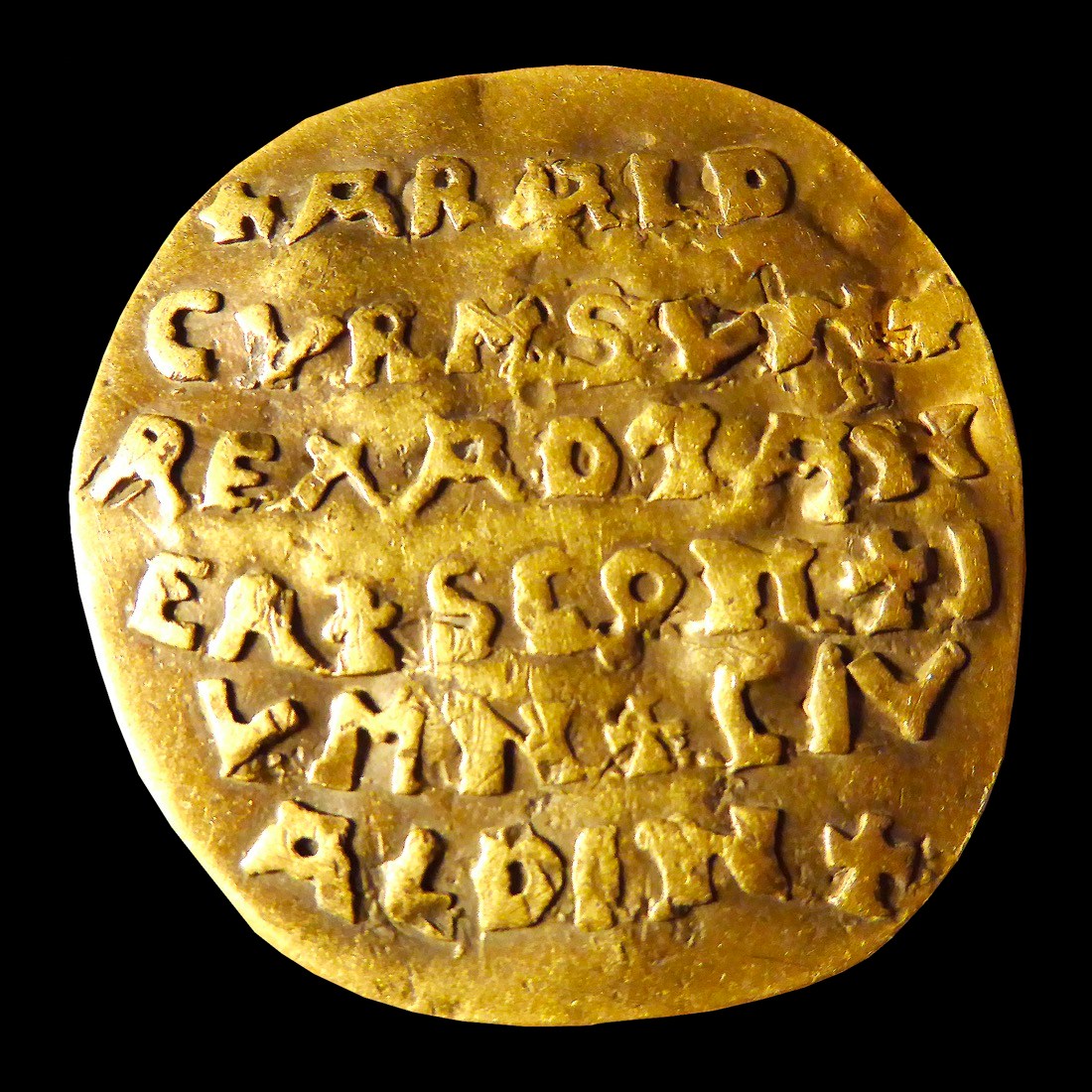
The 10th century golden Curmsun disc with the name of Danish King Harald "Bluetooth" Gormsson (Curmsun in Latin) on it, coming from a tomb at the Roman Catholic church in Wiejkowo, Poland, photographed in Malmo, Sweden, in 2015. The Bluetooth wireless link technology is named after the king. More than 1,000 years after his death in what is now Poland, a Danish king whose nickname is known to the world through the Bluetooth technology is at the center of an archeological dispute. (Sven Rosborn via AP)
The 10th century golden Curmsun disc with the name of Danish King Harald "Bluetooth" Gormsson (Curmsun in Latin) on it, coming from a tomb at the Roman Catholic church in Wiejkowo, Poland, photographed in Malmo, Sweden, in 2015. The Bluetooth wireless link technology is named after the king. More than 1,000 years after his death in what is now Poland, a Danish king whose nickname is known to the world through the Bluetooth technology is at the center of an archeological dispute. (Sven Rosborn via AP) The 10th century golden Curmsun disc with the name of Danish King Harald "Bluetooth" Gormsson (Curmsun in Latin) on it, coming from a tomb at the Roman Catholic church in Wiejkowo, Poland, photographed in Malmo, Sweden, in 2015. The Bluetooth wireless link technology is named after the king. More than 1,000 years after his death in what is now Poland, a Danish king whose nickname is known to the world through the Bluetooth technology is at the center of an archeological dispute. (Sven Rosborn via AP)

WIEJKOWO, Poland (AP) – More than 1,000 years after his death in what is now Poland, a European king whose nickname lives on through wireless technology is at the center of an archaeological dispute.

Chronicles from the Middle Ages say King Harald “Bluetooth” Gormsson of Denmark acquired his nickname courtesy of a tooth, probably dead, that looked bluish. One chronicle from the time also says the Viking king was buried in Roskilde, in Denmark, in the late 10th century.

But a Swedish archaeologist and a Polish researcher recently claimed in separate publications that they have pinpointed his most probable burial site in the village of Wiejkowo, in an area of northwestern Poland that had ties to the Vikings in Harald’s times.

Marek Kryda, author of the book “Viking Poland,” told The Associated Press that a “pagan mound” which he claims he has located beneath Wiejkowo’s 19th-century Roman Catholic church probably holds the king’s remains. Kryda said geological satellite images available on a Polish government portal revealed a rotund shape that looked like a Viking burial mound.

But Swedish archaeologist Sven Rosborn, says Kryda is wrong because Harald, who converted from paganism to Christianity and founded churches in the area, must have received an appropriate grave somewhere in the churchyard. Wiejkowo’s Church of The Immaculate Conception of the Blessed Virgin Mary stands atop a small round knoll.