
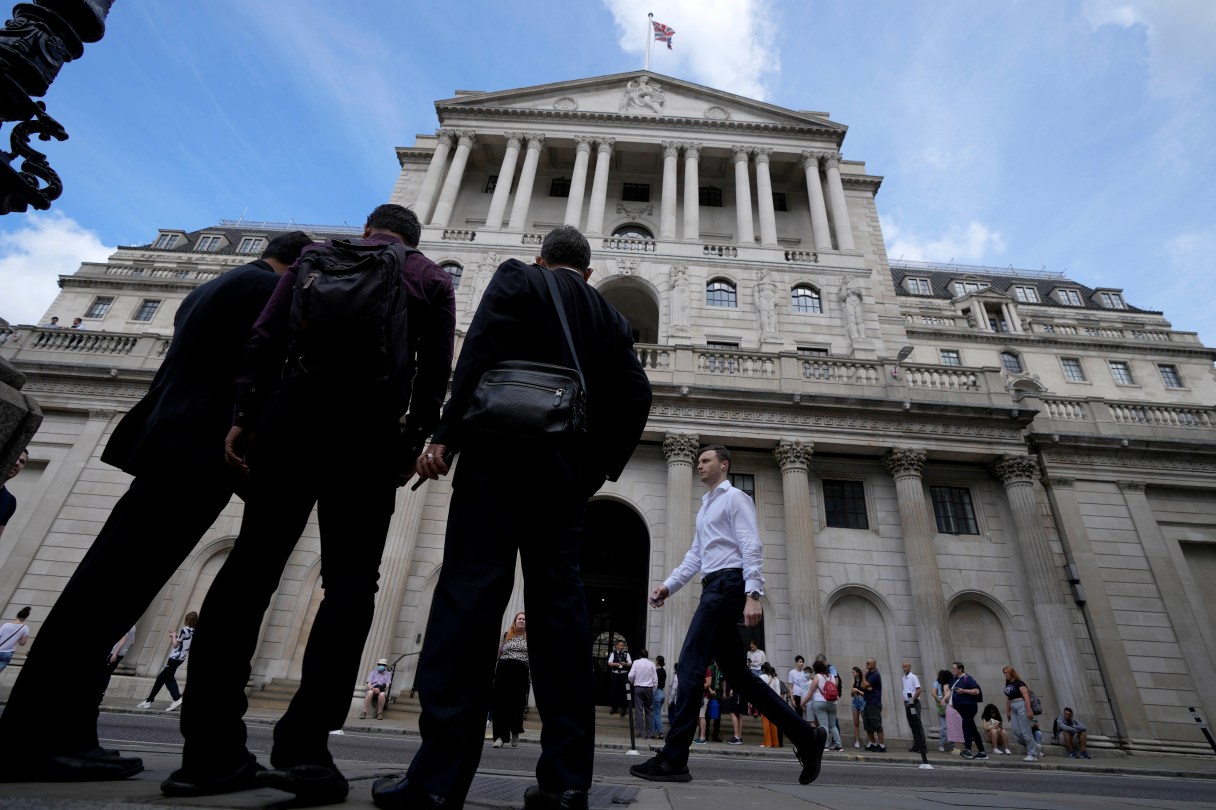
LONDON (AP) – The Bank of England announced its biggest interest rate increase in 27 years on Thursday as it forecast that the war in Ukraine would fuel further inflation and tip the U.K. economy into a prolonged recession.
Soaring natural gas prices are likely to drive consumer price inflation to 13.3% in October, from 9.4% in June, the bank said. That will push Britain into recession later this year, with economic output declining each quarter from the fourth quarter of 2022 through the fourth quarter of 2023, bank forecasts show.
Those pressures persuaded the bank’s Monetary Policy Committee to boost its key interest rate by 0.5 percentage points, the biggest of six consecutive increases since December. The rate now stands at 1.75%, the highest since the depths of the global financial crisis in late 2008.
Gov. Andrew Bailey defended the move, which will increase borrowing costs for consumers, saying the bank has a duty to control price increases that disproportionately affect the poorest in society.
“I recognize the significant impact this will have and how difficult the cost of living challenge will continue to be for many people in the United Kingdom,” Bailey said at a news conference. “Inflation hits the least well-off hardest. But if we don’t act against inflation becoming persistent, the consequences later will be worse.”