
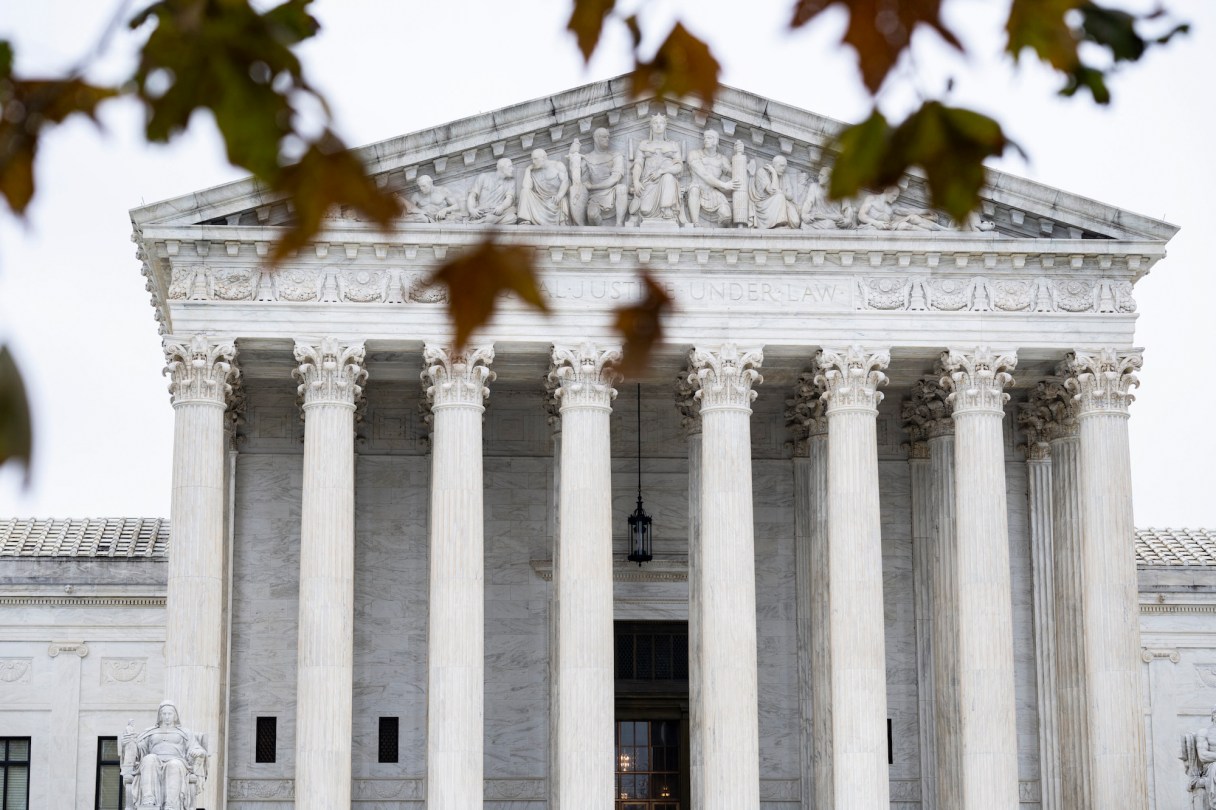
In a rare bit of good news out of the U.S. Supreme Court, there are signs that three of the court’s six conservatives are poised to join its three liberals to oppose a radical legal theory that threatens to enable partisan electoral sabotage in statehouses around the nation. The theory holds that state courts have no jurisdiction over how state legislatures handle states’ congressional elections. This would be a dangerous weapon to hand to politicians who tend to view gerrymandering as a legitimate partisan tool instead of the cynical affront to democracy that it actually is.
The “independent state legislature” doctrine is a once-fringe legal theory that has, unfortunately, been mainstreamed lately. It holds that state legislatures have total control over the state’s congressional election rules and district lines, and that state courts have no authority to second-guess them — even if those lawmakers’ decisions flagrantly violate the state constitution.
The theory rests on an extremely blinkered reading of the U.S. Constitution’s Elections Clause, which says: “The times, places and manner of holding elections for senators and representatives shall be prescribed in each state by the legislature thereof.” That’s all it says on the matter. There is no subsequent sentence to suggest those legislators get to do that outside the normal system of checks and balances that apply to virtually every other part of government.
The bizarre argument that the clause means state judges can’t stop state lawmakers from violating their own state election laws is a position being promoted by (yes) state lawmakers — the Republican majority in North Carolina’s legislature, in this case.
All data indicates the state has a roughly 50-50 split between Democratic and Republican voters, yet the GOP legislature produced a district map gerrymandered to give the GOP more than two-thirds of the state’s U.S. House seats. The state’s Supreme Court struck down the map as being gerrymandered in violation of the state’s constitution.