
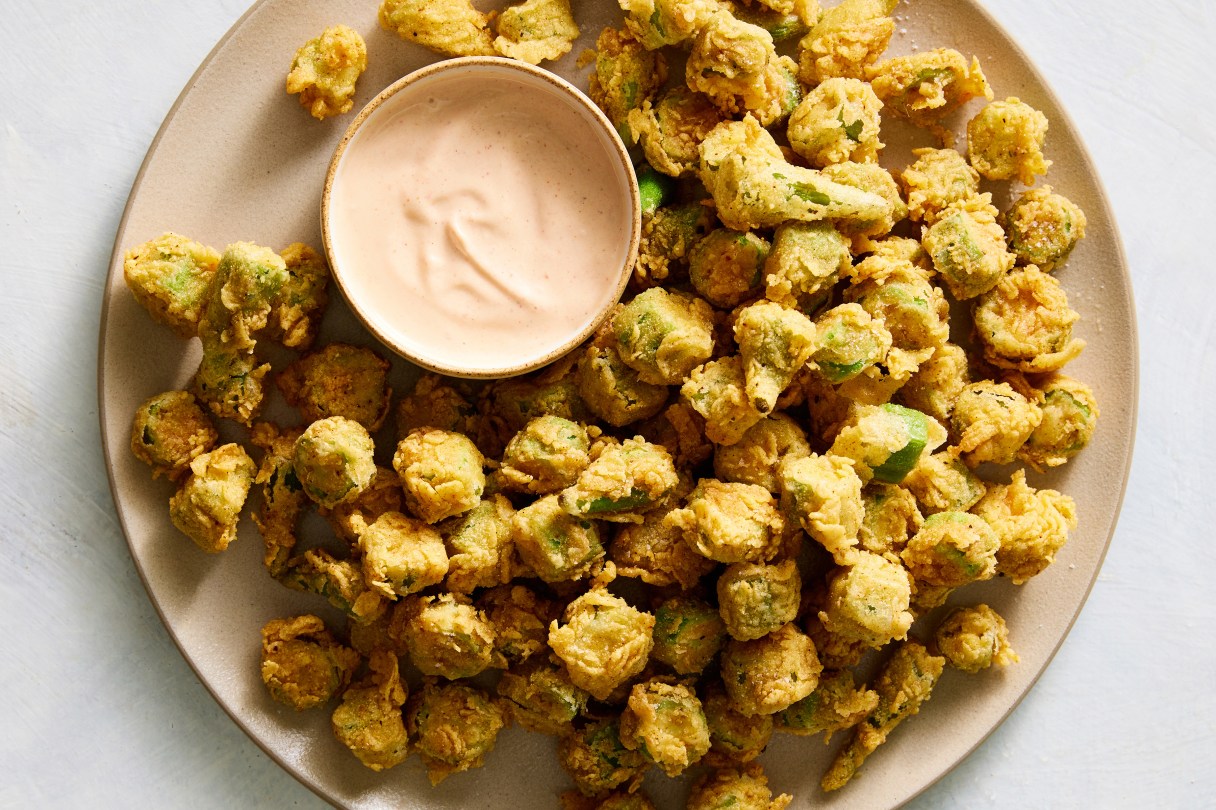
For the born-and-bred Southerner, few culinary experiences rival the intense satisfaction of biting into perfectly fried okra.
“Whether it was at Sunday dinner, in a cafeteria or in a restaurant, a meal simply wasn’t complete without fried okra,” said Marcus Davis, who owns Kulture, a Southern restaurant in his native Houston, where Black food takes center stage.
For generations, Southerners have boiled and steamed the okra pod or used it as a nutritious thickener for soups and stews. But it is the fried version that is most beloved. A handful or two of fried okra is often served at restaurants or by home cooks as an appetizer or a side dish. There’s a familiar structure to it: Textured, forest-green pods are typically sliced into small rounds, coated in a seasoned batter and fried to a cook’s liking (deep or pan-fried).
What makes fried okra so special is more than how it’s prepared: It’s how the dish reflects the spirit of the Black American cooks who have preserved its legacy, while creating their own versions and interpretations.
“When I see fried okra, I think about the bigger picture of us as Africans in America,” Davis said. “I think about the trans-Atlantic slave trade. I think about how okra got here, and I think about what the crop means and has meant historically in our nation. I’m hoping that, when people are eating our fried okra, they’re thinking about some of those things, too.”