
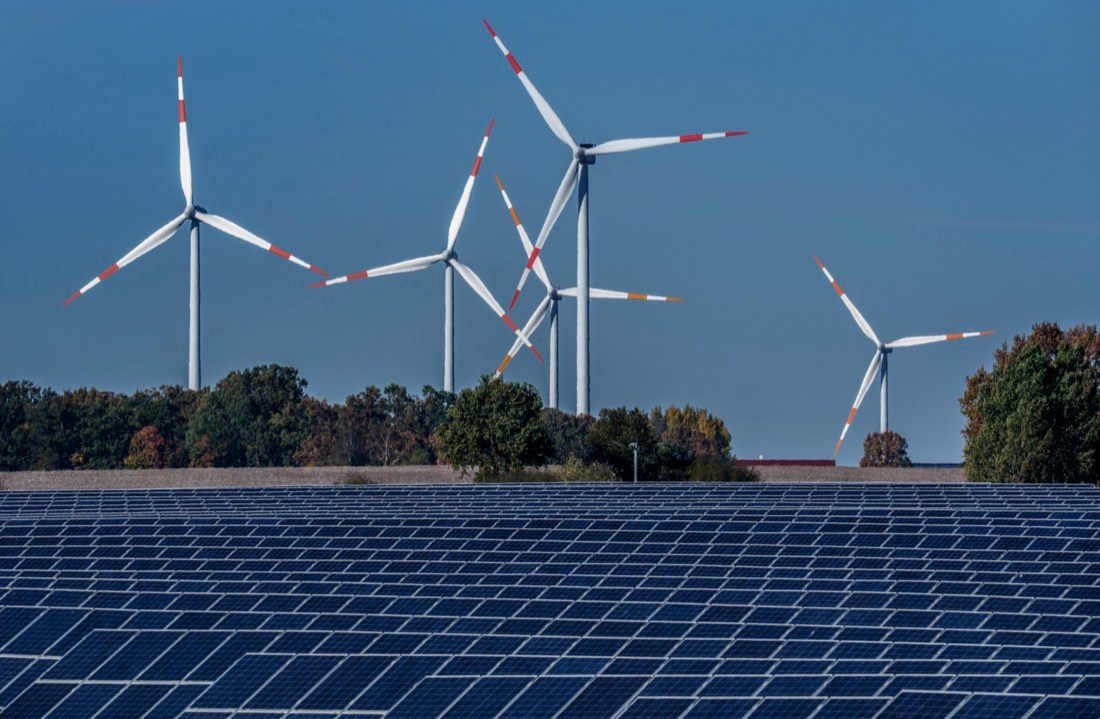
BERLIN (AP) – The world must take “radical action” to shift away from fossil fuels, including investing $5.7 trillion annually in solar, wind and other forms of clean power this decade to ensure that global warming doesn’t pass dangerous thresholds, the head of the International Renewable Energy Agency said Tuesday.
Other measures proposed in a 348-page report on the global energy transition include improving energy efficiency, increasing electrification, capturing carbon emissions and expanding the use of hydrogen gas.
Scientists say global emissions need to drop 45% by the end of the decade compared to 1990 levels. But recent data show they are going up, not down, in part due to rising energy demand and the expansion of fossil fuel use.
“The energy transition is far from being on track and anything short of radical action in the coming years will diminish, even eliminate, chances to meet our climate goals,” said Francesco La Camera, the director-general of IRENA.
Countries agreed seven years ago in Paris to limit global warming to 2 degrees Celsius (3.6 Fahrenheit), ideally no more than 1.5 degrees C (2.7 F), to avoid potentially catastrophic consequences for the planet. With temperatures now more than 1.1 degrees C above the pre-industrial average, a recent report by a U.N. science panel found that billions around the world are already vulnerable to the effects of climate change.