
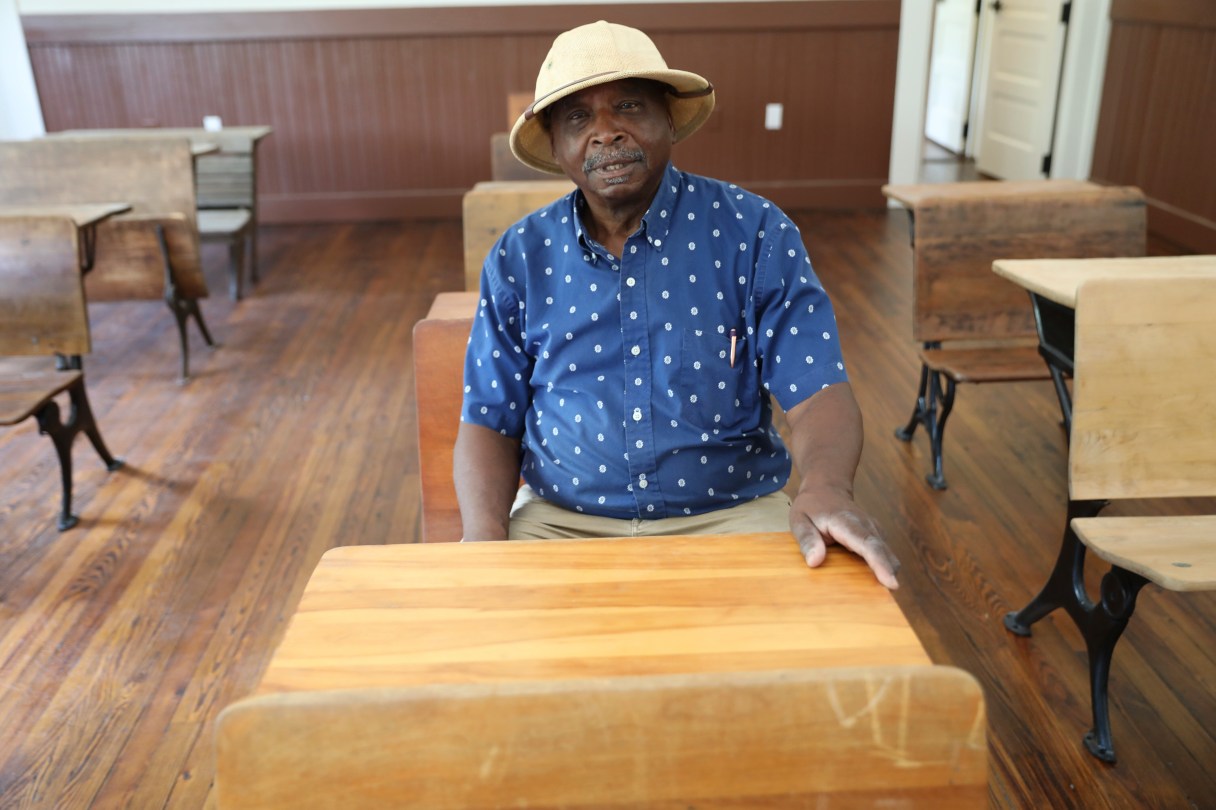
ST. GEORGE, S.C. (AP) — As Ralph James settled into the restored, highbacked desk at the segregated school he attended in rural South Carolina, he remembered the old school bell, the cascading light through tall windows, the Christmas pageant and the basketball court just outside.
It was in schools like this one, and nearly 5,000 others built in the American South a century ago, that Black students largely ignored by whites in power gained an educational foundation through the generosity of a Jewish businessman who could soon be memorialized with a national park.
They are now called Rosenwald Schools in honor of Julius Rosenwald, a part-owner and eventual president of Sears, Roebuck and Co., who teamed up with African American educator and leader Booker T. Washington to create the program to share the expenses of schools for Black children with the community.
It was nothing short of revolutionary in a segregated place like South Carolina, where governments spent pennies to teach Black children and dollars on white students.