
Enrollment in Alabama’s public institutions of higher education is recovering after a sharp decline during the COVID-19 outbreak but hasn’t returned to pre-pandemic levels, according to data from the Alabama Commission on Higher Education.
According to the preliminary numbers compiled by the commission, two-year college enrollment in Alabama went from 45,967 in the fall of 2022 to 48,502 in the fall of 2023, a roughly 5.5% increase. At four-year colleges and universities, enrollment grew from 145,040 to 147,604, a roughly 1.8% increase.
But outside some of the state’s flagship universities, the numbers are still down from their levels before the COVID-19 outbreak. Overall enrollment in higher education in Alabama fell from 198,523 in the fall of 2019 to 196,106 this fall, a 1.2% decrease.
In two-year colleges, enrollment fell from 50,474 in 2019 to 48,502 in 2023, a 3.9% decrease. At four-year colleges and universities, enrollment fell from 148,049 in 2019 to 147,604 in 2023, a 0.3% decrease.
According to a report from the National Student Clearinghouse Research Center, undergraduate enrollment grew for the first time nationally since the beginning of the pandemic. Freshman enrollment declined.
(READ MORE: UTC welcomes largest freshman class in school history)
Jim Purcell, executive director of the Alabama Commission on Higher Education, cited several reasons for the slow recovery. One is an overall decline in high school students in Alabama, which Purcell said would last through 2030.
Students historically return to colleges and universities after economic downturns. Now, people have more options to enter the workforce.
“What’s happened is with the influx of automation and different types of jobs, I think that some people are going into the workplace a lot earlier,” he said.
Looking forward, Purcell said the commission is looking at attracting more adults back to school.
“Yes, we want to have people to have the initial credentials to get a good job,” he said. “But we do believe that the promotion opportunities are really related to their ability to write well, speak well and present themselves to a large swath of the world very positively and that sometimes the bachelor’s degree can help people get to that skill set.”
Some schools challenged the Alabama Commission on Higher Education’s numbers released last month. The numbers attempt to reflect full-time student enrollment through a formula known as full-time equivalents.
The schools cited their own enrollment figures, which include part-time students, saying they showed a more significant recovery from the pandemic. Aaron Thompson, an assistant vice president for advancement and branding for Alabama A&M, wrote in an email that the school had enrolled 6,633 students in the current semester, the highest in school history. The Alabama Commission on Higher Education said the school had seen a 16% decline since 2019.
Purcell said full-time equivalents may stay the same even as enrollment grows. The a calculation is based on total credit hours applied to an equivalent number of full-time students. Enrollment numbers are the raw number of students enrolled, which could include those taking a single class. Purcell said full-time students are what helps institutions sustain themselves.
Gains
Six four-year universities — the University of Alabama, Auburn University, University of Alabama-Birmingham, University of North Alabama, Jacksonville State University and the University of West Alabama — have exceeded their pre-pandemic numbers, with UNA’s enrollment growing from 5,999 to 6,932, a roughly 15.6% increase.
(READ MORE: While some students skip college, trade programs are booming in Tennessee)
Alex House, spokesperson for the University of Alabama, said in an emailed statement the university has “well-established and strategic recruiting efforts.”
Purcell said some smaller institutions, like the University of West Alabama, are focusing on online enrollment.
“There is a question at some point, whether there’ll be a saturation point for that, whether there’ll be every institution will have enough off-campus, online stuff in other states that it will sort of begin to wane, and so that’s why it’s important for the institutions to keep an eye on what’s working, what’s not, what is really a benefit to the state,” he said.
For schools that are increasing student enrollment, Purcell said he has some concerns about schools enrolling single-course students, which he said doesn’t generate sustainability or efficiency for the institutions.
Who struggled
According to commission data, the four-year colleges and universities still affected by the pandemic include University of Alabama in Huntsville, Alabama A&M, Alabama State University, Troy University, University of Montevallo, University of South Alabama and Auburn University at Montgomery.
(READ MORE: Community colleges are reeling. ‘The reckoning is here.’)
Lance Crawford, a spokesman for the University of South Alabama, provided a September news release that said the school had grown in enrollment and retention. Alabama Commission on Higher Education full-time equivalent data showed a roughly 3.69% decrease.
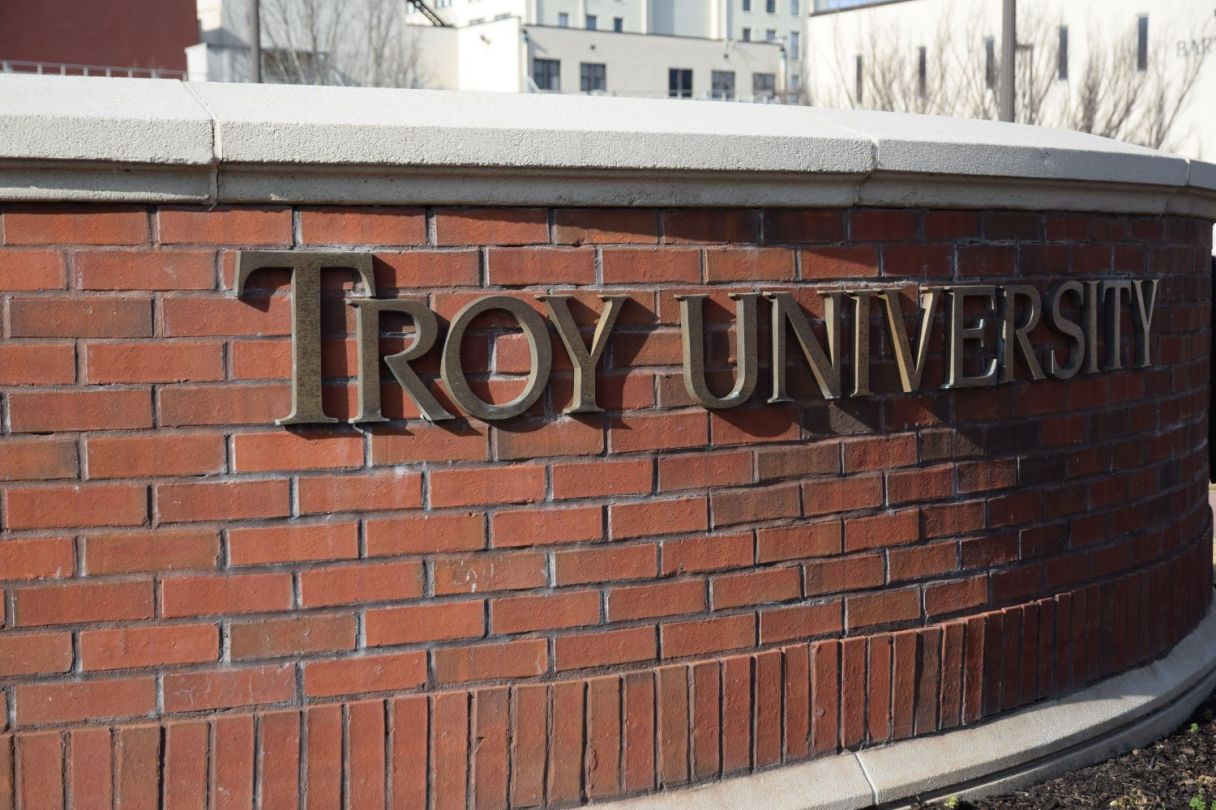
Matt Clover, spokesman for Troy, said in an email that net enrollment was only down 1% this year and was up over last year in several years. Clover said that enrollment was up for online students, international students and new starts. Commission data showed a decrease from 11,539 to 9,881, about 14.37%.
“Like many institutions, Troy University has faced enrollment challenges in the aftermath of the pandemic, particularly among adult non-traditional students and international students,” he said. “University leaders are engaged in an ongoing process of strategic planning to address the challenges of today’s competitive enrollment market. This includes a review of enrollment marketing strategies, program inventory, and support services to ensure we can successfully recruit and retain students.”
Read more at AlabamaReflector.com.