
Wednesday, November 11, 2026Nov 11

Fashion sneakers propel sustainable rubber in Brazil Amazon

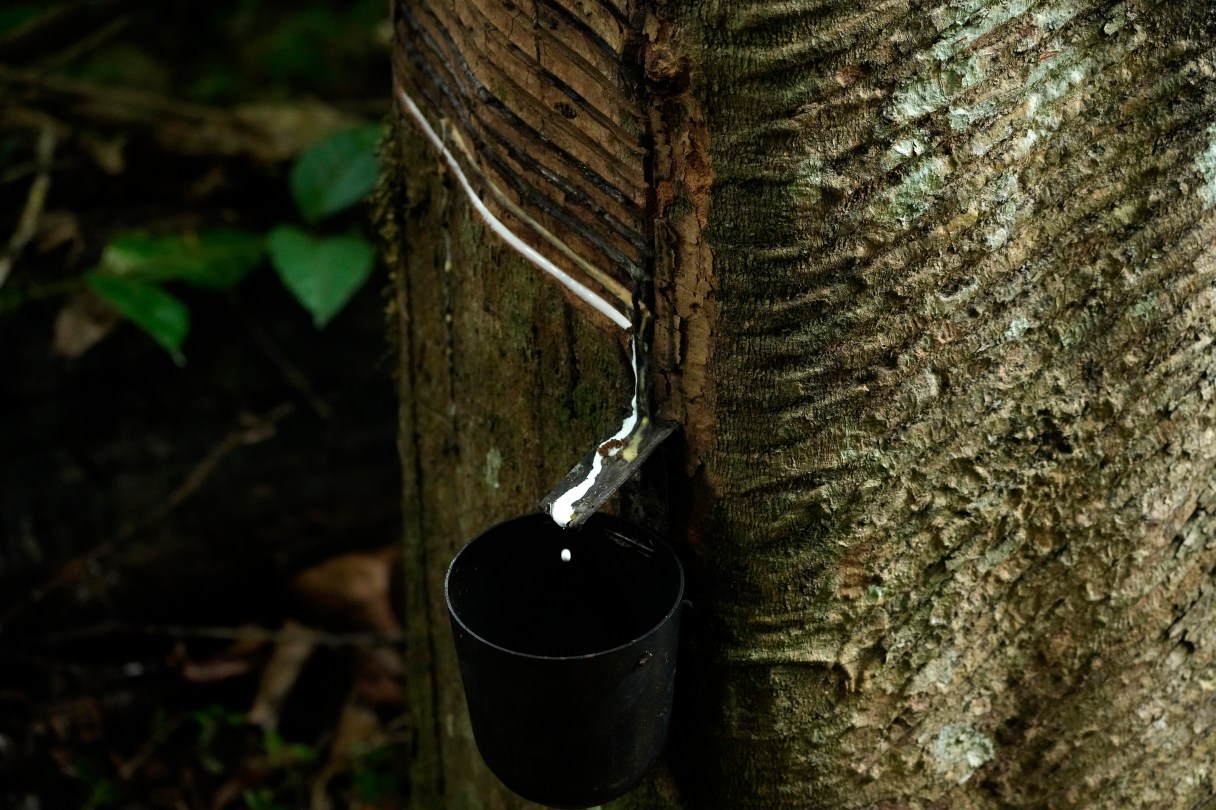
A rubber tree is prepared for the removal of rubber in the Chico Mendes Extractive Reserve, Acre state, Brazil, Tuesday, Dec. 6, 2022. Veja, an expensive global sneaker brand, is producing sneaker soles made of native Brazilian Amazon rubber in collaboration with local rubber tappers cooperatives. The project has reenergized production of a sustainable forest product and improved the standard of living for hundreds of rural families of rubber tappers. (AP Photo/Eraldo Peres)
A rubber tree is prepared for the removal of rubber in the Chico Mendes Extractive Reserve, Acre state, Brazil, Tuesday, Dec. 6, 2022. Veja, an expensive global sneaker brand, is producing sneaker soles made of native Brazilian Amazon rubber in collaboration with local rubber tappers cooperatives. The project has reenergized production of a sustainable forest product and improved the standard of living for hundreds of rural families of rubber tappers. (AP Photo/Eraldo Peres) A rubber tree is prepared for the removal of rubber in the Chico Mendes Extractive Reserve, Acre state, Brazil, Tuesday, Dec. 6, 2022. Veja, an expensive global sneaker brand, is producing sneaker soles made of native Brazilian Amazon rubber in collaboration with local rubber tappers cooperatives. The project has reenergized production of a sustainable forest product and improved the standard of living for hundreds of rural families of rubber tappers. (AP Photo/Eraldo Peres)

XAPURI, Brazil (AP) — Rubber tapper Raimundo Mendes de Barros prepares to leave his home, surrounded by rainforest, for an errand in the Brazilian Amazon city of Xapuri. He slides his long, scarred, 77-year-old feet into a pair of sneakers made by Veja, a French brand.

At first sight, the expensive, white-detailed urban tennis shoes seem at odds with the muddy tropical forest. But the distant worlds have converged to produce soles made from native Amazonian rubber.

Veja works with a local cooperative called Cooperacre, which has reenergized the production of a sustainable forest product and improved the lives of hundreds of rubber tapper families. It’s a project that, though modest in scale, provides a real-life example of living sustainably from the forest.

“Veja and Cooperacre are doing an essential job for us who live in the forest. They are making young people come back. They have rekindled the hope of working with rubber,” Rogério Barros, Raimundo’s 24-year-old son, told The Associated Press as he demonstrated how to tap a rubber tree in the family’s grove in the Chico Mendes Extractive Reserve. Extractive reserves in Brazil are government-owned lands set aside for people to make a living while they keep the forest standing.

Rubber was once central to the economy of the Amazon. The first boom came at the turn of the 20th century. Thousands of people migrated inland from Brazil’s impoverished Northeast to work in the forest, often in slave-like conditions.