
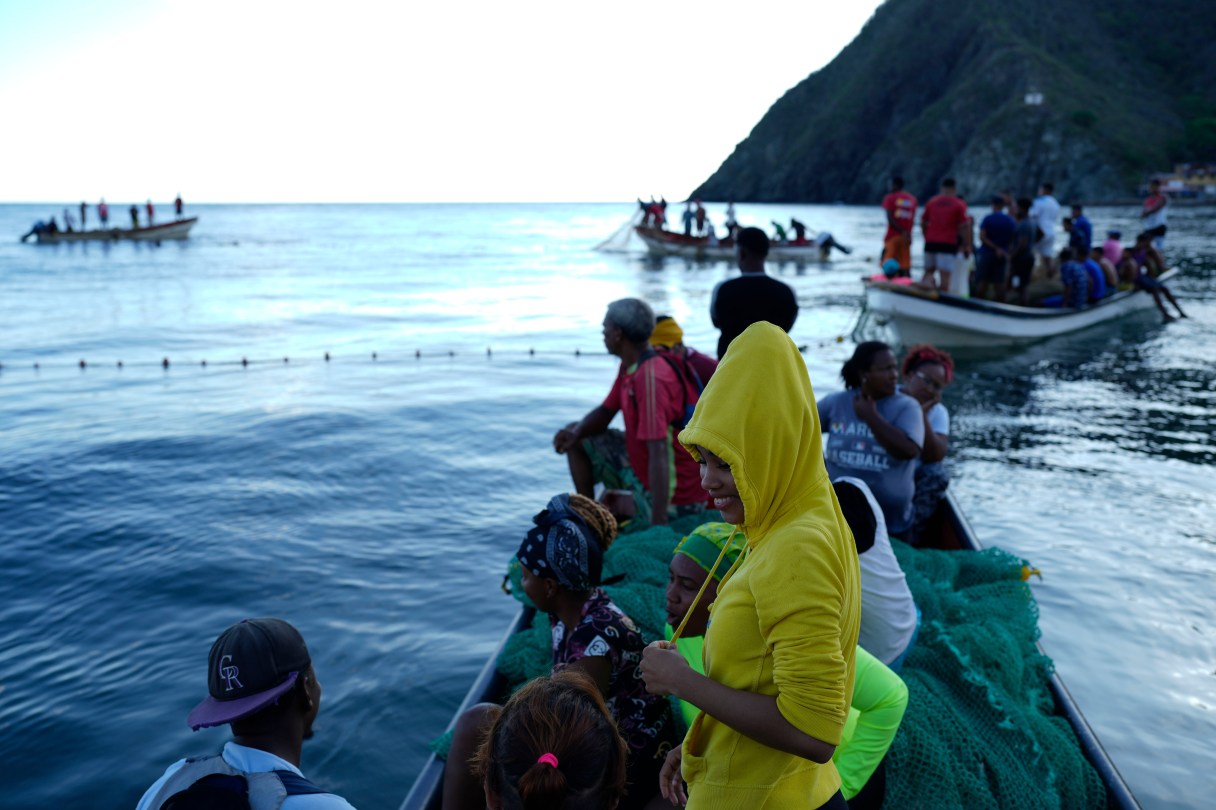
CHUAO, Venezuela (AP) — Long before sunrise, dozens of people gather around more than 50 boats along this portion of Venezuela’s vast Caribbean coast, their tanned bodies showing scars and maimed hands from years of fishing. Most of them are men, but women are increasingly among them.
The women may be joining a family tradition of fishing, or in some cases launching new careers after losing jobs during Venezuela’s economic crisis, enlisting in the physically demanding work that may pay $8 after five consecutive 12-hour shifts.
That’s only a fraction of the estimated $390 that a Venezuelan family would need per month to buy a basic basket of goods in the South American country, but it is more than the nationwide $5 monthly minimum wage.
Once relegated to cooking or cleaning at hostels, bed-and-breakfasts and diners, women in the coastal communities of Choroni and neighboring Chuao have been gaining the respect of men with whom they now work to catch thousands of pounds of fish a day. Many of the women lost their jobs as the country’s protracted crisis all but ended the area’s tourism and the coronavirus pandemic worsened their living conditions.
“Nowadays, we have a big presence. In fact, there are women in the two fishermen’s councils, and there are women who own boats,” Greyla Aguilera, 48, said after finishing a recent shift.