
Many of Chattanooga’s most popular tourist attractions have been in operation for nearly a century. So, how do they continue to attract and delight visitors when, according to DataReportal, Americans spent an average of seven hours each day looking at a digital screen?
Barry White has a thought about that.
“Keep providing an experience you can get only in Chattanooga,” says White, president and CEO of Chattanooga Tourism Co. “I don’t think technology will ever replace the pure experience. But on a broad scale, it’s all competing for people’s time — and so much more is now spent in front of computers or phone screens.”
We asked leaders from six of Chattanooga’s oldest and most popular attractions how they continue to bring in crowds. Here’s what they had to say:
Tennessee Aquarium
Make the real life “wow factor” irreplaceable
Keith Sanford, who just marked his seventh year as chief executive at the Tennessee Aquarium, needs no prompting when it comes to the question of tech vs. touch.
“It’s hard to replace seeing an animal with seeing a picture of an animal,” he says. “Having a butterfly land on your finger is hard to replicate on a screen.”
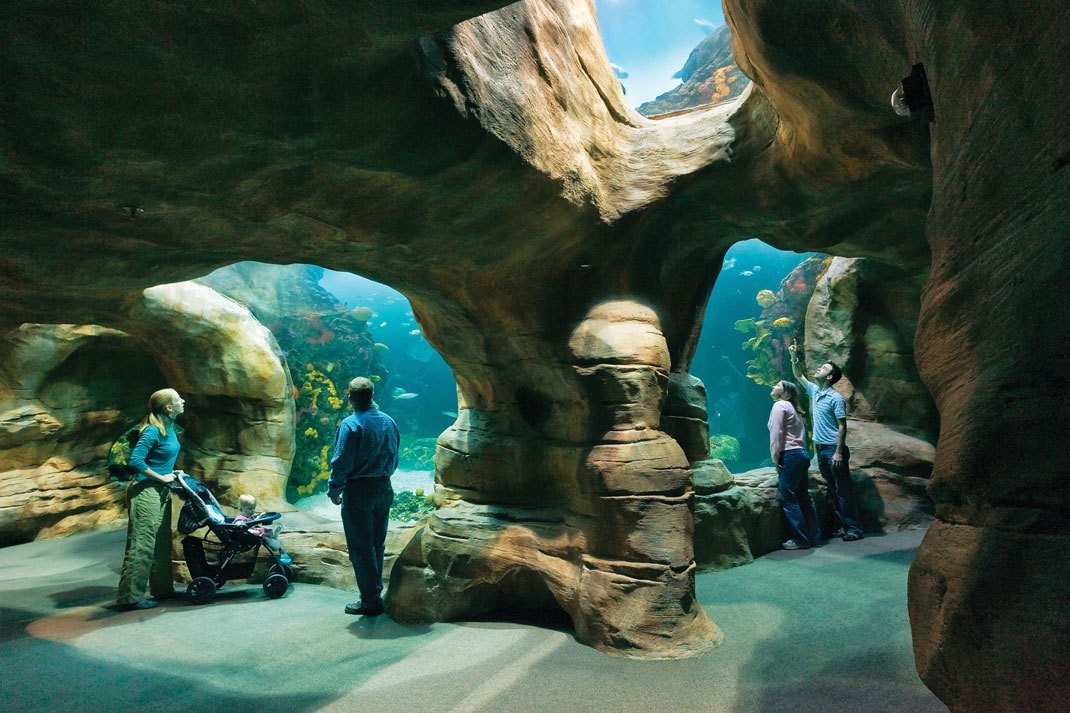
Sanford says the Aquarium “tries to do something new every two to three years … so it’s not the same the next time you visit.” In late 2016 and early 2017, he says, lemurs were added to the Tropical Cove exhibit. A year or so later, he says, the Island Life gallery debuted.
“Then, in 2020, we brought in (an endangered turtle) nursery, where you can look at the baby turtles,” he says, adding that a new Ridges to Rivers gallery is set to be introduced this month.
“It’ll showcase a lot of smaller fish protected in streams around Tennessee,” Sanford says. “We’re also going to have a pop-up tank, with different animals, and Sturgeon Bend is a new lake sturgeon touch tank where kids can not only get up close, but gently touch those fish as well. And we’ll have two sets of graphics — one for older kids and adults, and one for younger children. It’ll be much more educational.
“You want to give it a little ‘wow’ factor,” Sanford adds, “but make sure it fits its natural environment.”
Rock City Gardens
Offer what the internet can’t: time to unplug
 Photography courtesy of See Rock City
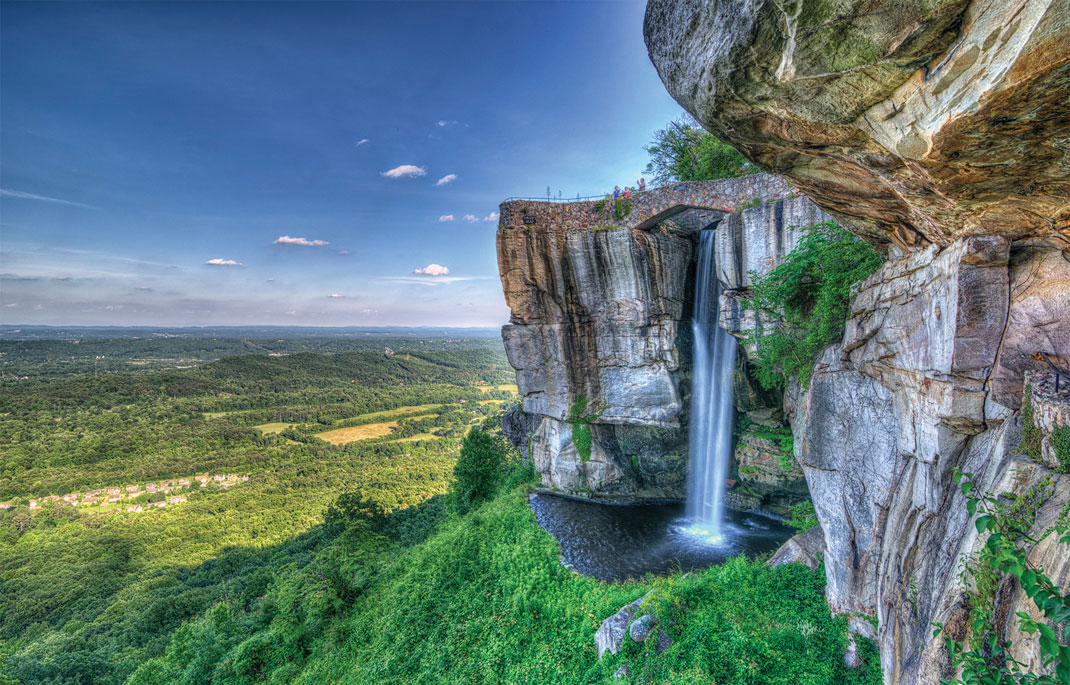
Having opened to the public in May 1932, Rock City Gardens celebrated its 90th year in 2022. Doug Chapin, the attraction’s 33-year-old, fourth-generation CEO, says that to address the question of high tech at Rock City Gardens is to walk a “fine line.”
“We’re not Luddites,” quips Chapin, who bought the business from his father, Bill, a year ago. “We don’t think technology is bad, but we want it to enhance what people experience here. What’s made our business sustainable is that there’s a level of authenticity.
“My dad’s phrase is, ‘Rock City was created by God and enhanced by man.’ Our guests really appreciate being able to just stop, unplug and be with the people they’re with. We want to be able to make improvements, but not in a way that robs our guests of Rock City’s authenticity.”
Chapin says that includes the prospect of expanding Rock City Gardens’ current 12-acre layout, which drew just short of 570,000 visitors last year. He says the attraction owns 24 more acres adjacent.
“When we look at the future and what the rest of that property can be,” he says, “(the question is) how do we use it to make a full, rich experience? We want to do something that feels evergreen and authentic.”
Incline Railway
Let social media do the talking
 Photography courtesy of Incline Railway
The Incline Railway that takes passengers up and down the side of Lookout Mountain is actually a successor line. According to the attraction’s website, the first Incline opened in 1887. A second opened eight years later and was so successful that the original line closed.
Robert Pettway, who’s handled the Incline’s marketing for the past 19 years, says that’s kind of what’s happened when it comes to attracting visitors.
“We used to run a lot of mass media, print and things like that,” he says, “But we pivoted years ago to a very focused digital marketing strategy including social media — ads on laptops, tablets and heavily on phones.”
Pettway, president of Partnership Marketing Group, says social media allows for the occasional one-to-one customer interaction.
“I get Facebook messages from people asking if we have any tickets left,” says Pettway. “I tell them, ‘Sure, come take a ride with your family this afternoon.’ It used to be a lot harder for (customers) to communicate with you.
“You look at five or six years ago — technology was moving so fast and being embraced dramatically by a younger audience. To be important to (that audience), to position yourself as a choice for their entertainment dollar, you have to reach out to them in the media they use.”
Hunter Museum of American Art
Never stop reaching out to new audiences
 Photography / EDGE archives
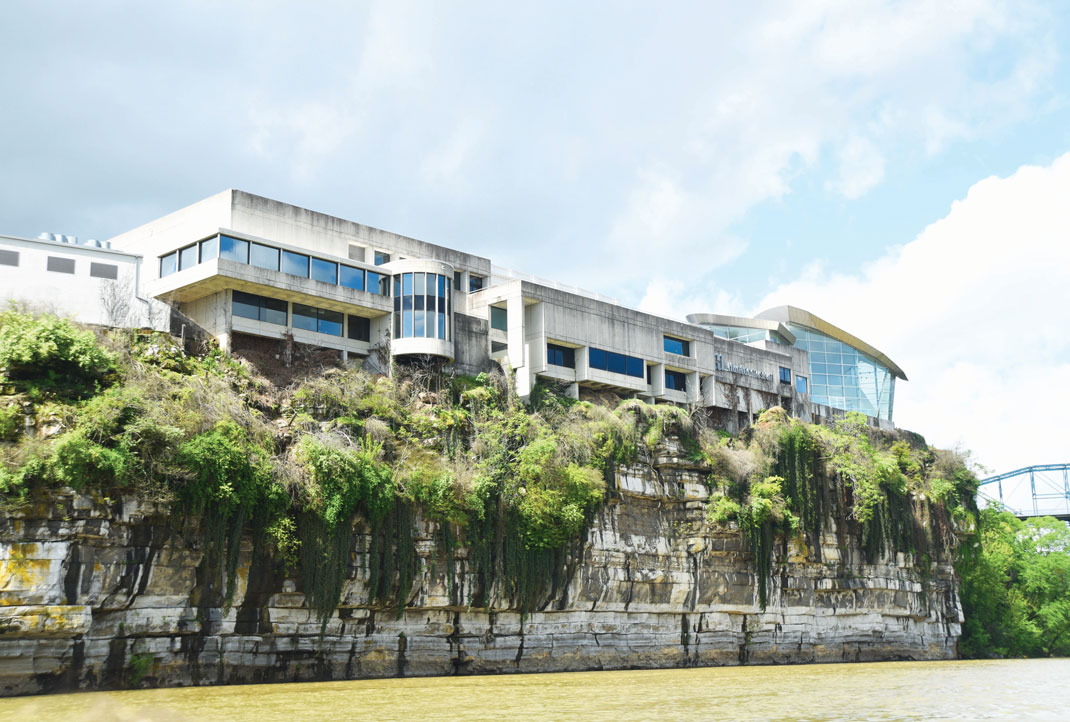
Virginia Anne Sharber, the museum’s executive director, says that tech is a challenge — but not the only one.
“Time is definitely something we talk about,” she says. “How to get people to carve time from their busy days to see this museum. It’s not just a nose-in-the-screen conversation.
“We’ve been around 70 years,” she adds, “but we’re not the same museum. We’ve been very intentional about reaching audiences that didn’t used to come to the museum.”
One example of that, Sharber says, was the launch of Black Professionals at The Hunter in 2018. Every other month, Black professionals are invited to a networking event featuring food prepared by Black caterers, as well as performances by Black poets and dancers.
“I’ve been absolutely blown away by how successful it’s been,” says Sharber, who also cites the success of the Hunter’s 70th anniversary exhibit last summer — particularly collections of Lord of the Rings-style illustrations and works of Black artists.
“I’m a recovering attorney,” Sharber says. “I’m not an art expert. But one thing that’s been very important to me is to make sure the Hunter is for everyone, not just those who are learned in art.”
Ruby Falls
Offer visitors more choices where they are: online
 Photography courtesy of Ruby Falls
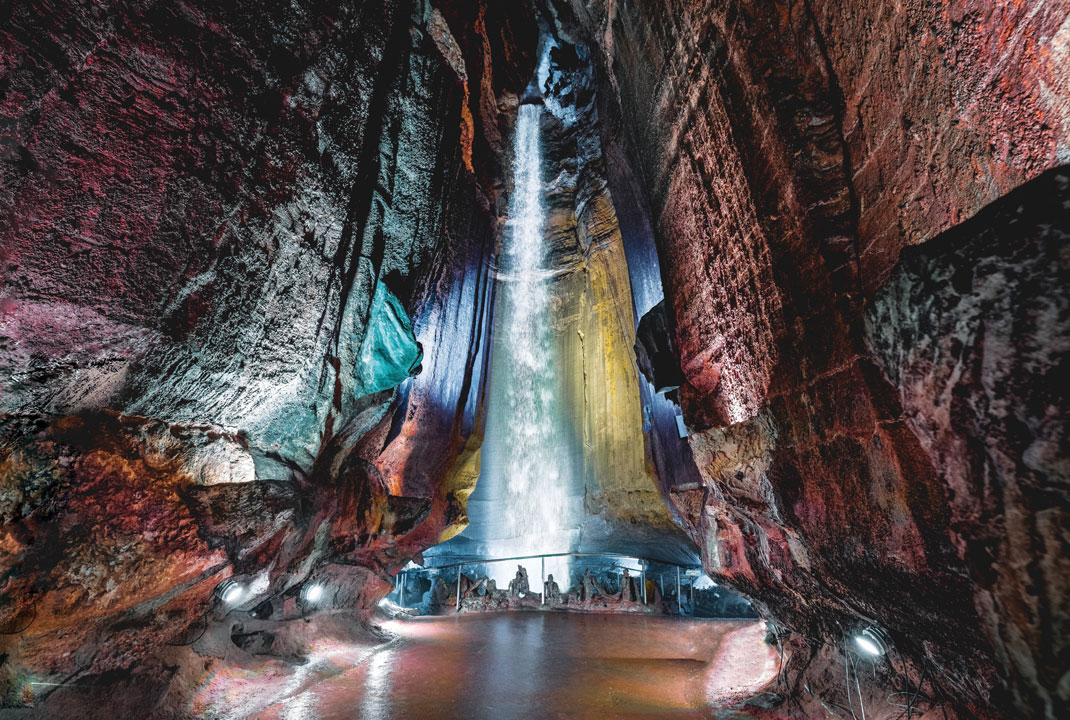
Morgan Lee, who coordinates digital media and public relations at Ruby Falls, says technology is very much in play at the 94-year-old Lookout Mountain attraction. But not in terms of the “adventure” it offers.
“The way we look at it,” she says, “is that instead of changing what we are, we’re changing how we’re reaching people.
“We’re not selling a waterfall. We’re not just giving people a hike you do once and get sweaty. That’s not what Ruby Falls is. We know people still have that desire for this adventure, but if (those people) are on a screen, then let’s get on those screens.”
Lee says about a half million people tour Ruby Falls in a typical year. Those visitors now have more tour options, she says, including a lantern tour, a “gentle walking” tour that moves at a slower pace and a “low-sensory” tour.
She also cites an 8,000-gallon rainwater retention system and the introduction of electric-vehicle (EV) charging stations.
“We want to serve our guests of the future, and EV charging is a big part of that,” Lee says. “We’re really pushing toward sustainable business practices. Sustainability is a huge part of the future for us.”
Chickamauga & Chattanooga National Military Park
Offer a “package deal”: outdoor recreation and connection with history
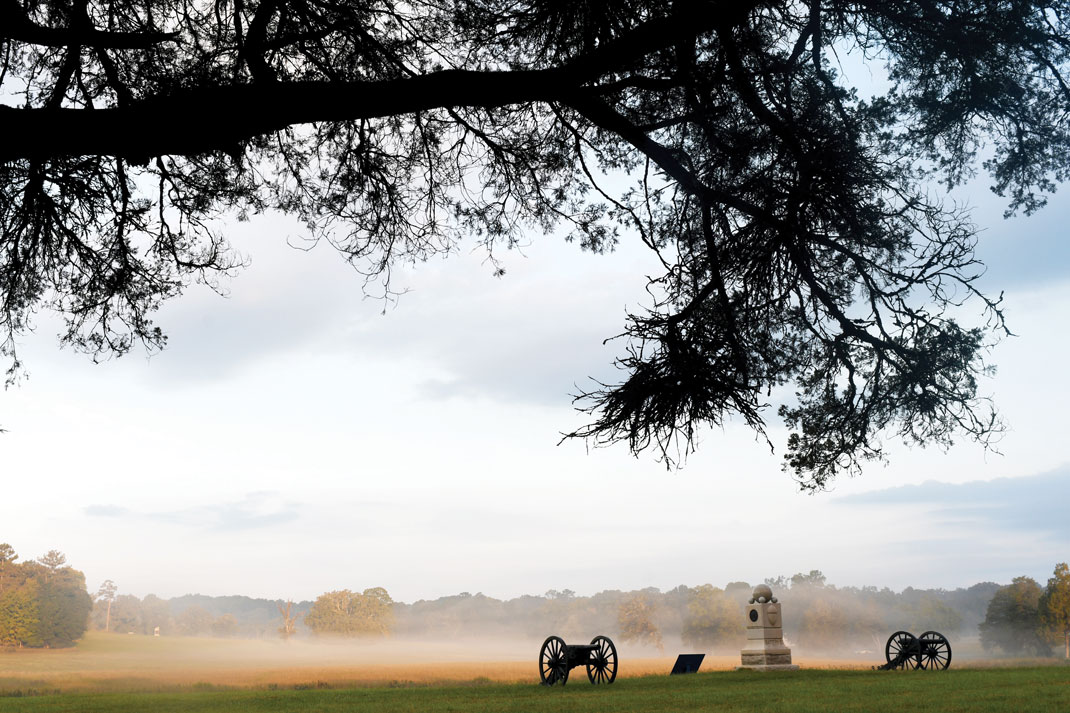 Photography by Robin Rudd
For Kim Coons, being chief of interpretation and resource education at Chickamauga & Chattanooga National Military Park is about much more than merely luring and herding visitors through an attraction.
“We owe it to the men who sacrificed here to tell their story,” she says.
Coons says the park’s attendance has rebounded nicely since 678,000 visited in the pandemic year of 2020. The park drew 945,000 in 2021 and more than 964,000 last year, she says.
But Coons says park leaders are “constantly trying to figure out ways to entice younger visitors.” She says the park has become more “recreational” in recent years, with bike tours, canoeing and kayaking.
“We’ve partnered with Outdoor Chattanooga in an effort to reach that audience,” she says.
Coons adds that the National Park Service has moved toward a younger clientele by using more apps. But that approach, while prudent, has limitations.
“You can use an app,” she says, “but it’s hard to connect without being here. I believe that to learn a place, you have to be at that place.”
READ MORE
* Chattanooga hotels rebound from pandemic, spurring the addition of more lodging options