
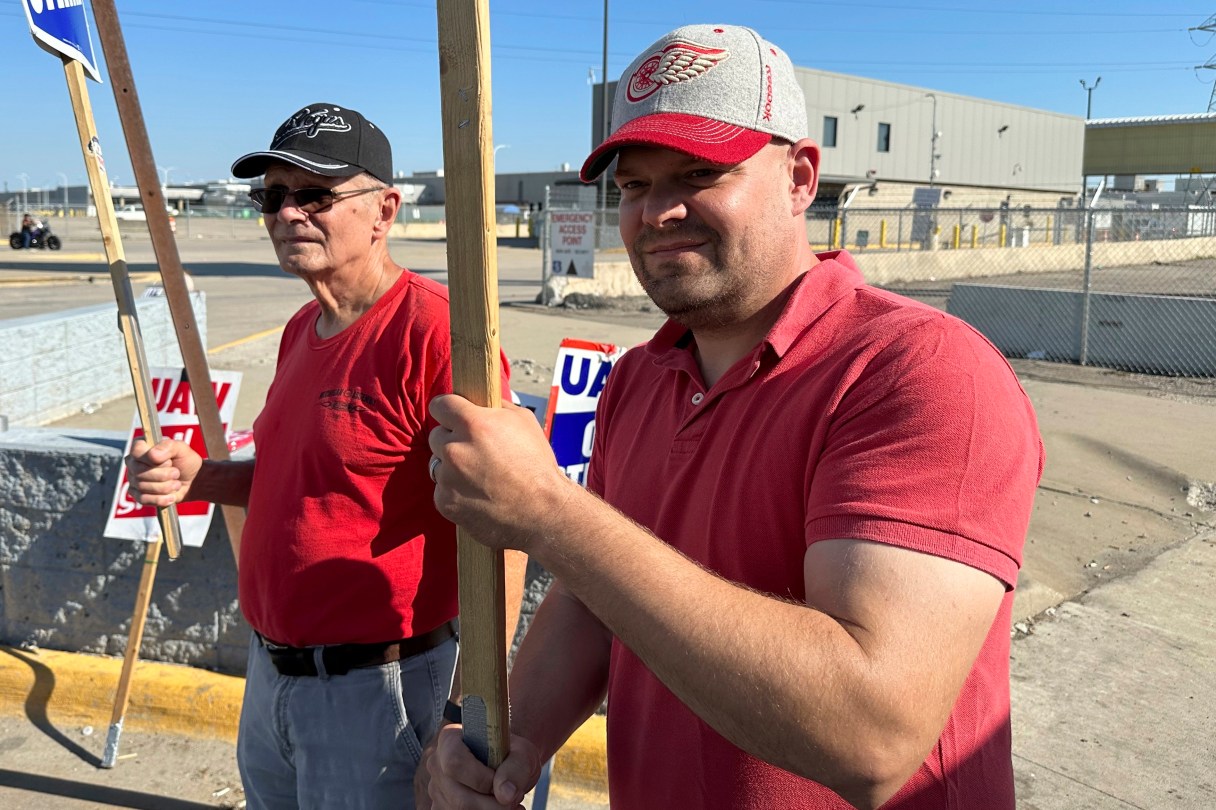
WAYNE, Mich. (AP) — On the picket lines at a Ford factory west of Detroit, many striking workers don’t think the electric vehicle revolution is coming for their jobs — at least not in the near future.
But just in case, they’re backing United Auto Workers President Shawn Fain’s quest to unionize EV battery factories at Ford and Jeep maker Stellantis, matching a breakthrough concession made by General Motors last week.
So far, neither Ford nor Stellantis has agreed to the change, which would pull employees at all 10 U.S. battery factories proposed by Detroit automakers into national contracts with the UAW, all but assuring they’ll be unionized.
Fain also wants workers at the plants to make top UAW assembly plant wages, which now are $32 per hour.
With the UAW strike now in its fourth week, EVs and their potential impact on job security have become central to union negotiations with the automakers. Contract talks are likely to determine whether those plants — mostly joint ventures with South Korean battery companies — are union, which may have long-lasting consequences as the auto industry transforms itself.