
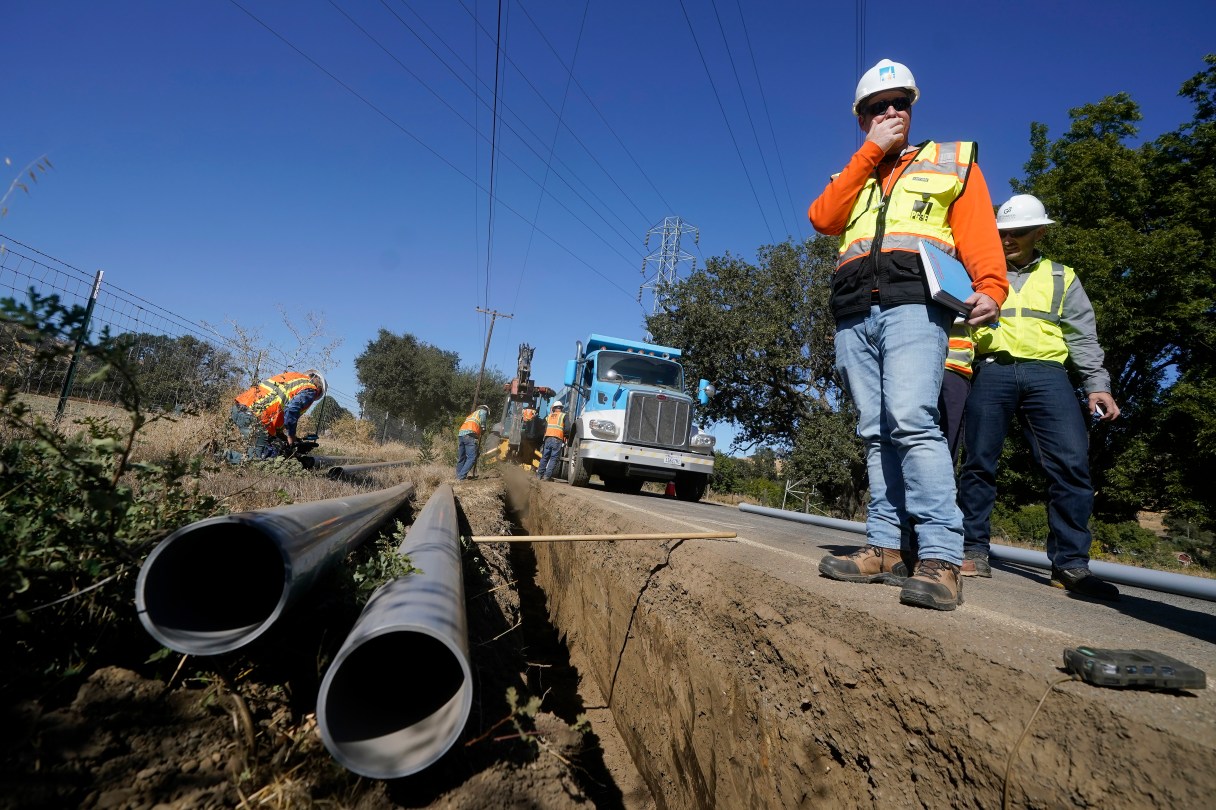
VACAVILLE, Calif. (AP) — Pacific Gas & Electric — one of the nation’s largest utilities whose equipment has sparked some of California’s deadliest wildfires — wants to bury power lines in some of its most at-risk areas to prevent destructive blazes like the 2018 Paradise fire that killed 85 people.
But state regulators are balking at the utility’s plan because it would take too long and cost $5.9 billion. The company’s customers — who already have some of the highest rates in the country — would have to pay for it.
Regulators want PG&E to put a protective cover over many of its overhead power lines instead of burying them. The cover approach is cheaper, but riskier. PG&E says burying a power line reduces the chance it will start a wildfire by 99% because it can’t be blown down by wind storms. The protective cover, which would better insulate the power line should it fall to the ground, would reduce that chance by 62%.
“We’re not going to live with 35% risk,” said PG&E CEO Patti Poppe, who was rounding down in her assessment. “Who wants to get on a plane that has a 35% chance of crashing?”
PG&E, which filed for bankruptcy protection in 2019 after it faced more than $30 billion in damages for wildfires started by its equipment, is trying to convince regulators that its burying plan is better. The company filed its plan with state regulators last year.