
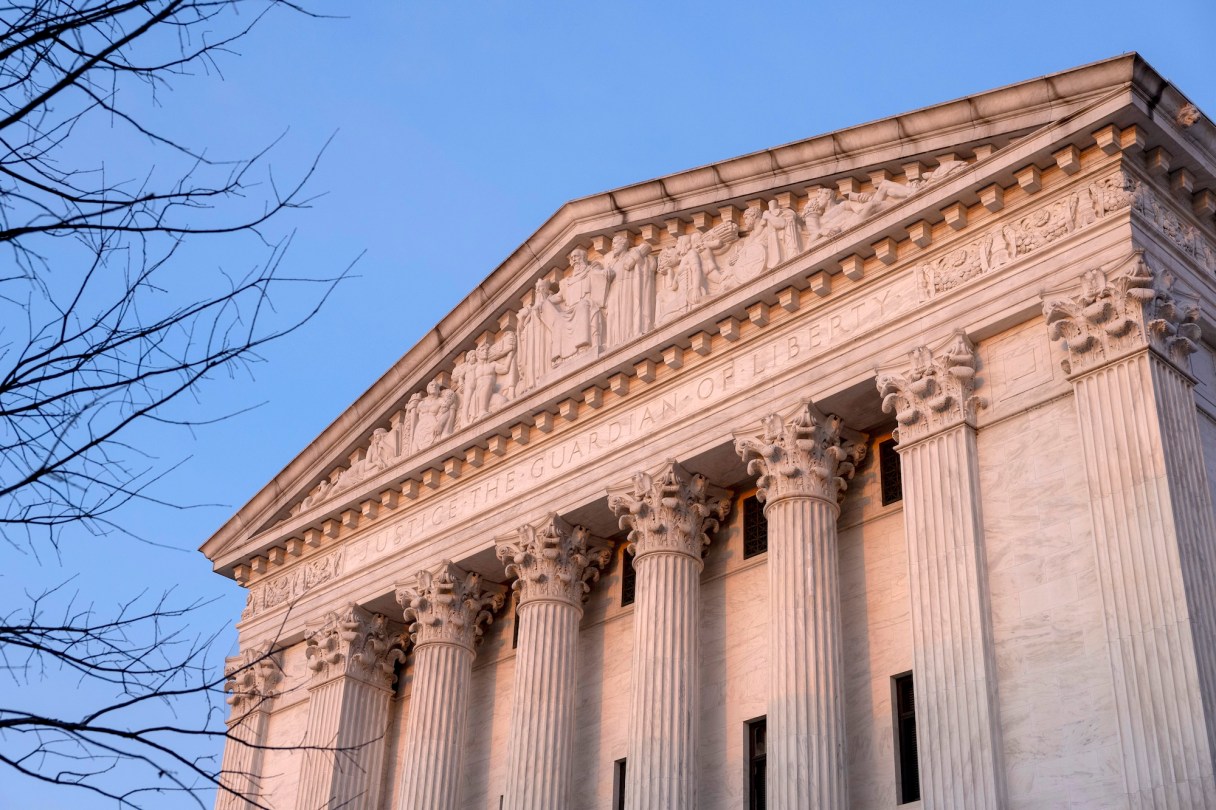
Last Tuesday, the Supreme Court’s conservative majority appeared skeptical that prosecutors could use the Sarbanes-Oxley Act to go after Jan. 6 rioters. It’s a closely watched case in part because Special Counsel Jack Smith also cited this statute in his criminal charges against former President Donald Trump.
As a matter of statutory interpretation, it would be plausible to say that the relevant part of the statute shouldn’t apply to Trump or the rioters: It is part of the Sarbanes-Oxley Act and was originally aimed at preventing the destruction of documents to thwart criminal investigation.
The problem is that the court’s conservatives are officially textualists. That is, they believe a statute’s purpose shouldn’t matter — only its literal language should count. If they nevertheless read the law not to cover the hundreds of Jan. 6 rioters and Trump, they will be demonstrating the utter bankruptcy of textualism as a theory — not to mention looking hypocritical for violating their own principles of statutory interpretation.
The law in question, 18 USC 12(c), first says it’s a crime to “corruptly” alter or destroy a document “with the intent to impair the object’s integrity or availability for use in an official proceeding.” That’s the part that tells you the main purpose of the statute, along with the history of Sarbanes-Oxley, passed in the aftermath of the Enron scandal and aimed at assuring effective oversight of companies. No one thinks this part of the law applies to the Jan. 6 rioters.
Then, the second part of that same section punishes anyone who “otherwise obstructs, influences, or impedes any official proceeding, or attempts to do so.” This is the language used by federal prosecutors to go after Trump and hundreds of Jan. 6 offenders, including Joseph Fischer, the one whose case is before the Supreme Court right now.