
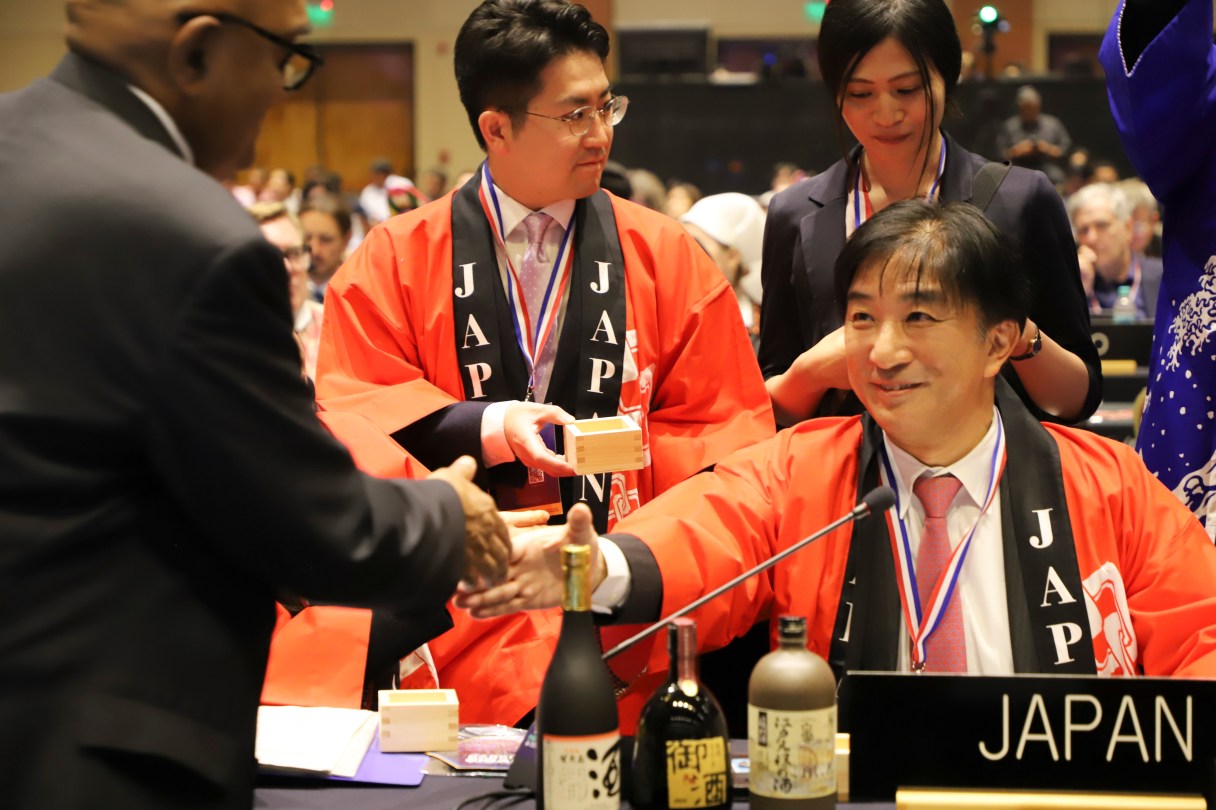
LUQUE, Paraguay (AP) — Sake is perhaps more Japanese than the world-famous sushi. It’s brewed in centuries-old mountaintop warehouses, savored in the country’s pub-like izakayas, poured during weddings and served slightly chilled for special toasts.
The smooth rice wine that plays a crucial role in Japan’s culinary traditions was enshrined on Wednesday by UNESCO on its list of the “intangible cultural heritage of humanity.”
At a meeting in Luque, Paraguay, members of UNESCO’s committee for safeguarding humanity’s cultural heritage voted to recognize 45 cultural practices and products around the world, including Brazilian white cheese, Caribbean cassava bread and Palestinian olive oil soap.
Unlike UNESCO’s World Heritage List, which includes sites considered important to humanity like the Pyramids of Giza in Egypt, the Intangible Cultural Heritage designation names products and practices of different cultures that are deserving of recognition.
A Japanese delegation welcomed the announcement in Luque.