
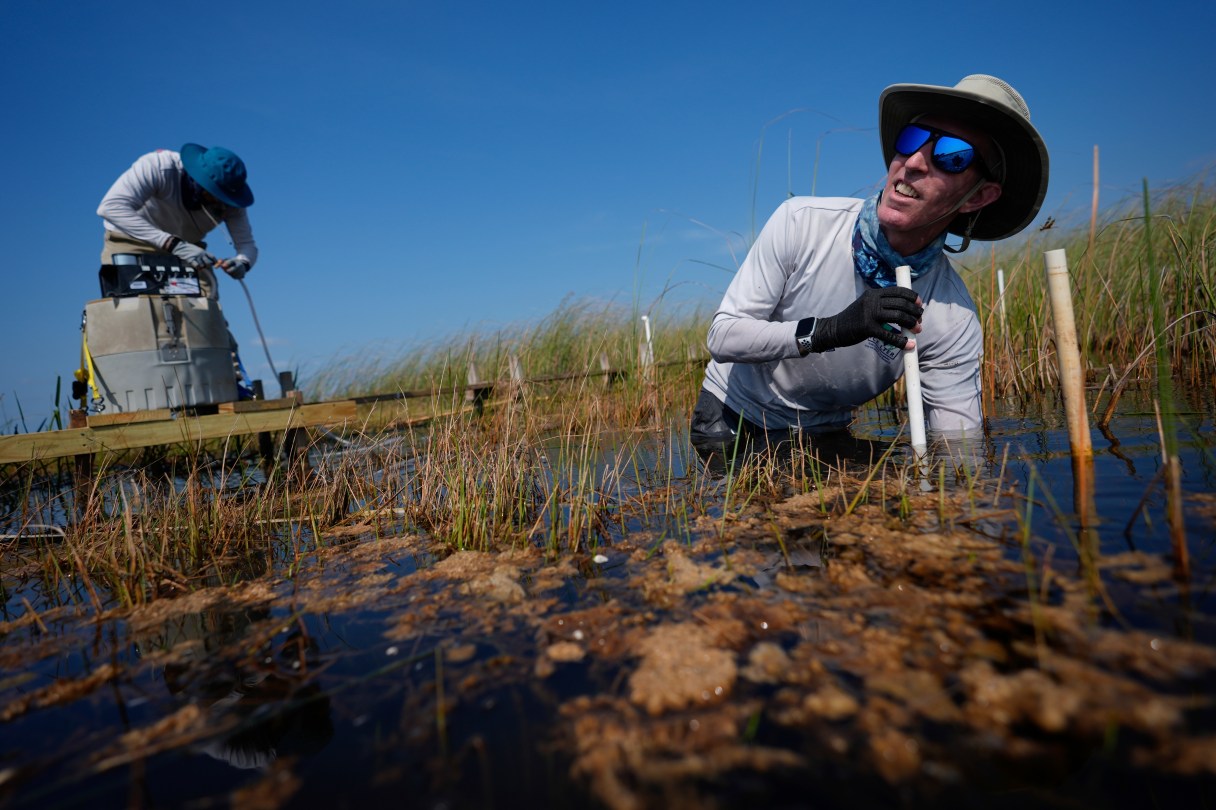
EVERGLADES, Fla. (AP) — In a region of Florida known as the River of Grass, John Kominoski plops into hip-deep waters. Blobs of brown periphyton – a mishmash of algae, bacteria and other organisms – carpet the surface.
The air is thick and sticky as Kominoski, a Florida International University professor, pushes a rod to secure a tube that collects timed and continuous water samples that will help his team investigate the impacts of climate change and freshwater flows in this unique, sensitive ecosystem.
The Everglades ecosystem was degraded and transformed when a highway connecting Tampa and Miami was built in 1928, cutting through a mosaic of prairies, sawgrass marshes, freshwater ponds and forested uplands. Sections of the road are now being elevated to restore water flows into the Shark River Slough – a vital restoration area deep in the Everglades National Park.
The highway elevation is part of a massive state-federal project, approved by Congress in 2000 with bipartisan support, that aims to undo damages wreaked upon these wetlands.
“This is the biggest, most complicated and most expensive ecosystem restoration project in the world,” said Eve Samples, executive director of Friends of the Everglades. “It’s really important that we get it right.”