
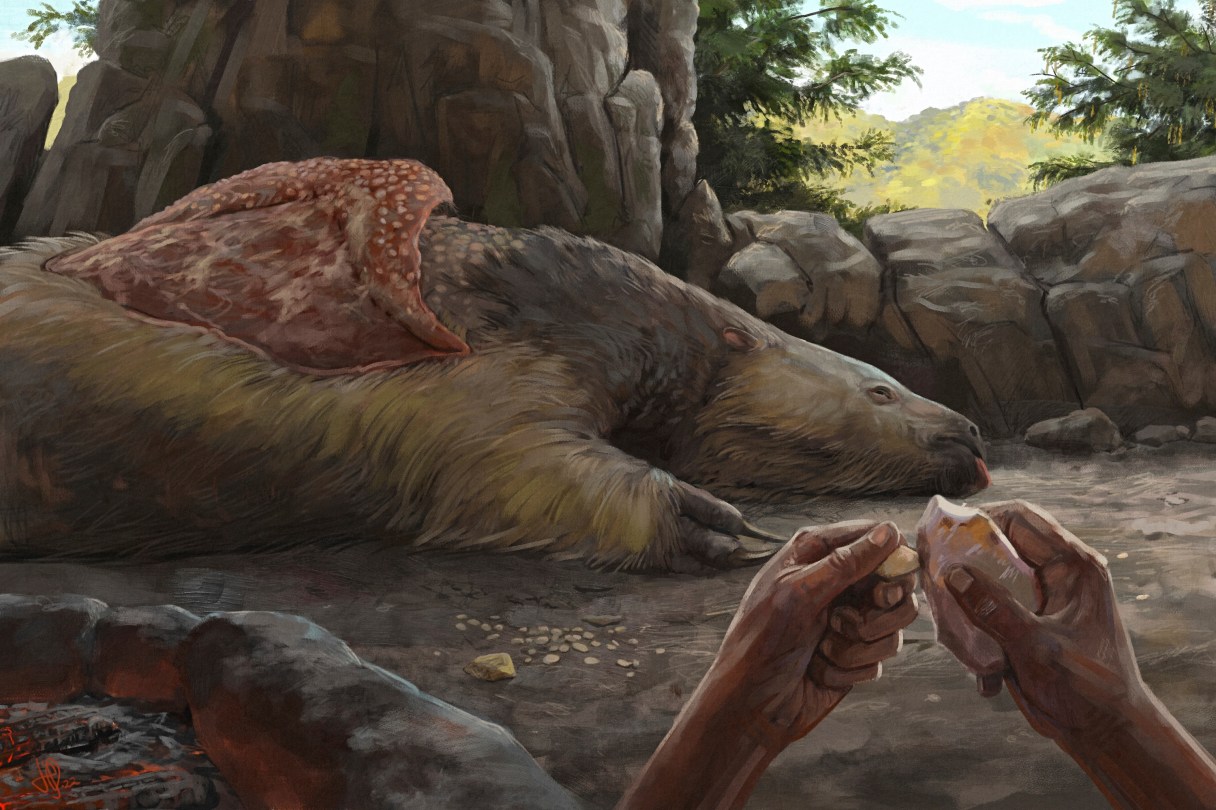
SAO PAULO (AP) — Sloths weren’t always slow-moving, furry tree-dwellers. Their prehistoric ancestors were huge — up to 4 tons (3.6 metric tons) — and when startled, they brandished immense claws.
For a long time, scientists believed the first humans to arrive in the Americas soon killed off these giant ground sloths through hunting, along with many other massive animals like mastodons, saber-toothed cats and dire wolves that once roamed North and South America.
But new research from several sites is starting to suggest that people came to the Americas earlier — perhaps far earlier — than once thought. These findings hint at a remarkably different life for these early Americans, one in which they may have spent millennia sharing prehistoric savannas and wetlands with enormous beasts.
“There was this idea that humans arrived and killed everything off very quickly — what’s called ‘Pleistocene overkill,'” said Daniel Odess, an archaeologist at White Sands National Park in New Mexico. But new discoveries suggest that “humans were existing alongside these animals for at least 10,000 years, without making them go extinct.”
Some of the most tantalizing clues come from an archaeological site in central Brazil, called Santa Elina, where bones of giant ground sloths show signs of being manipulated by humans. Sloths like these once lived from Alaska to Argentina, and some species had bony structures on their backs, called osteoderms — a bit like the plates of modern armadillos — that may have been used to make decorations.