
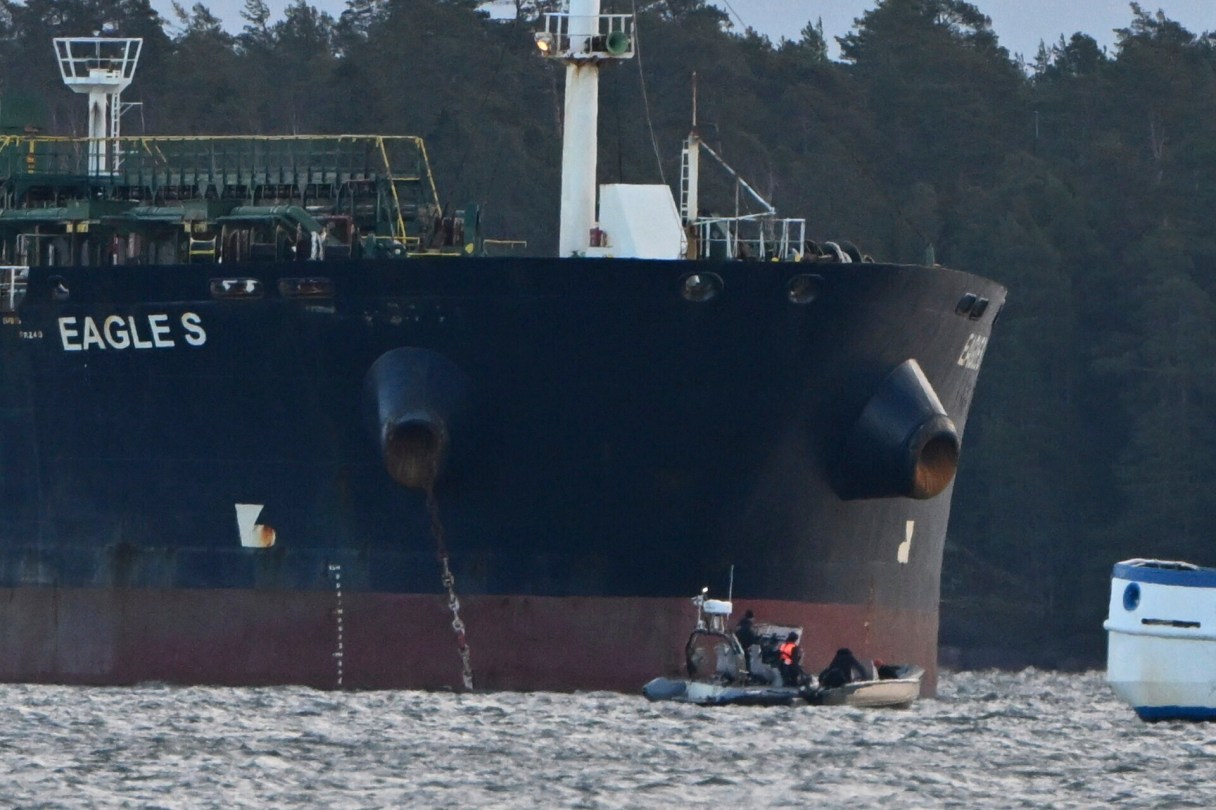
HELSINKI, Finland (AP) — Finnish investigators probing the damage to a Baltic Sea power cable and several data cables said they found an anchor drag mark on the seabed, apparently from a Russia-linked vessel that has already been seized.
The discovery heightened concerns about suspected sabotage by Russia’s “shadow fleet” of fuel tankers — aging vessels with obscure ownership acquired to evade Western sanctions amid the war in Ukraine and operating without Western-regulated insurance.
The Estlink-2 power cable, which transmits energy from Finland to Estonia across the Baltic Sea, went down on Dec. 25 after a rupture. It had little impact on services but followed damage to two data cables and the Nord Stream gas pipelines, both of which have been termed sabotage.
Finnish police chief investigator, Sami Paila, said late Sunday the anchor drag trail continued for “dozens of kilometers (miles) … if not almost 100 kilometers (62 miles).”
Paila added to Finnish national TV broadcaster Yle: “Our current understanding is that the drag mark in question is that of the anchor of the (seized) Eagle S vessel. We have been able to clarify this matter through underwater research.”