
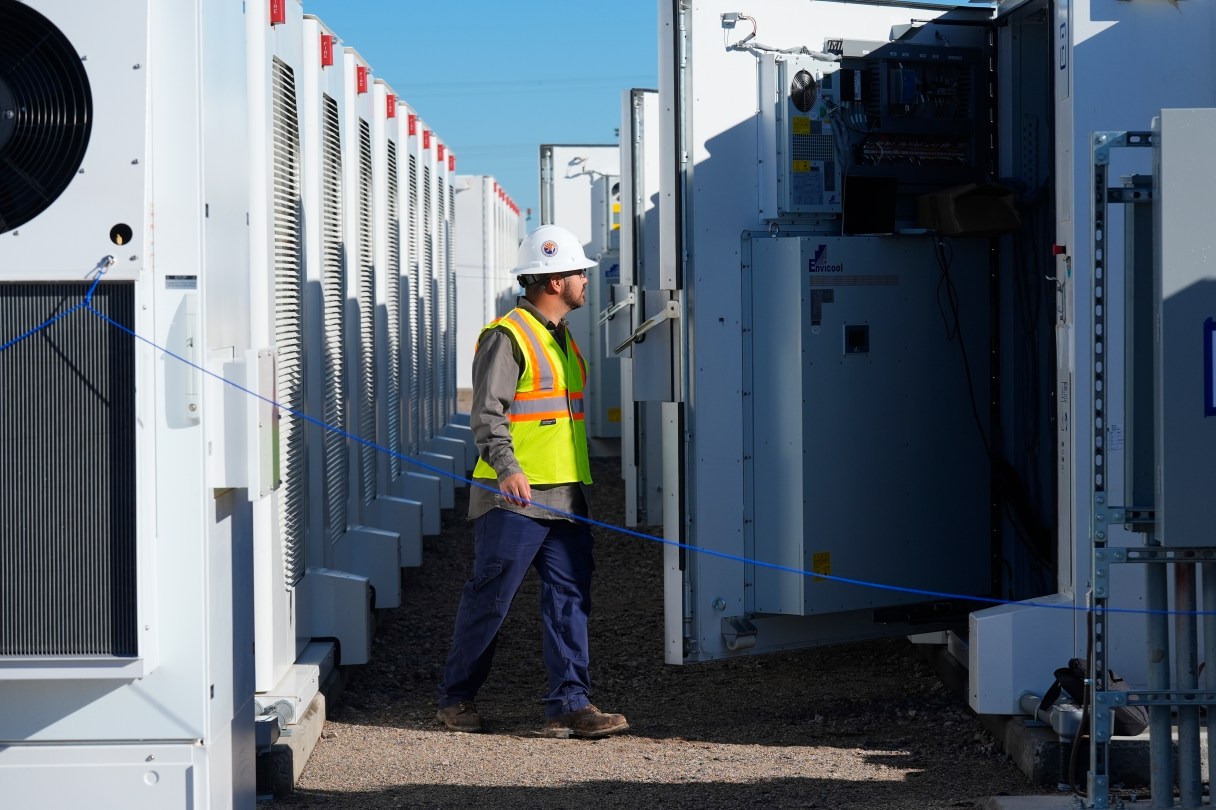
2024 was another banner year for a source of electricity that is better for people’s lungs, better for climate change and may be reaching your home when you turn on the lights or turn up the thermostat — large banks of batteries.
This ability to store large amounts of electricity in batteries was essentially nonexistent a decade ago, but the country had about 24 gigawatt-hours operating as of the end of November, up a whopping 71% over the same date in 2023.
This is welcome news to clean energy advocates including Dariella Rodriguez. She has seen what happens on days when demand for air conditioning or heating spikes and extra power plants fueled by natural gas, located in Port Morris and Mott Haven, fire up not far from where she works in Hunts Point in the South Bronx, New York.
Batteries can jolt into service, sending electricity onto overhead wires, instead of these dirty “peaker” plants. Rodriguez hasn’t seen that transition yet, but she hopes to.
“The people that are exposed to these plants are the most vulnerable people in environmental justice communities already,” said Rodriguez, a director at THE POINT Community Development Corporation there, noting that lower-income people and communities of color often live near peakers.