
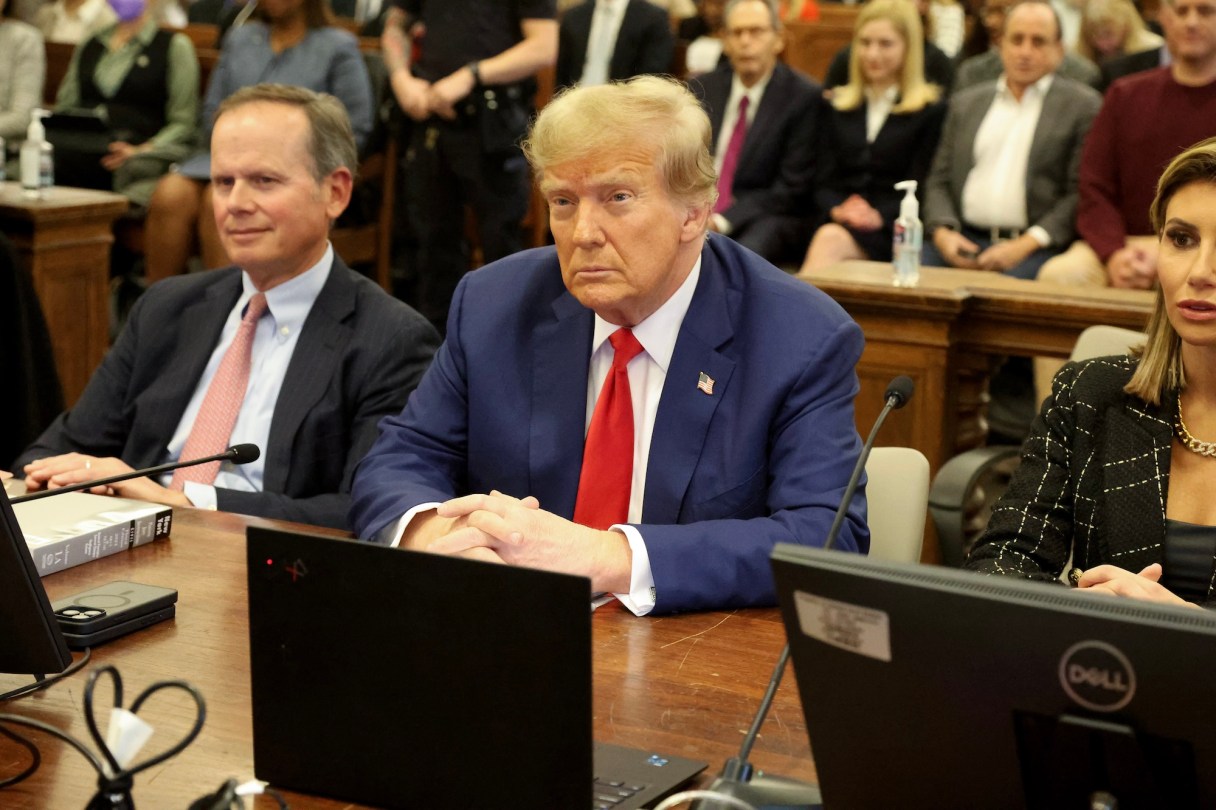
One would expect the 2024 GOP front-runner, former President Donald Trump, to be rallying voters. Instead, he’s railing against a ruling in his civil fraud trial that resulted in a $355 million fine, a three-year ban from running companies in New York (including his own), as well as $4 million fines and similar two-year bans against his sons Donald Jr. and Eric.
Trump reacted by attacking Judge Arthur Engoron and New York Attorney General Letitia James, calling both “corrupt.” Supporters, including Trump’s attorneys, have suggested that there were no true victims of the corrupt business practices. For her part, James, in a news conference after the ruling, said that “This long-running fraud was intentional, egregious, illegal; there cannot be different rules for different people in this country, and former presidents are no exception.”
At least three potential victims come to mind, said Christopher Michaelson, the Opus distinguished professor of principled leadership at the University of St. Thomas’ Opus College of Business.
“One would be the banks who are lending at lower rates as a result of these [financial] misstatements,” Michaelson told an editorial writer. “Another victim would be society at large, insofar as when we have an inequitable system that can be sort of gamed by the powerful or the knowledgeable, then the rest of us are likelier to get less favorable terms for submitting accurate information when others are getting favorable terms by submitting unfair information.” The third, added Michaelson: “Competitors who are doing business honestly.
“The idea that it’s a victimless crime,” Michaelson said, “is maybe founded on the idea that these are big, abstract, ambiguous entities — big banks, big society, big competitors — but they’re victims nonetheless.”