
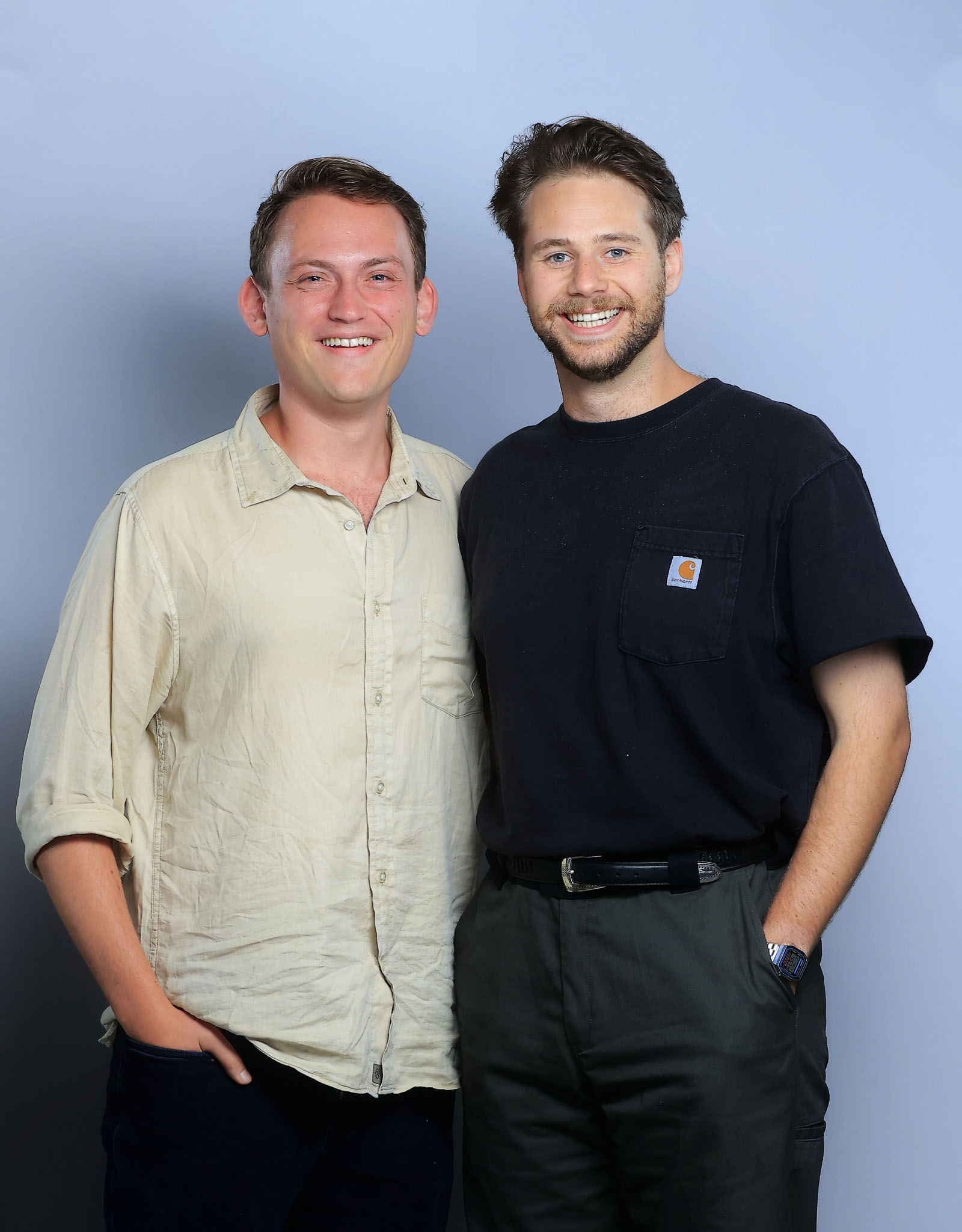
 Contributed Photo / Jake Gutstein, left, and Graham Kirstein are co-founders of Zest, an app that helps people learn to cook. The company is based at Brickyard, a Chattanooga tech-company incubator.
The COVID-inspired “order in” meal culture may have peaked.
Many Americans, especially Generation Z and younger millennials, are discovering a diet built around deliveries from DoorDash and Uber Eats is costly and can also be nutritionally suspect and socially bleak.
(READ MORE: Don’t tip pre-delivery? Don’t expect food fast.)
A Chattanooga-based startup company is providing a digital solution, an app called Zest (zestapp.co), that aims to teach people to cook at home, while espousing a dinner-party culture that feeds a need for food-centered fun among the under-40 crowd.
It turns out that DIY cooks on TikTok and Instagram provide thin gruel for those who want to learn the fundamentals of culinary-school-style cooking while preparing meals they can share with their pals.
Jake Gutstein, a 26-year-old entrepreneur from Short Hills, New Jersey, now living in Chattanooga, remembers sitting at the feet of his grandmother while she cooked and listened to recordings of jazz singer Ella Fitzgerald. The music he remembers, the recipes and cooking techniques … not so much.
“I had the fire department called on me for eviscerating a DiGiorno pizza,” said Gutstein, one of the co-founders of Zest, a company based here under the wing of Brickyard, a tech company incubator and venture capital firm.
(READ MORE: Brickyard brings founders to Chattanooga to go all-in on their startups.)
If necessity is the mother of invention, then hunger is its bachelor uncle. Gutstein said in an interview he needed to learn how to cook, but didn’t know where to turn … short of watching the same recipe video 10 times.
“Nobody sat me down and showed me how (to cook),” he said. “My parents were both doctors that worked full time. Three-star meals weren’t really on the menu for us growing up.”
Gutstein, a graduate of Northwestern University near Chicago, said the frozen pizza incident set his entrepreneurial mind to work. While in college, he had built (and ultimately sold), a campus based bike-sharing company. So, he knew the mechanics of building a company from scratch, if not cooking from scratch.
Before Zest, Gutstein had leaned on his friend (and ultimately a Zest co-founder) Graham Kirstein, 26, for advice in the kitchen. Kirstein was not a trained cook, either, but at least he had an open mind and a full cupboard.
“When it came time for me to cook for myself, it was much harder than I had ever anticipated,” Kirstein is quoted as saying on the company website. “My grocery hauls became monotonous and wasteful, so as a result, my culinary skills never grew at a rate I was hoping for.”
If Gutstein was the business brain, and Kirstein the voice of the app, the team still needed a culinary star. Enter Julie Ottusch, a Harvard University grad and former chef de partie at Alenia, a three-star Michelin restaurant in Chicago once voted the best restaurant in the world. Trained at Le Cordon Bleu culinary institute in Paris, Ottusch filled the expertise void and brought her ample resumé into the fold.
The team, which also includes Creative Director Savannah Cooper and Chief Technology Officer Amrit Saini, proceeded to develop content through Zest that targeted four potential audiences: people who have just moved in with a significant other and need to up their cooking game; under-40s who are looking to acquire an immersive hobby (like cooking) that separates them from their time-eating screen habits; people who are literally sick and tired of salt and fat filled restaurant meals, and people hoping to deploy higher-level cooking skills to entertain (and impress) their friends.
People in all those categories, and more, are at the top of the digital funnel as Zest users who the company hopes to convert to paying subscribers who want the app’s complete suite of info-services. The team uses social media pages to introduce users to the Zest experience.
“We have tens of thousands of active users,” Gutstein said. “Growth has been going well. We have over 250,000 people that follow us over TikTok and Instagram.”
When the company becomes profitable from paid subscriptions is largely a matter of choice, Gutstein says, as the company balances the cost of acquiring new customers and growth forecasts to build a favorable cash flow. The company has attracted funding from several prominent venture capital funds, he said.
According to the Zest website, “Cooking at home offers substantial financial, physical and mental benefits,” yet “only one-third of Gen Z cooks from scratch.” Meanwhile, CNBC reported last week that a poll of 1,033 people between the ages of 18 and 34 showed that 54% said rising food costs “are the biggest strain on their finances.”
“These (restaurant) meals cost so much more than they used to,” Gutstein said. “People are just looking for alternatives.”
Zest provides much more than just recipe instructions. Members also get cooking tips from a world-class chef, tools to organize their shopping and metrics to measure their growing cooking skills.
Gutstein, for one, says he is gone from burning pizza to making an excellent “jerk tofu with coconut rice” dish that he learned from his own app.
“It’s excellent,” he said confidently.
The Life Stories column publishes Mondays. Contact Mark Kennedy at mkennedy@timesfreepress.com or 423-757-6645.