
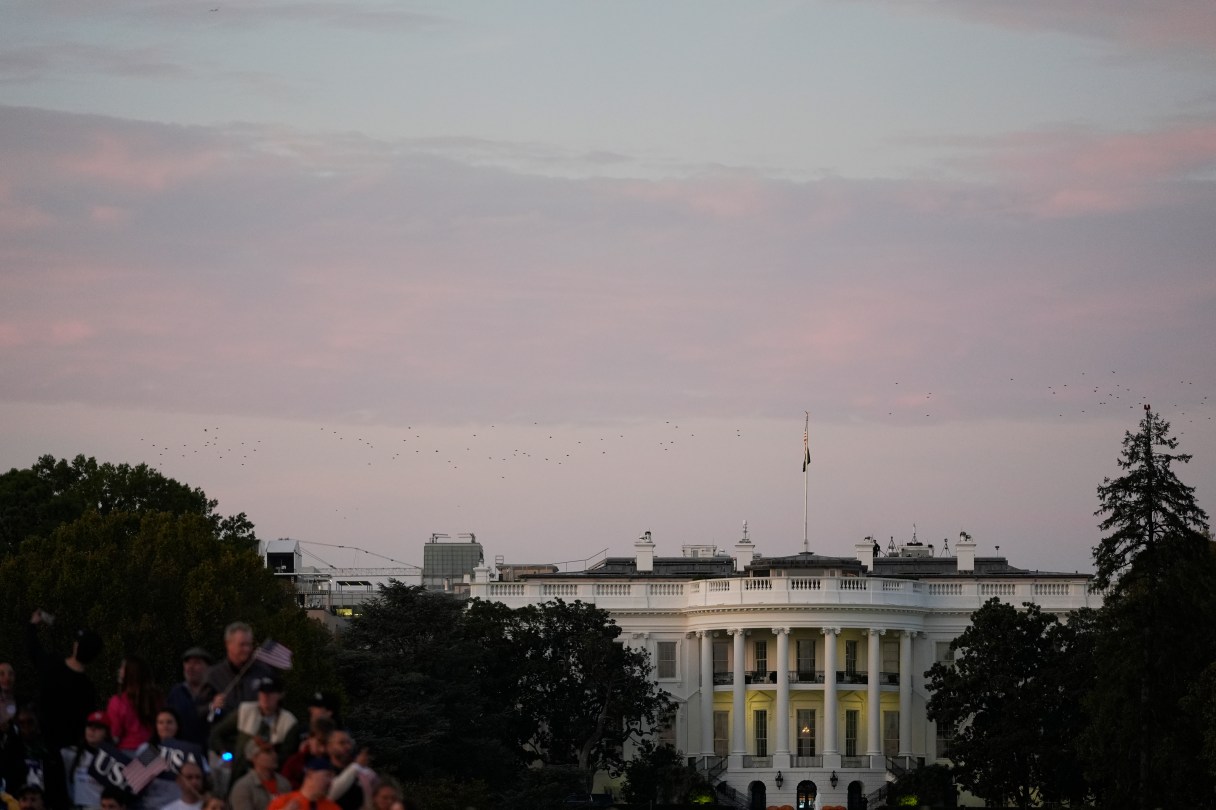
WASHINGTON (AP) — There will be 77 days between Election Day and inauguration, a period in which the president-elect may ready his or her administration to take over power from President Joe Biden.
Long built on tradition and bipartisanship, the presidential transition exploded into a point of political contention four years ago, after then-President Donald Trump made baseless claims to dispute his loss and his administration delayed kicking off the transition process for weeks.
This year, a new law is meant to start the transition sooner, no matter who wins. But, if neither major party candidate concedes after Election Day, the updated rules allow both sides to get additional government funding and logistical support to begin working toward transitioning to power. That could lead to both Vice President Kamala Harris and Trump potentially assembling dueling, governments-in-waiting for weeks.
“Rules can only take you so far, and ultimately you need to have the players in the system working to shared objective,” said Max Stier, president and CEO of the nonprofit Partnership for Public Service, which has worked with candidates and incumbents on transitions. “Everyone should have the shared objective of making sure that the handoff of power is smooth and effective. And that requires a cooperation that law can’t alone enforce.”
Here’s a look at how changes meant to fix the problems of four years ago may not solve coming issues this time, and where the coming transition stands in the meantime: