
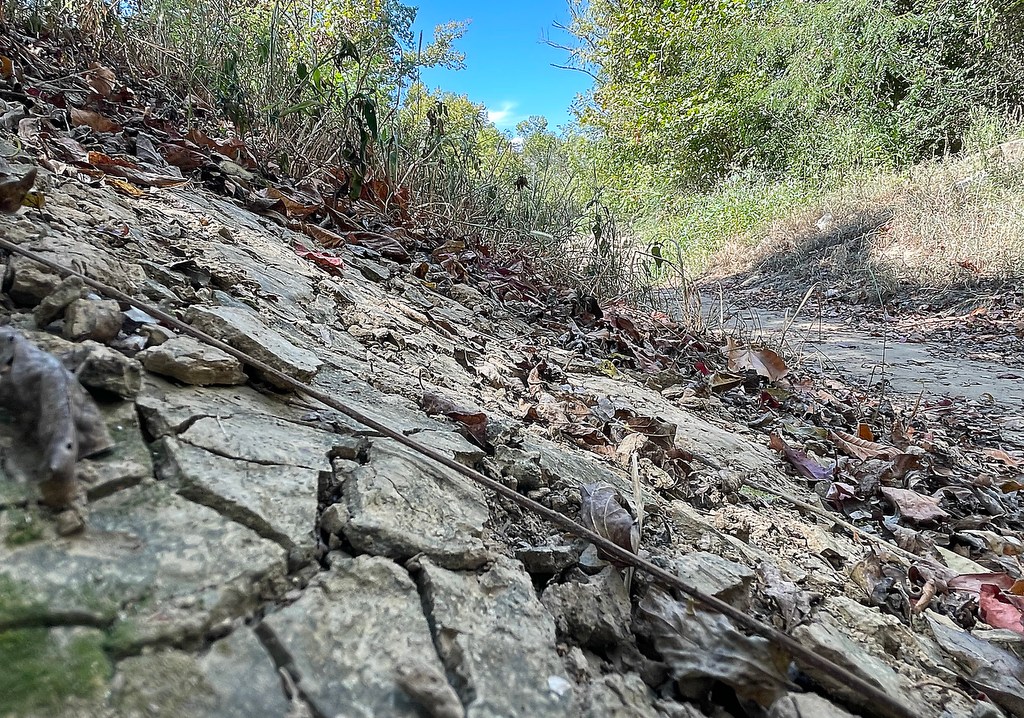

Most of Hamilton, Bledsoe, Marion and Sequatchie counties are officially in an extreme drought, according to the U.S. Drought Monitor.
The monitor, issued Thursday, showed conditions in the Chattanooga region worsened over the past week from a severe drought, and even though the area got some scattered precipitation, meteorologists said it just wasn’t enough.
Two significant areas of extreme drought are now found in Southeast and Middle Tennessee, according to the monitor, and a tiny patch of extreme drought is found in Giles County on the Tennessee-Alabama line.
The monitor ranks “exceptional” as the most intense level of drought, followed by “extreme” and then “severe.” “Moderate” is the fourth level of drought, according to the monitor.
Last month was the second-driest August since 1885, and the rainfall total for September so far stood at 0.13 inches entering the weekend, drawing even with the driest September on record set in 2023, according to the National Weather Service. Annual rainfall totals through August for the Chattanooga region since 1885 show 2024 so far is the driest since 2016, when the total for the year at that point was 23.3 inches.
(READ MORE: Drought lingers in Chattanooga area despite recent showers)
The Tennessee Climate Office at East Tennessee State University in Johnson City provides state climate information to the federal monitor on the state, and the change in conditions over the past two weeks was dramatic, state officials said.
“This week brought very stark differences to conditions between the eastern and western portions of Tennessee,” climate officials said in the state report Thursday “Hurricane Francine brought a significant amount of rainfall — 2 to 5 inches — to most of West Tennessee. In some areas, this brought rainfall deficits up to well above normal for the last 30 days. However, areas that received the lower end of the rainfall are still seeing moderate to severe deficits.”
Elijah Worley, the drought officer at the climate office, said effects from the ongoing dryness are compounding.
“We’ve had lots of indicators showing really, really dry conditions,” Worley said, “I’m looking at 30% of normal rainfall in Chattanooga. Y’all missed out a whole lot on all the rainfall that Hurricane Francine brought up.“
Soil moisture is down by 2%, and streamflows are well below normal in the Chattanooga region, he said.
“There’s very little to no moisture in the top 2 to 5 inches of the soil,” Worley said. “Unfortunately, the forecast I’ve been looking at only predicts a tenth of an inch to maybe a quarter of an inch over the next seven days. That’s really unfortunate because we’ve got a lot of farmers and producers and citizens looking at their yards and gardens, and they’re seeing really bleak conditions.”
The Lawn-and-Garden Moisture Index produced by the Alabama Climate Office in Huntsville, Worley said, shows deep dryness across the region.
“They’re saying pretty much the entire city of Chattanooga is severely dry, losing trees, shrubs and other plants, and people can’t afford to water the amount they need to,” Worley said. “In Northeast Tennessee, we’re seeing fall colors, and it’s not even time for the leaves to turn. So by October, it could be all brown.”
Record dryness
— Driest September since 1885: 0.04 inches in 1919
— September 2024 (entering weekend): 0.13 inches
— Driest month since 1885: 0.01 inches in August 2011
— Driest year since 1885: 32.68 inches in 1904
— August 2024: 0.16 inches of rain, second driest since 1885
— 2024 through August: 28.93 inches
Source: National Weather Service
According to U.S. Forest Service information on fall leaf colors, the amount and brilliance are related to weather conditions before and during the time the chlorophyll in the leaves is dwindling. Chlorophyll gives leaves their green, summer color, but the fall weather and shorter days cause chlorophyll to dwindle, leaving behind the true color of the leaves. A summer drought can delay the onset of the color change by weeks. A warm wet spring, favorable summer weather and warm sunny fall days with cool nights should produce the most brilliant autumn colors.
Condition Monitoring Observer Reports at the National Drought Mitigation Center at the University of Nebraska show fair to very poor crop conditions across Southeast Tennessee as expected yields are down and losses reported for some crops while pastures are providing little feed for livestock and herd owners are being forced to buy hay. Farm pond levels and other water sources are also low.
Chattanooga region farmers have been hit hard two years in a row, said Haley Treadway, the extension agent for the University of Tennessee Agricultural Extension Service in Hamilton County.
“They are really, really frustrated,” Treadway said in a phone interview. “It’s a real challenge dealing with this drought. We had something similar happen last year where it was a challenge near the end of the summer, too.”
The drought has a partner in crime this year, too.
“We’ve got fall armyworms just everywhere,” she said. “For those struggling with the drought, and then to have this pest come in and add a second layer of frustration, has really been making their lives super difficult.”
Drought conditions have little effect on the armyworms because they get their water from the plants they eat, Treadway said. The fact that armyworms in the area appear to be finicky about what they eat indicates they’re getting plenty of water.
“They have specific preferences for different species of grasses,” she said. “For instance, they prefer the Bermuda over the zoysia, and so they don’t seem like they’re very desperate because they’re still able to be picky with what they want. They’re not struggling.”
Armyworms can cause costly damage to crops over a couple of days, she said, but they can be a maddening problem for homeowners, too.
There are worse drought conditions east of the Mississippi River in Ohio and West Virginia, according to the monitor. In Ohio, almost 10% of the state is in an exceptional drought and another 30% is in an extreme drought. Similarly in West Virginia, more than 15% of the state is in an exceptional drought and 66% of the state is in an extreme drought.
Contact Ben Benton at bbenton@timesfreepress.com or 423-757-6569.