
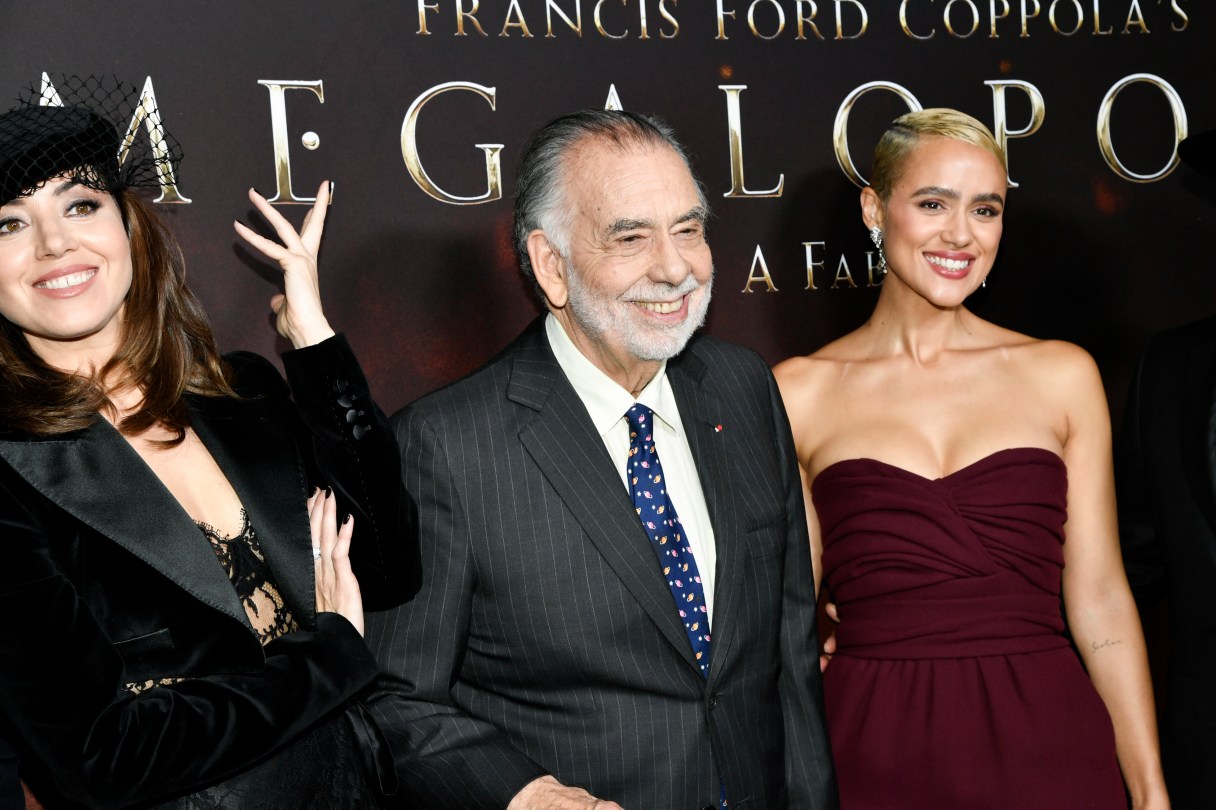
NEW YORK (AP) — Francis Ford Coppola’s decades-in-the-making, self-financed epic “Megalopolis” flopped with moviegoers, while the acclaimed DreamWorks Animation family film “The Wild Robot” soared to No. 1 at the weekend box office.
“The Wild Robot,” Chris Sanders’ adaptation of Peter Brown’s bestseller, outperformed expectations to launch with $35 million in ticket sales in U.S. and Canada theaters, according to studio estimates Sunday. “Wild Robot” was poised to do well after critics raved about the story of a shipwrecked robot who raises an orphan gosling. Audiences agreed, giving the film an A CinemaScore. “Wild Robot” is likely set up a long and lucrative run for the Universal Pictures release.
Paul Dergarabedian, senior media analyst for Comscore, predicts “The Wild Robot” “may take a page from the ‘Elemental’ playbook by opening to respectable box office and then looking toward long-term playability.” Pixar’s “Elemental,” which like “The Wild Robot” wasn’t a sequel, debuted with a modest $30 million but went on to gross nearly $500 million worldwide.
Family movies, led by the year’s biggest hit in “Inside Out 2,” have particularly powered the box office this year. David A. Gross, a film consultant who publishes a newsletter for Franchise Entertainment, said the genre should reach $6 billion worldwide in 2024 — which, he noted, “is back to pre-pandemic levels.”