
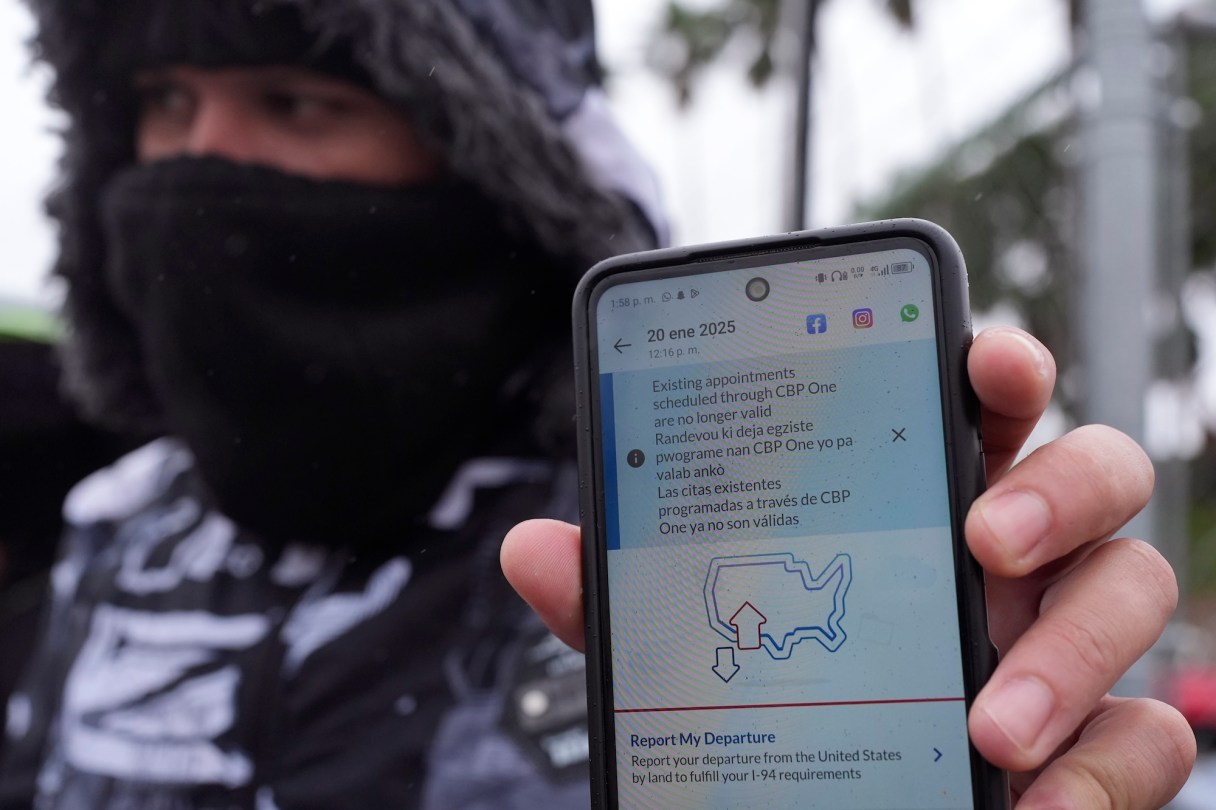
McALLEN, Texas (AP) — Hubert Montoya burst out laughing when the U.S. Department of Homeland Security emailed to say he should leave the country immediately or risk consequences of being deported. He is a U.S. citizen.
“I just thought it was absurd,” the Austin, Texas, immigration attorney said.
It was an apparent glitch in the Trump administration’s dismantling of another Biden-era policy that allowed people to live and work in the country temporarily. U.S. Customs and Border Protection is quietly revoking two-year permits of people who used an online appointment app at U.S. border crossings with Mexico called CBP One, which brought in more than 900,000 people starting in January 2023.
The revocation of CBP One permits has lacked the fanfare and formality of canceling Temporary Protected Status for hundreds of thousands whose homelands were previously deemed unsafe for return and humanitarian parole for others from Cuba, Haiti, Nicaragua and Venezuela who came with financial sponsors. Those moves came with official notices in the Federal Register and press releases. Judges halted them from taking effect after advocacy groups sued.
CBP One cancellation notices began landing in inboxes in late March without warning, some telling recipients to leave immediately and others giving them seven days. Targets included U.S. citizens.