
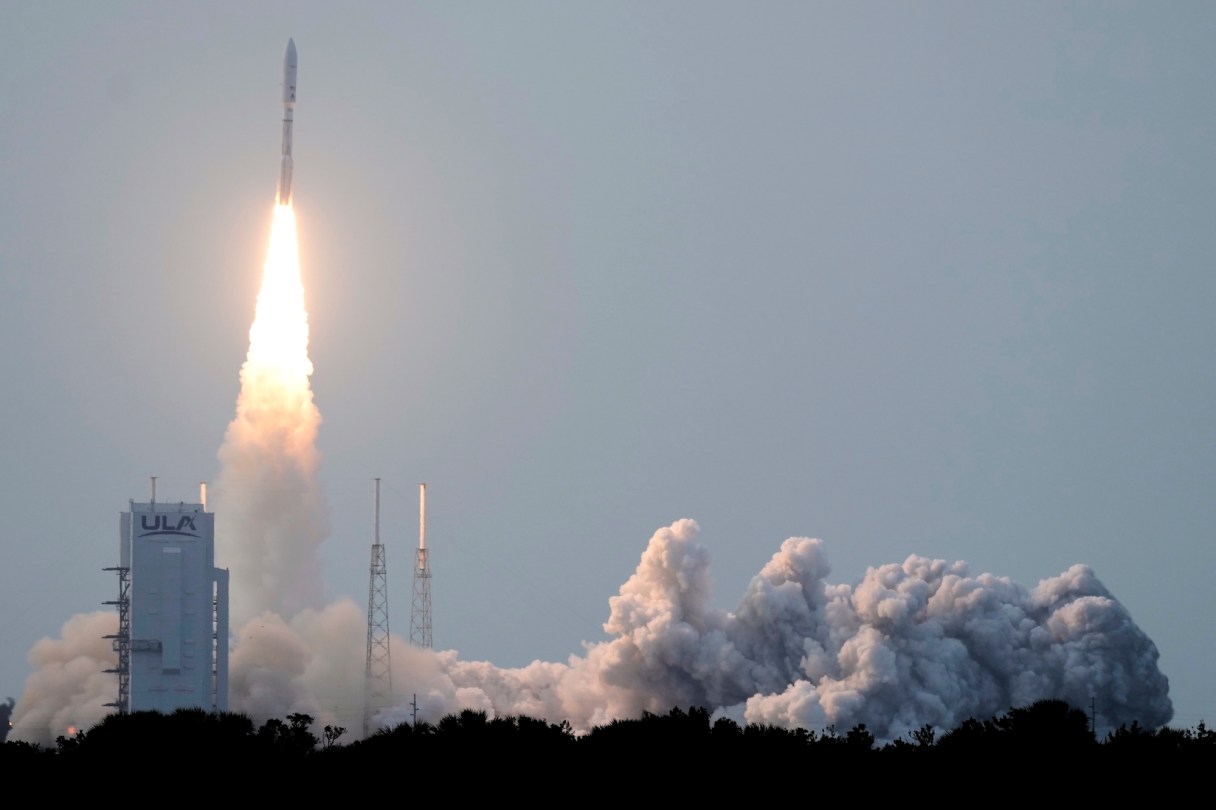
CAPE CANAVERAL, Fla. (AP) — Amazon’s first batch of internet satellites rocketed into orbit Monday, the latest entry in the mega constellation market currently dominated by SpaceX’s thousands of Starlinks.
The United Launch Alliance’s Atlas V rocket carried up 27 of Amazon’s Project Kuiper satellites, named after the frigid fringes of our solar system beyond Neptune. Once released in orbit, the satellites will eventually reach an altitude of nearly 400 miles (630 kilometers).
Two test satellites were launched in 2023, also by an Atlas V. Project officials said major upgrades were made to the newest version. The latest satellites also are coated with a mirror film designed to scatter reflected sunlight in an attempt to accommodate astronomers.
Stargazers oppose the fast-growing constellations of low-orbiting satellites, arguing they spoil observations. Others fear more satellite collisions.
Founded by Jeff Bezos, who now runs his own rocket company, Blue Origin, Amazon aims to put more than 3,200 of these satellites into orbit to provide fast, affordable broadband service around the globe.