
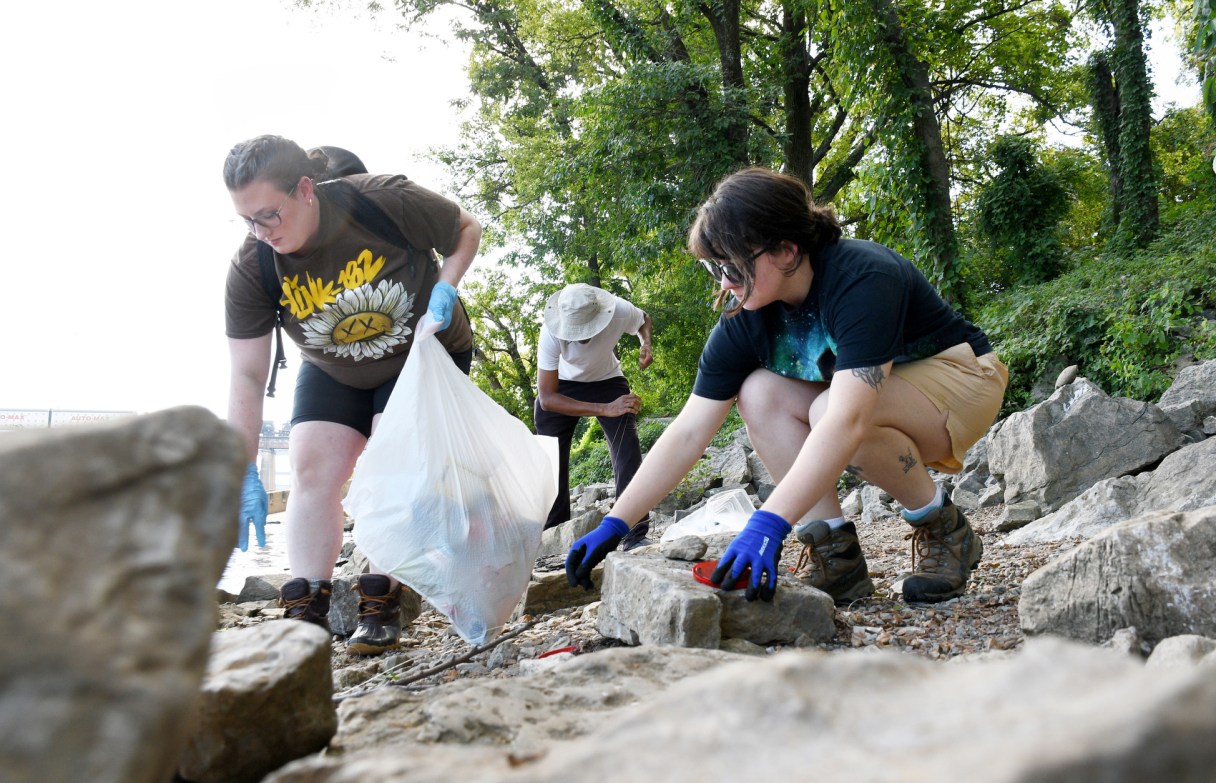
For Hersh Patel and his group of committed volunteers, picking up trash at the Tennessee Riverpark is a seemingly endless task.
Patel, a math professor at Chattanooga State Community College, and some of his students have gone out to pick up litter at the riverpark since fall of 2022. Patel noticed trash along the way as he walked the path and would pick up what he could. Then, the idea struck him that he could offer his students extra credit to help pick up the trash.
‘TRASHY AGAIN’
The goal at first was to pick up litter along the riverbank, starting at the part of the park behind Chattanooga State near the Chickamauga Dam and working down the path to the part across the water from Coolidge Park, Patel said in an email. However, the volume of trash has been so much that the small group of volunteers can only manage to keep two spots — one near the dam and another down the way where the river meets South Chickamauga Creek — clean for about a week each.
“If we clean up here this week, next week we’re down there. The week after, this is trashy again,” Patel said in an interview at the location near the dam. “The week after, that one’s trashy again. So, it’s just bouncing back and forth. Basically, we’re cleaning up for the fishermen to trash the place again.”
Officials: Chattanooga litter problem is everyone’s responsibility
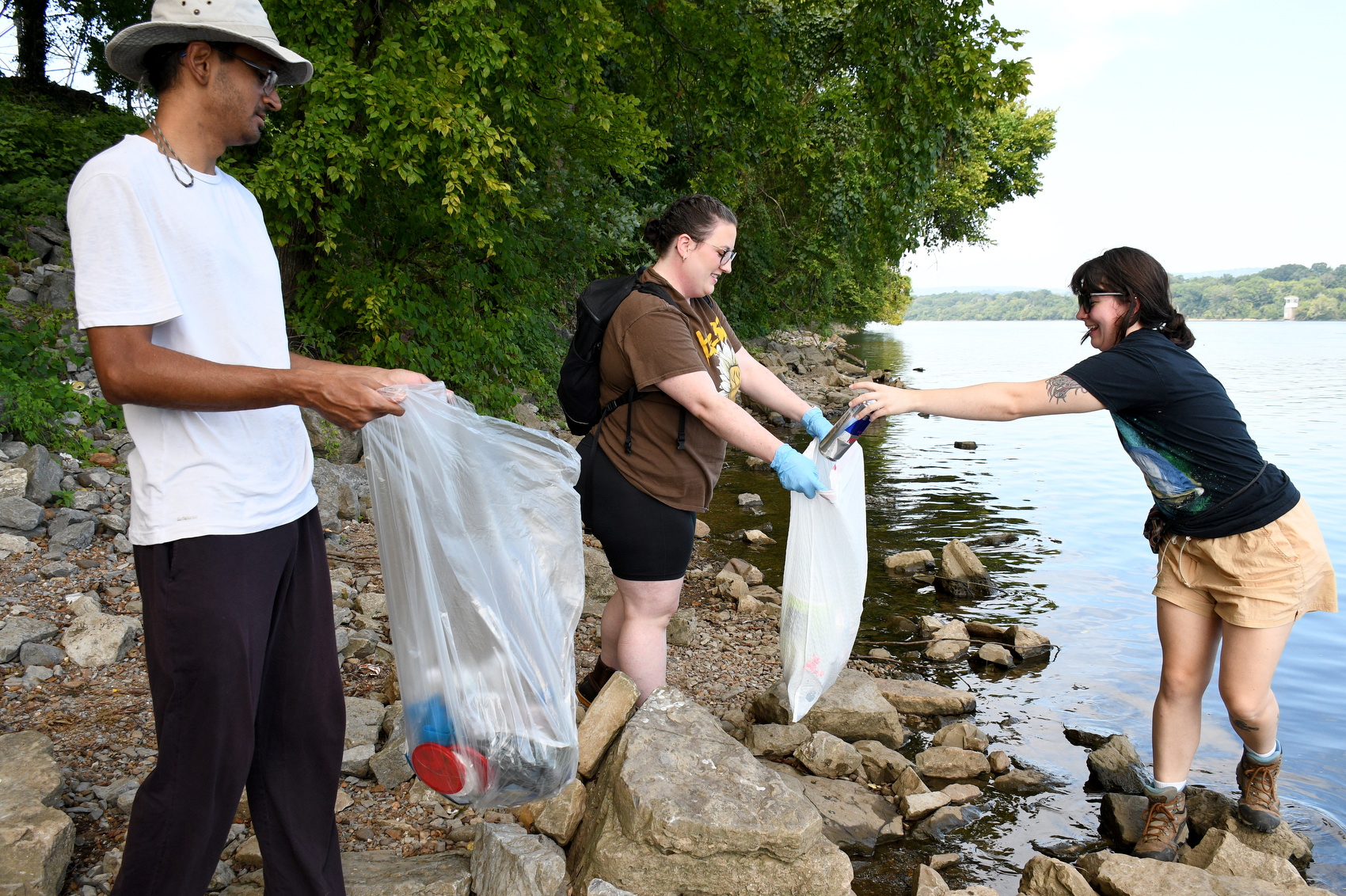
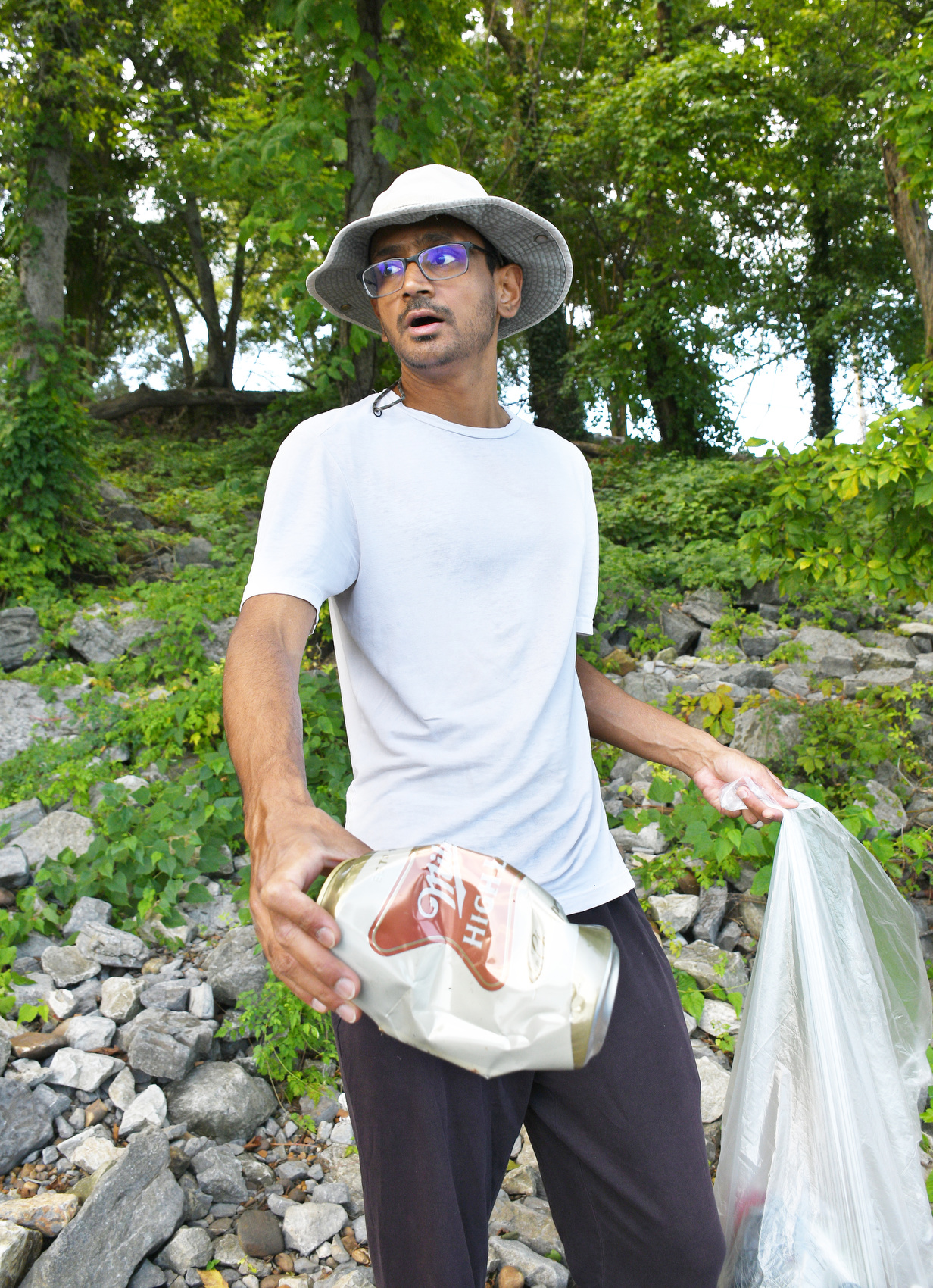
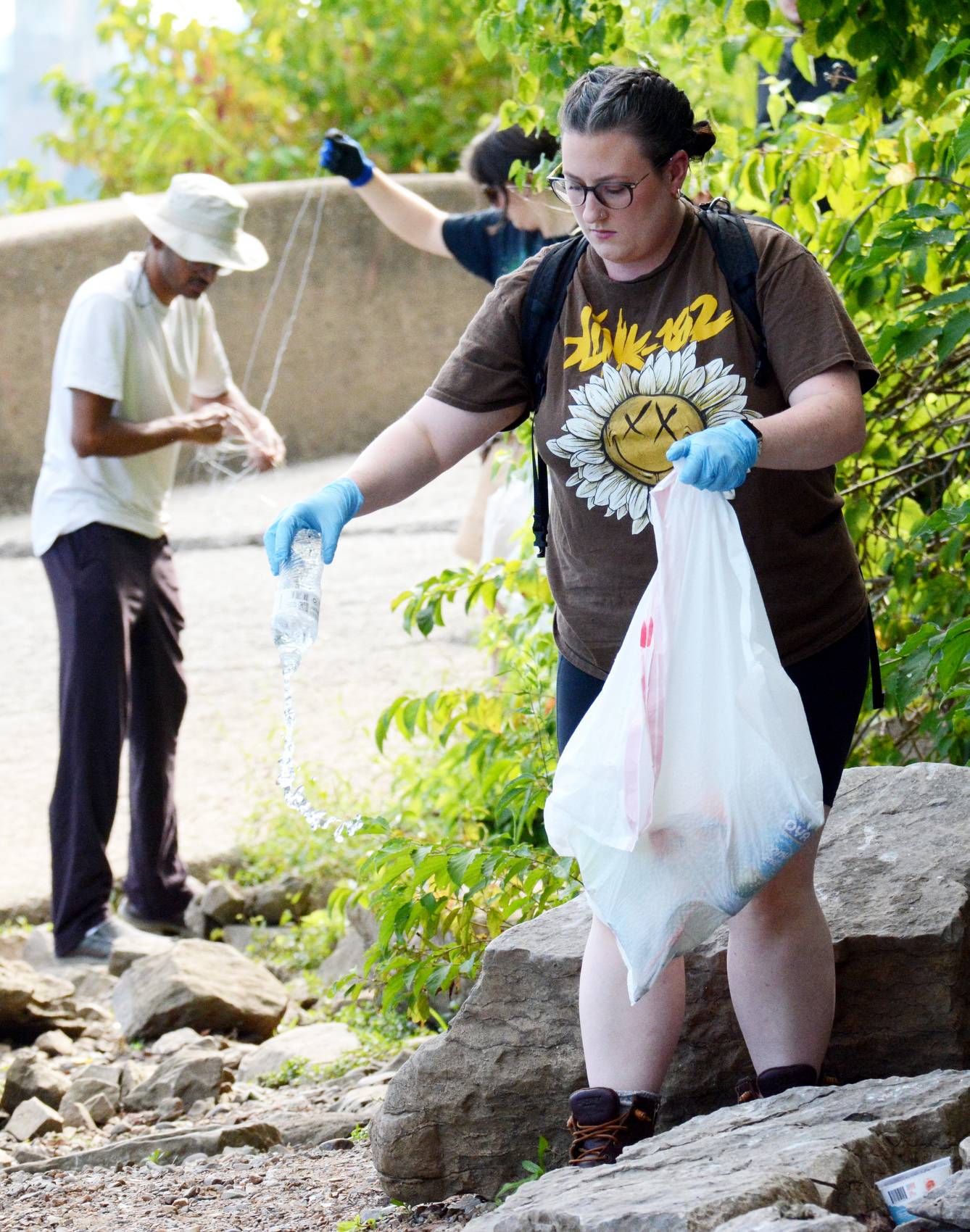
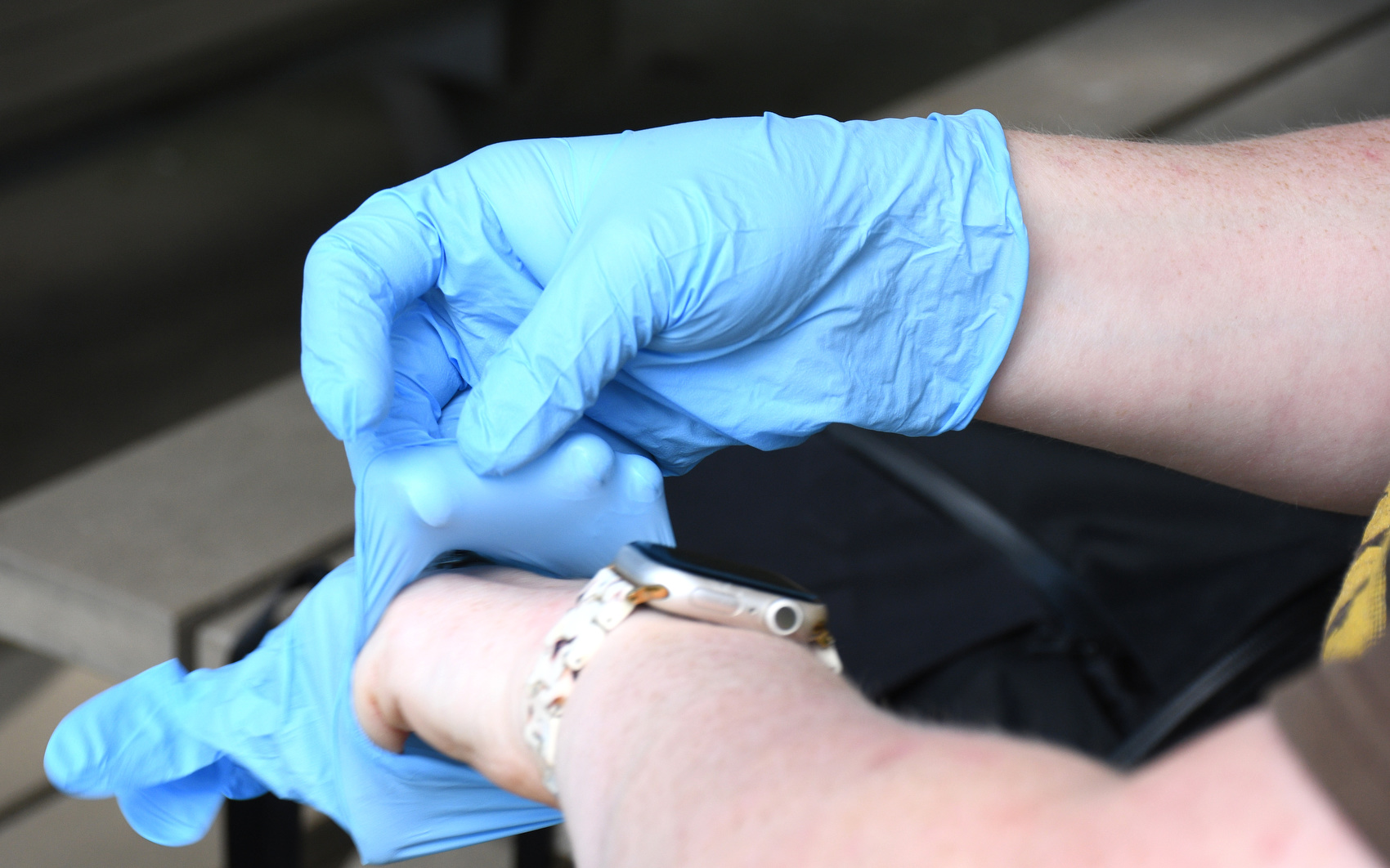
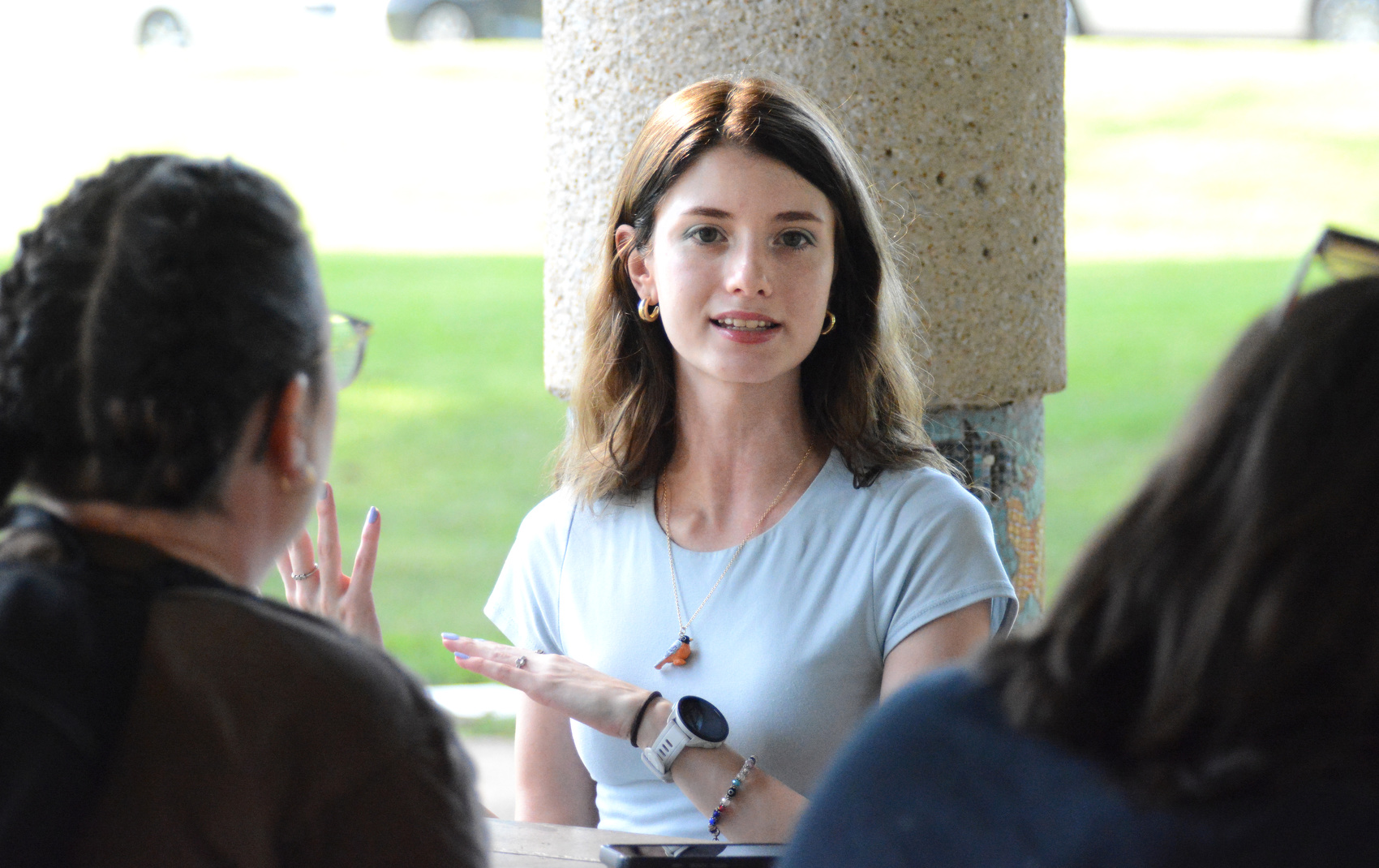
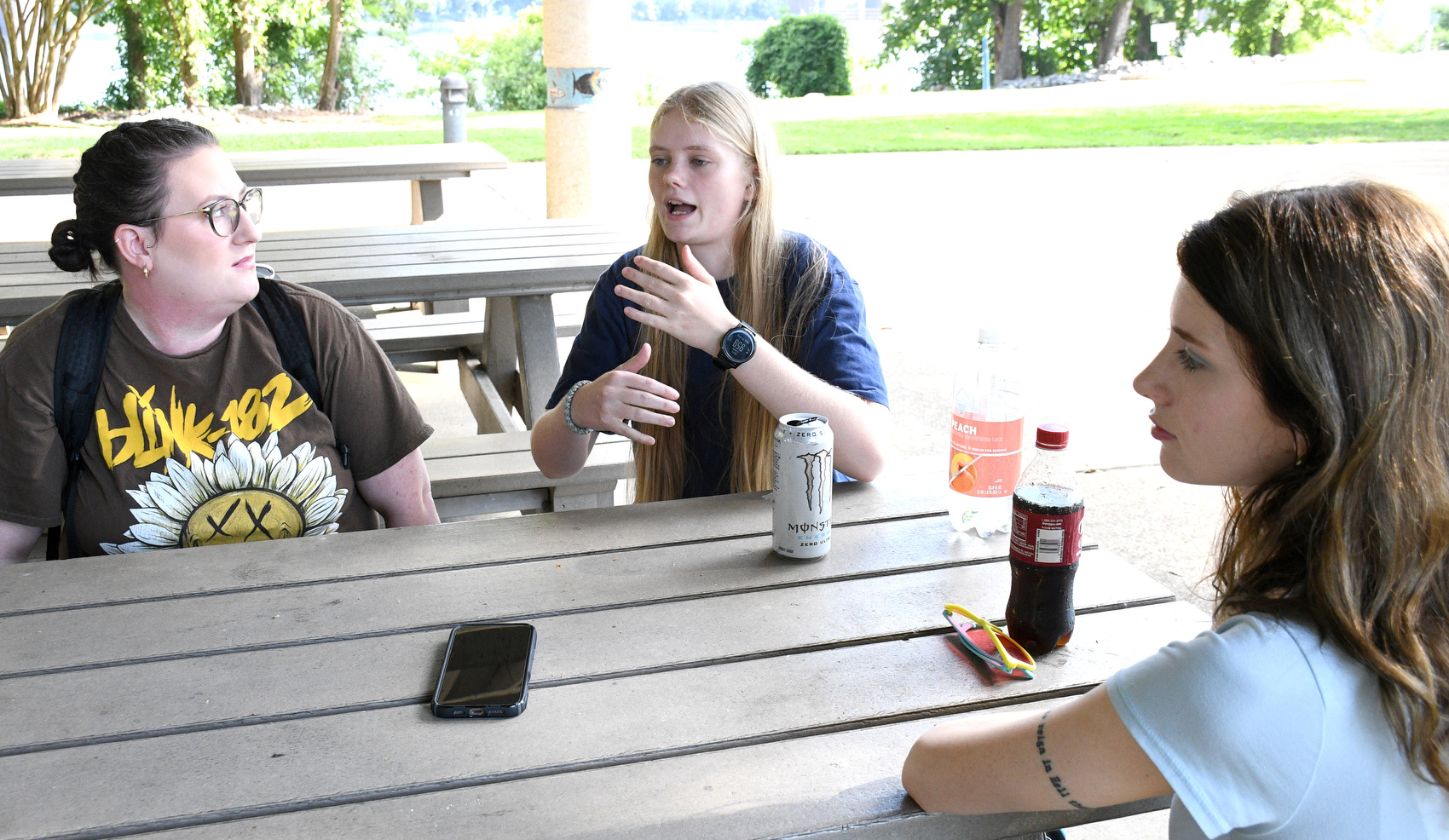
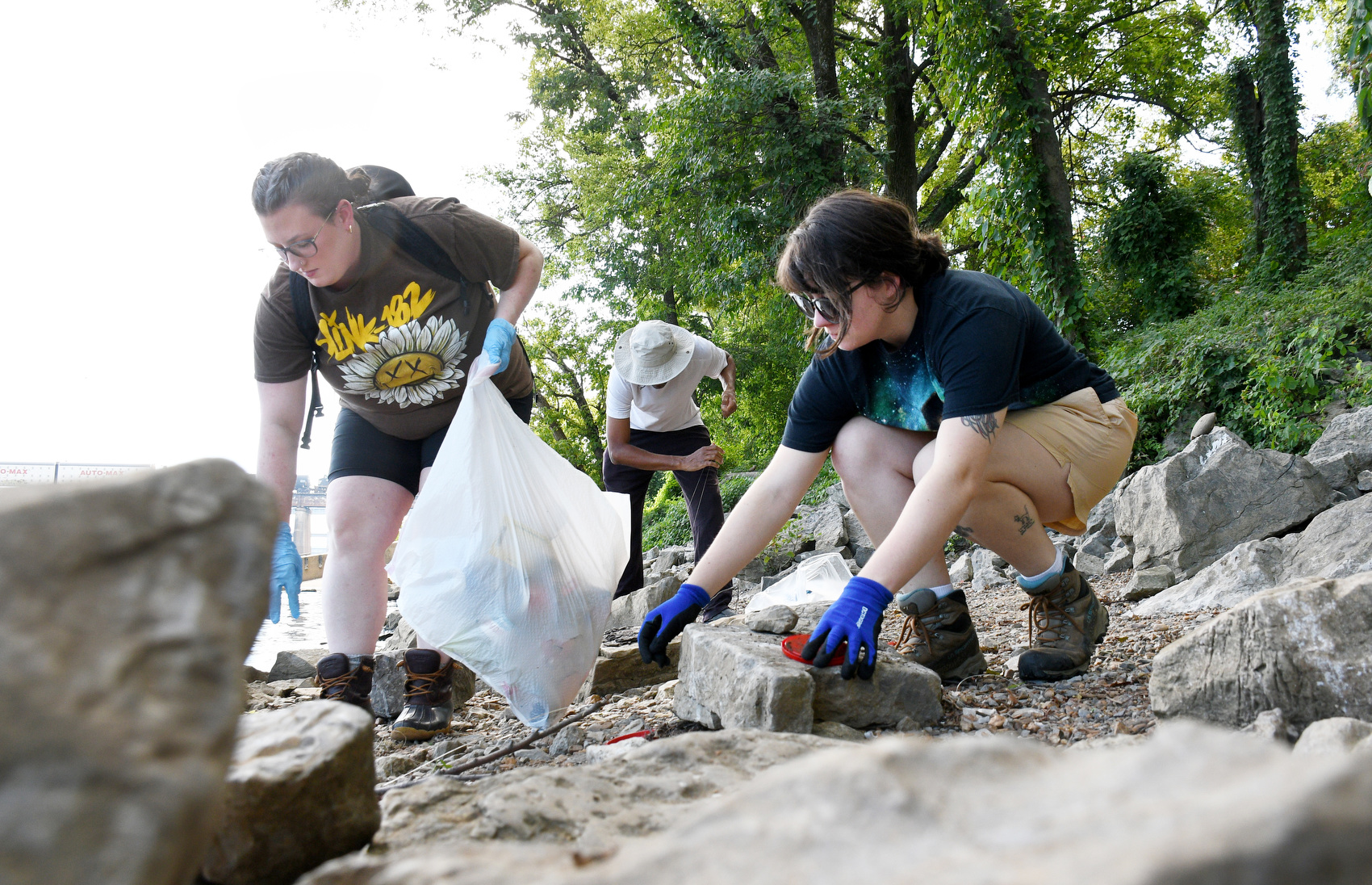
During a cleanup earlier this month, behind the Chattanooga State campus and well under a mile down river from the dam, Patel and two volunteers managed to fill two trash bags not long after they started. On average, it is common for the volunteers to collect about 30 pounds of trash during one cleanup, Patel said. Among the pieces of litter were bait containers, glass bottles, fishing line and plastic bags, and despite park rules prohibiting alcoholic beverages, the volunteers picked up several beer cans.
While picking up litter seems to be a Sisyphean task, the work nevertheless continues. The goal is “just to have cleaner public places,” Patel said.
“I’ll keep volunteering for as long as I’m here,” he said, “because it’s either do or don’t, and I’d rather be out here, do at least something than just nothing at all.”
‘PICK IT UP’
Everyone on the planet lives in a watershed, said Brooke Fleeman, director of operations for watershed advocacy nonprofit WaterWays. In a watershed, when it rains, pollutants like litter are picked up and carried to the lowest level of the landscape. Small waterways are connected to bigger waterways, so litter in Hixson, for example, eventually makes its way to the Tennessee River, Fleeman said by phone.
Plastic is a major pollutant, and it breaks down and degrades, resulting in microplastics in waterways, Fleeman said. The effect of microplastics is still being researched, but once those materials make their way into the water, they are difficult, if not impossible, to remove, she said.
“If you see trash, pick it up, even if it’s not yours,” Fleeman said, “because it becomes your problem in your waterway.”
WaterWays has helped establish four litter booms in the Chattanooga area — one at Chattanooga Creek, one at Citico Creek and two on Baylor School’s campus, Fleeman said. Those booms have passively collected nearly 6,000 pounds of trash since 2023, she said.
Through WaterWays, people can participate in the Adopt-A-Waterway program, through which they adopt a section of stream to steward. There is also the annual Tennessee River Rescue, an event that features various cleanup projects around the Tennessee River watershed. The 2024 event had about 50 projects completed, resulting in the removal of almost 40,000 pounds of trash, Fleeman said.
This year’s Tennessee River Rescue is set for Oct. 4.
(READ MORE: Northwest Georgia utilities, well owners mull how to filter PFAS from water)
PARK STEWARDS
Several government entities have jurisdiction over certain parts of the 13-mile riverpark. From Chickamauga Dam to Veterans Bridge is under the purview of Hamilton County, while the city of Chattanooga oversees the riverpark from Veterans Bridge through St. Elmo, Chattanooga Parks and Outdoors spokesperson Brian Smith said by phone. The Tennessee Valley Authority and Army Corps of Engineers have jurisdiction along the banks of the Tennessee River, he said.
There is a dedicated custodial crew to manage the city’s river parks because of the number of people who use those parks compared to others around the city, Smith said. One of that crew’s main responsibilities is to empty trash cans at the parks. While the crew does provide litter pickup, everyone is responsible for helping keep parks clean, Smith said.
“We combat litter every day, and while it is our duty to try to keep the parks as clean as possible, what makes our jobs easier and more efficient in park cleanups is to just empty the trash receptacles and make our way to the next one,” Smith said. “What will slow us down is having to go back in and clean after others that may leave their litter or leave trash. And that slows down the entire process.
“So, there are times where maybe we don’t get to the next trash can ’til a couple days, because we’re picking up litter in another park or another location,” he said. “So, the best thing that we can possibly advertise is that we just don’t litter in general, because not only may you litter or there’s litter in the park, but it could blow away. And, that impacts wildlife, or it blows into the river and impacts, obviously, our waterways.”
The city has a park stewardship program for anyone interested in lending a hand. Park stewards, among other things, help with litter control, Smith said. As part of the program, there can be volunteer days that cover litter pickup, or volunteers can pitch in daily at local parks to clean up litter.
If a park or location does not have enough trash cans, people can contact 311 to see about having the issued addressed, Smith said. More information about volunteering with Chattanooga Parks and Outdoors is available at bit.ly/ChattParkStewards.
Hamilton County officials did not respond to requests for comment.
(READ MORE: Consumer advocate Erin Brockovich talks PFAS, building trust)
MANY HANDS
In addition to its own facilities crew that helps pick up trash, TVA works with various community groups in the Tennessee Valley to help keep the region clean, said Suzanne Fisher, TVA’s senior program manager for environmental compliance. There is a “many hands make light work” aspect to the partnerships, she said by video call.
In 2025, TVA has provided about $200,000 to river and community cleanup efforts in the region, Fisher said. The combined power of the groups receiving TVA support includes 3,000 volunteers, who TVA estimates will pick up 380,000 pounds of trash out of the river this year, Fisher said. More information about TVA’s environmental work is available at tva.com/environment.
Keep the Tennessee River Beautiful, an affiliate of national nonprofit Keep America Beautiful, will celebrate October as Keep the Tennessee River Watershed Beautiful Month, with multiple cleanup projects planned. One of the projects is scheduled for Oct. 18 at Nickajack Lake in Jasper, less than an hour west of Chattanooga.
“I don’t think it takes a lot of effort to take those few extra steps to throw it in the trash can,” Fisher said of litter. “We all love to recreate. We all love to swim in the river. We like to fish in the river. We catch fish, and we eat them from the river. So, it’s important for people to play their part and to try not to litter.”
The Tennessee River is a source of drinking water for millions of people, and it is important for commerce, TVA spokesperson Scott Fiedler said in the video call. It is a resource that needs to be conserved and cherished.
“This river system is worth about $12 billion to our region’s economy,” Fiedler said. “It creates about 130,000 jobs. Why would you want to trash that?”
Contact community reporter Sam Still at sstill@timesfreepress.com or 423-757-6579.