
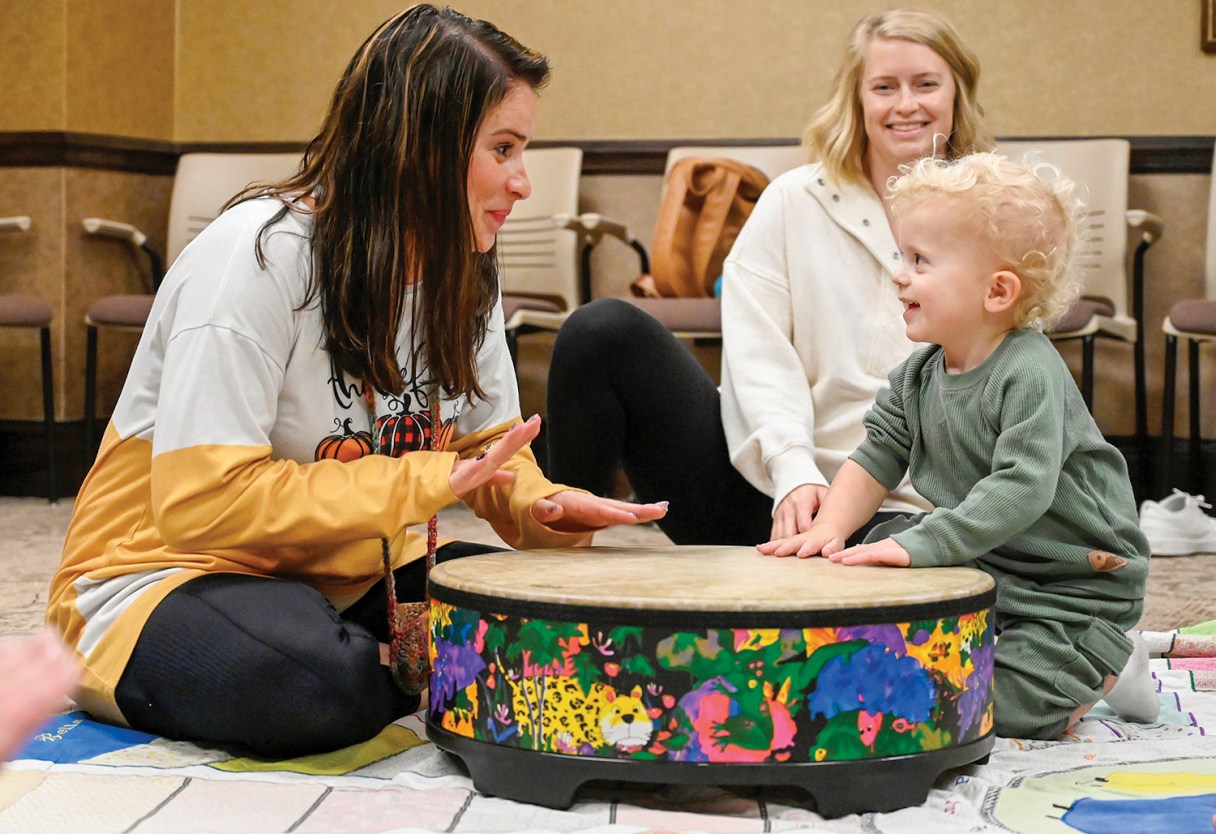
Babies come into the world with everything they need to make music: a voice, a body, a brain, says Brooke Safford, founder of Music Together Chattanooga.
Since 2015, the local program has hosted weekly music classes for infants, toddlers and preschoolers. “The goal is to achieve basic music competency,” Safford says.
But the benefits of early music training reach far beyond the ability to sing in tune or move with rhythm.
“Music helps build a whole child,” says Dee Lancaster, owner of Kindermusik with Dee, which hosts weekly classes for ages 0-7 in Cleveland, Tennessee. “You don’t have to wait until your child shows an interest. Learning music doesn’t have to be the goal.”
In addition to song, Kindermusik with Dee incorporates elements such as relaxation, instrument play and movement. Each 45-minute infant class begins with a welcome song, followed by massage and gentle stretching. Then, baby-friendly instruments and props such as egg shakers and scarves are introduced, and classes end with a dance followed by a goodbye song.