
Thursday, October 29, 2026Oct 29

This story is free to read.

Carter’s quest for Mideast peace didn’t end with Camp David

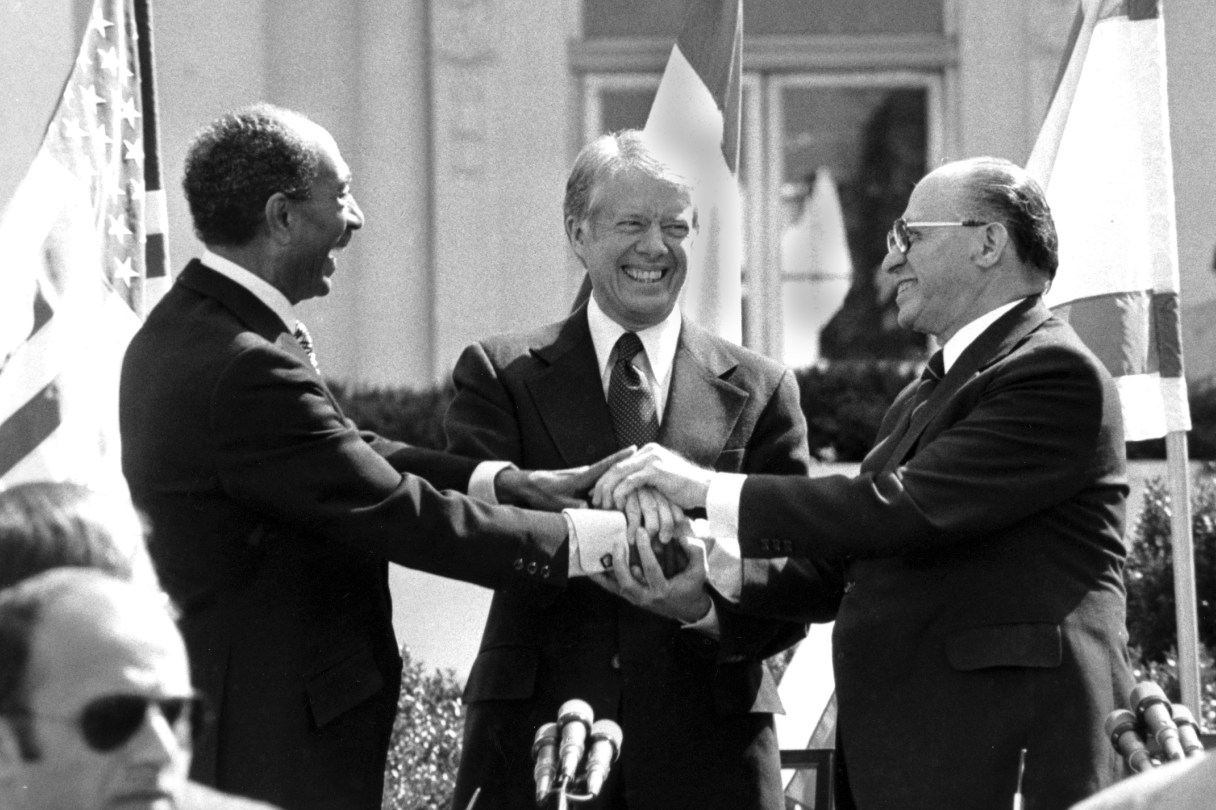
FILE - Egyptian President Anwar Sadat, left, U.S. President Jimmy Carter, center, and Israeli Prime Minister Menachem Begin clasp hands on the north lawn of the White House after signing the peace treaty between Egypt and Israel on March 26, 1979, in Washington. (AP Photo/ Bob Daugherty, File)
FILE - Egyptian President Anwar Sadat, left, U.S. President Jimmy Carter, center, and Israeli Prime Minister Menachem Begin clasp hands on the north lawn of the White House after signing the peace treaty between Egypt and Israel on March 26, 1979, in Washington. (AP Photo/ Bob Daugherty, File) FILE - Egyptian President Anwar Sadat, left, U.S. President Jimmy Carter, center, and Israeli Prime Minister Menachem Begin clasp hands on the north lawn of the White House after signing the peace treaty between Egypt and Israel on March 26, 1979, in Washington. (AP Photo/ Bob Daugherty, File)

JERUSALEM (AP) — As president, Jimmy Carter brokered the watershed peace agreement that removed Israel’s most powerful enemy from the battlefield. But he incurred the Israeli government’s wrath decades later when he said its military rule over the Palestinians amounted to apartheid.

The Camp David peace accords, signed by Israel and Egypt in 1978, remain the biggest achievement from decades of mostly failed U.S. peacemaking in the Middle East.

But for Carter, who died on Sunday at the age of 100, they were clouded by what he saw as the continued oppression of the Palestinians and Israel’s expansion of settlements on lands they want for a future state.

Carter did not speak publicly after entering hospice care, months before the outbreak of the latest war in Gaza. But he devoted much of his life during and after his presidency trying to broker a just solution to the wider conflict.

A historic peace between Israel and Egypt