
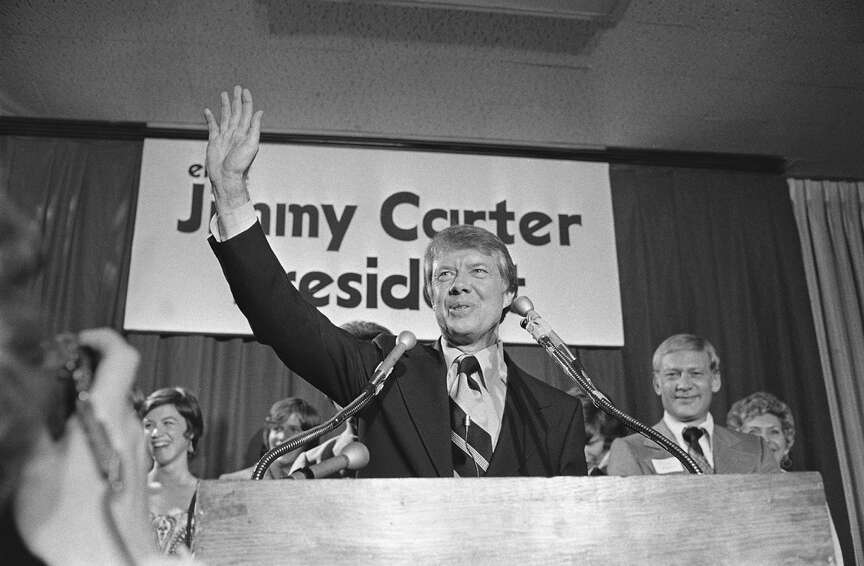
When he entered office in 1977, Jimmy Carter inherited an economy already struggling with the twin demons of rising inflation and sluggish growth. Oil shocks in 1973 and 1978 from the newly formed OPEC cartel sent the price of crude surging tenfold by the end of his administration.
Easy money policies from the Federal Reserve under Nixon and Ford, intended to help finance deficit spending from the Vietnam War, accelerated the rise in prices. When Carter departed in 1981, inflation had reached 13.5%.
Carter was the lone Democrat amid four Republican presidents between 1969 and 1993. Yet early on he recognized that inflation was being stoked by anticompetitive government regulation, adopting a central tenet of conservative orthodoxy. His success at liberating competitive forces from the stifling bureaucracy deserves greater recognition.
Federal oversight of major industries, a remnant of the Great Depression and World War II industrial policy, had transmogrified into a lead blanket dampening America’s economic vitality.
Despite his generally liberal political philosophy, the new president embraced deregulation as the key to rekindling the animal spirits of free market capitalism. And it worked. While Carter lost to Reagan in 1980, it is no exaggeration to say that Carter kickstarted the Reagan revolution that licked inflation and launched a generation of economic prosperity.