
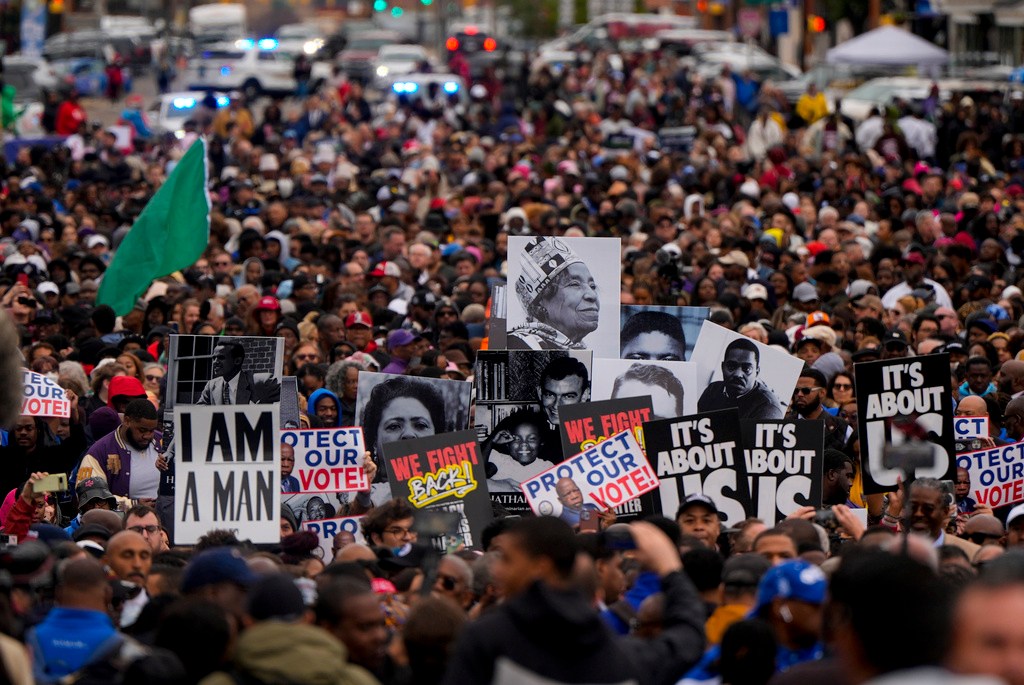
SELMA, Ala. — Voting rights advocates on a panel Saturday highlighted the difficulties those who have completed prison sentences have in trying to regain the right to vote.
Those released from prison can face several obstacles to voting after release. Depending on the severity of the crime for which they were convicted, the formerly incarcerated may have to get a pardon from the Alabama Board of Pardons and Parole and certify that they have received it.
“We know that folks who are behind the wall (and) who reenter society, voting is central to who they are, because they have been liberated from the inside out for doing the time behind the wall,” said Chelsey Cartwright, program manager for the Democracy Truth Project with the national chapter of the League of Women Voters. “Understanding restorative justice is not just a buzzword, but is actual people doing work, educating voters and being in community.”
The panel was one in a series of democracy-focused seminars commemorating the 60th anniversary of Bloody Sunday, when law enforcement beat civil rights protestors on Selma’s Edmund Pettus Bridge as they began a planned march to Montgomery.
Saturday’s festivities also included seminars hosted by the Transformative Justice Coalition concerning the youth vote and a second that focused on the current challenges to civil rights.