
There is just something about it. It is very hard to explain, and I will try, but if you are not a gun guy or girl — and especially if you are not partial to shotguns — you will not understand.
What I am going on about here is the allure, the mystique of a double-barreled shotgun. OK, to do this right, I really should call what I’m referring to a “side-by-side” shotgun — that is, the barrels are situated on the shotgun in a side-by-side fashion (horizontally). One could say that an over-and-under shotgun, which is one barrel on top of the other (vertically), is a double-barreled shotgun as well, but in truth, the whole world knows that a “double-barrel” is a side-by-side.
OK, got all that? Then let’s continue.
So what makes double-barrels (sorry, side-by-sides) so special? Again, that’s hard to explain, but I’ll give it a try.
To start with, the “chunk-chunk” sound of dropping a pair of shotgun shells into the chambers of a fine side-by-side is somehow very satisfying. Closing the action of the gun and hearing the reassuring sound of the gun locking into place tells you all is ready; you just have to do your part.
There is no doubt that some of us put ourselves in the ranks of the hunters we see in old pictures carrying a timeworn double-barrel. We like to think that carrying this shotgun, as they did, will somehow transport us to a golden age of hunting when there were grouse in most every thicket, the sky was often black with ducks, and things were a whole lot simpler.
I know, I don’t really understand it either, but it is true.
(READ MORE: Remington takes double-barreled approach to new shotguns)
For many years (prior to World War II), the side-by-side was really the only shotgun choice for shooters and sportsmen. If you like to look at vintage hunting pictures (as I do), in this time in history, you will see hunters going for ducks, turkeys, grouse, quail and rabbits toting the double-barrel almost exclusively. It was the gun that was available, and hunters probably never gave it a second thought.
Well, as always, things began to change. Thanks to guys including John Moses Browning (he had his hands on almost every new firearm creation), T.C. Johnson and C.C. Loomis, the age of the auto-loader and slide-action (pump) shotgun blew everything else out of the water. J.M. Browning gave us the Browning Auto 5 and the predecessors to the Winchester Model 12 (T.C. Johnson) and the Remington Model 31 (C.C. Loomis). These repeaters gave the shooter the option of sometimes five rounds available, and they were instant hits with hunters and trap and skeet shooters.
(READ MORE: Shotgun sports are a fun way to stay on target all year)
After this, double-barreled shotguns began to be seen as old and outdated. They were still carried by some stalwarts, you understand, but the age of the repeater was definitely at hand.
One factor proposed regarding the double-barrel’s decline is that during this transition time, probably in the late 1940s going into the 50s, the side-by-side may have priced itself out of popularity. In the late 40s, you could buy a new L.C. Smith side-by-side for less than a hundred bucks. (Oh, if that were only true today.) At this same time, you could get a Winchester Model 12 pump shotgun or Browning Auto 5 (humpback) for a good bit less than the hundred greenbacks.
And so the shooters and hunters of the time no doubt saw this as they could get more gun for less or the same money. The elegant, standard, tried and true side-by-side began to slip into shadow. More is the pity, but there is hope.
Several years ago, a new spring began to take hold for the old double-barrel. Younger and new shooters as well as veterans began to turn their thoughts back to the side-by-side. Shotgun forums and gun store counters began to hear questions about finding a nice side-by-side shotgun. They were still being made, of course, but maybe not in great numbers. On top of that, the price of some English- and Italian-made double-barrels no doubt turned off the new shooter with a checkbook that maybe could not go that route. Affordable double guns began to appear as a few gunmakers began to take notice of the trend.
Recently, I have become acquainted with a pretty side-by-side that I would like to tell you about.
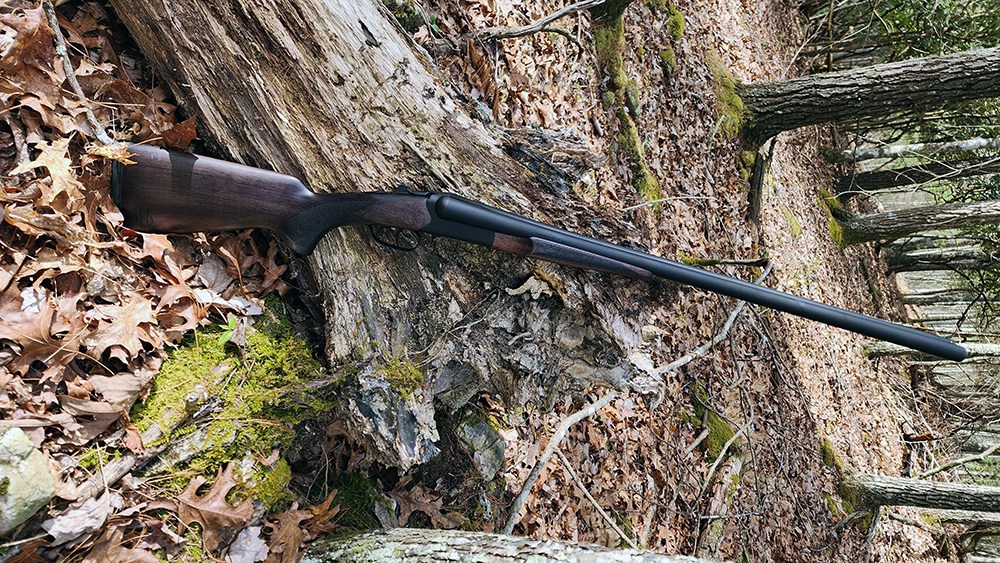
Heritage Manufacturing is offering the Badlander side-by-side shotgun in several different models. My favorite (and the one I am reviewing at this time) is the 12-gauge model with 28-inch barrels. The metal finish is black oxide, reminiscent of deep bluing, and the stock and the forearm are dark walnut. This gun is pretty, and everyone I have shown it to thus far has expressed an interest in it.
While the metal finish and wood is lovely, I will say that it is plenty subdued enough to be carried in the turkey woods, which I am doing now. This gun takes me back to the age of hunting vests made of brown duck canvas, block-headed pointers, and farmers who welcomed the hunter on their private land.
The Badlander double-barrel from Heritage is offered in 12-gauge, 20-gauge, 28-gauge and .410. There is a nickel-plated version, as well as one with 18 1/2-inch barrels for home defense and other concerns. You can learn more at heritagemfg.com.
The age of the side-by-side shotgun isn’t over yet, thank goodness.
“Guns & Cornbread” is written by Larry Case, who lives in Fayette County, W.Va. You can write to him at larryocase3@gmail.com.