
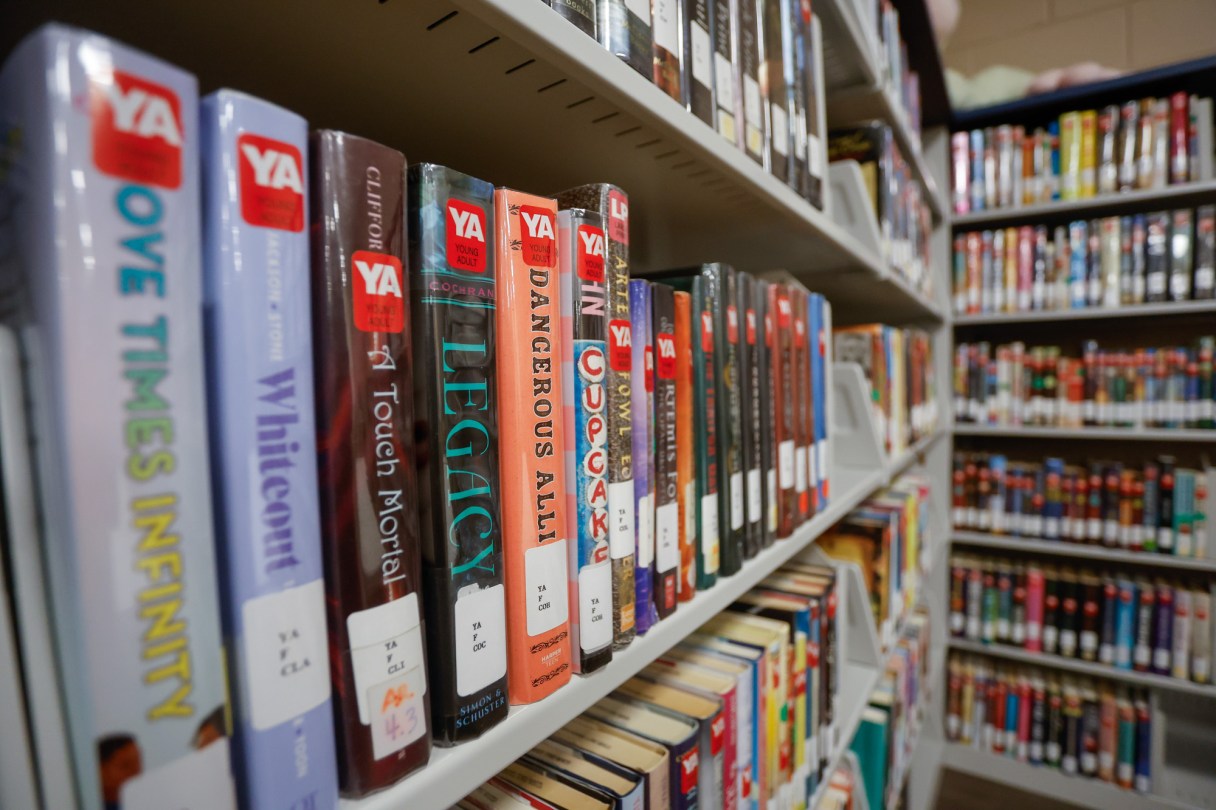
The authors of two books targeted by activists trying to restrict access to books with LGBTQ+ themes for youth in libraries have criticized new state policies to move their books to adult sections.
Patricia McCormick, the author of “Sold,” a novel about human trafficking and child sexual exploitation, and Megan Pamela Ruth Madison, one of the writers of “Yes! No!: A First Conversation of Consent,” said the restrictions approved by the Alabama Public Library Service (APLS) Board starting in the summer of 2024 deprive children and teenagers of the ability to learn about issues affecting them and the world.
“All the books in our series talk about issues that many adults in the United States find difficult to talk about, and particularly difficult to talk about with young children,” Madison said. “In large part because they are not conversations that grownups have with us, with newer kids.”
McCormick said in a statement sent in early October that the APLS proposal “amounts to censorship.”
“It represents coercion from on high — and it tells young people, especially those who already feel unwelcome and underrepresented, that their stories do not belong,” the statement said.
For the past two years, a cadre of individuals appointed to the APLS Board have enacted policy changes to further restrict access to library materials. The board has required libraries to remove library materials deemed sexually explicit, obscene or inappropriate, or lose funding.
Critics have said the policy is being used to remove any content with any LGBTQ+ characters or themes. In the coming weeks, board members are expected to approve a policy to restrict minors from having access to library materials with positive depictions transgender individuals or “gender ideology,” a term the board has not defined.
The Fairhope Public Library is the lone library thus far that has its funding suspended.
REVIEW PROCESS
Their actions stem from some in the community who repeatedly attended local library and APLS board meetings and read passages to prove the books are inappropriate to be part of the library’s collection.
The updated state administrative code bypasses processes and rules that local libraries had established for years. The process for local libraries begins with library staff reading publications that review potential books they may want to purchase. This includes the recommended age range for the book.
The reviewers of the books typically have credentials in library science or academic qualifications.
“We had a staff member years ago who reviewed adult nonfiction, and he had been a professor and had at least two master’s degrees,” said Mary Campbell, president- elect of the Alabama Library Association (ALLA). “He did nonfiction, historical, because that was what his concentration was in. He is currently an archivist with NASA (National Aeronautics and Space Administration).”
When the book is received, staff conduct their own review, at least for the more sensitive materials.
“When some of those books come in, they bring them to me and say, ‘Hey, I made a mistake, this really belongs, not in the kids’ section but somewhere else,'” said Craig Scott, past president of the Alabama Library Association. “So we do our own self-policing.”
“It is not on a whim,” Campbell said. “We do not just go on Amazon and purchase what is selling great on Amazon, although that might be one place that we look to see what is popular, but we do a lot of work beforehand to make sure we are getting the right books.”
(READ MORE: Under Tennessee’s stricter school library law, some books quietly disappear)
‘HER CONFUSION, HER BEWILDERMENT, AND HER PHYSICAL PAIN’
“Sold,” first published in 2006, is about a 13-year-old girl in Nepal sold into sexual slavery by her stepfather and her attempts to survive life in a brothel in India. McCormick said in an interview last week that she wanted the book to shed light on child trafficking and that she wanted to “be a part of the solution.”
“The scene is essential to the book, but it is written from the point of view of a 13-year-old girl. There isn’t any graphic language. It basically describes her confusion, her bewilderment and her physical pain. I am very aware that when I am writing, I am writing for other people’s children. And I have no desire to brutalize the readers by using brutal language. I tried to use language that was appropriate to the 13-year-old narrator,” McCormick said in the interview.
McCormick said in the interview that she has visited schools to discuss the book and said that it has taught students about what their peers in other countries experience. Some, she said, have spoken about their personal experience with sexual assault.
Critics have repeatedly targeted the book over a scene in which the main character was sexually assaulted by a patron in a brothel while drugged. Critics of the Fairhope Public Library would read the passage then urge the board members to withhold state funding until the book is removed from the shelves during at least two APLS meetings in 2025 because they said the book was sexually explicit.
“Yes! No!: A First Conversation About Consent,” published in 2022, is part of a series aimed at helping educators and parents who want to have conversations with young children about topics such as race, gender and their bodies.
Critics have expressed concern about the book’s illustrations of sexual reproductive organs, which they believe makes it inappropriate for the children’s section.
Madison wrote the book with Jessica Ralli, a librarian, after hosting a series of workshops for teachers who asked for resources to inform their students about a host of issues, including consent.
“Our book equips young children with the language to keep themselves safe,” Madison said.
The new code would move both books into the adults’ section of local libraries. Both authors object to the moves, saying that they will deprive children and teens of important information.
“I believe that it belongs in the teens section because trafficking is something that happens to teenagers,” McCormick said in an interview last week. “And I think that a well-informed teenager is less vulnerable.”
Madison said her book aims to keep children safe.
“I don’t believe any parent has a right to decide what all children have access to, and I think my books are really good,” Madison said. “They are based on the research and based on decades of professional experience providing kids with accurate information about their bodies and the world so that they can keep themselves safe and be informed citizens in building a just and inclusive world for everybody.”