
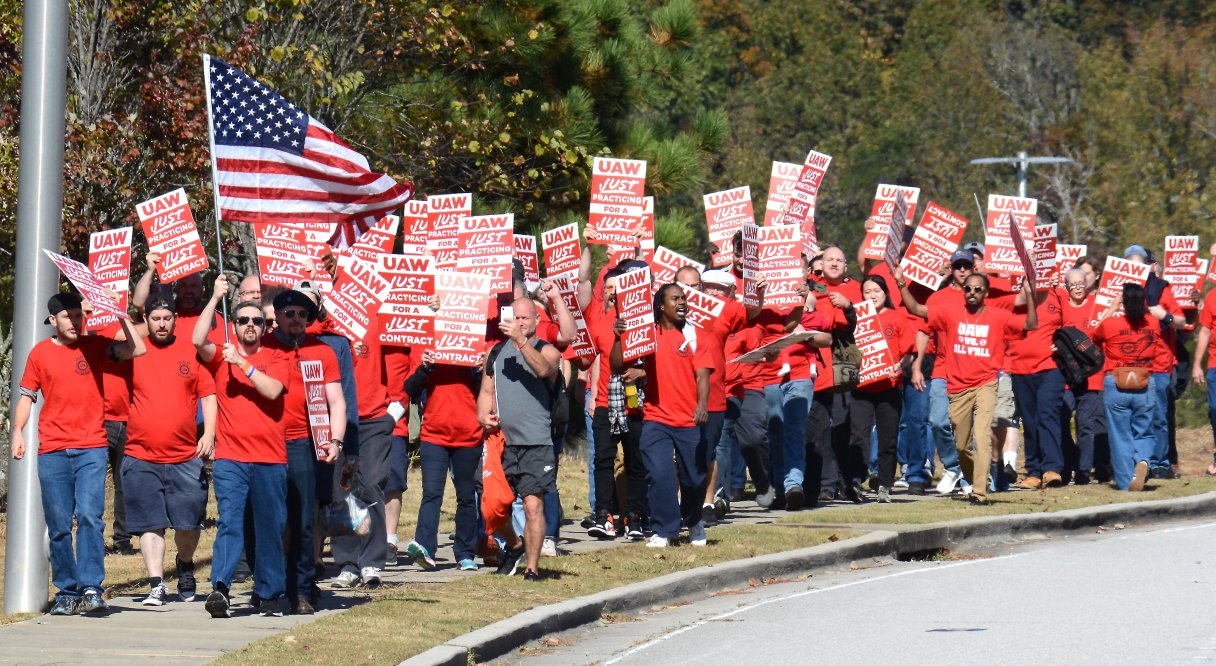
On October 30, Free Press Editor Clint Cooper raised questions about the United Auto Workers’ recent vote to authorize a strike at Chattanooga’s Volkswagen plant. Given the gravity of the situation, it feels incumbent to clarify several points related to the ongoing dispute.
It’s necessary to stress that the Chattanooga factory is the only VW plant in the world without a contract. A fair contract for workers is not some pie-in-the-sky dream; it’s the reality for everyone who works at VW — except, of course, the Chattanoogans on the line in our hometown.
Reproducing vague threats to close the plant or withhold future jobs is a tried-and-true management tactic to make sure working people never forget their place. Whether that happens or not (and it seems very unlikely, given the investment in the local plant and VW’s apparent ability to manufacture cars using workers represented by a fair contract everywhere else), it should always be remembered that the union can’t decide whether to close a factory or not. That is always the company’s decision. If the company chooses to put its own profits above fair wages, safe working conditions and good benefits for its workers, the responsibility for that choice should never fall on the workers.
Speaking of profits, Cooper argues that VW is not the Big Three, and therefore it’s too much to expect Chattanooga workers to get the same contract autoworkers at Ford, GM, and Stellantis won two years ago.
That is partially accurate. VW is not the Big Three. Last year, VW’s net income was almost $11 billion; Ford’s was $5.9 billion; GM’s was $6 billion; Stellantis’s was $5.8 billion. So, VW is indeed different. It is far more profitable than any of the Big Three.