
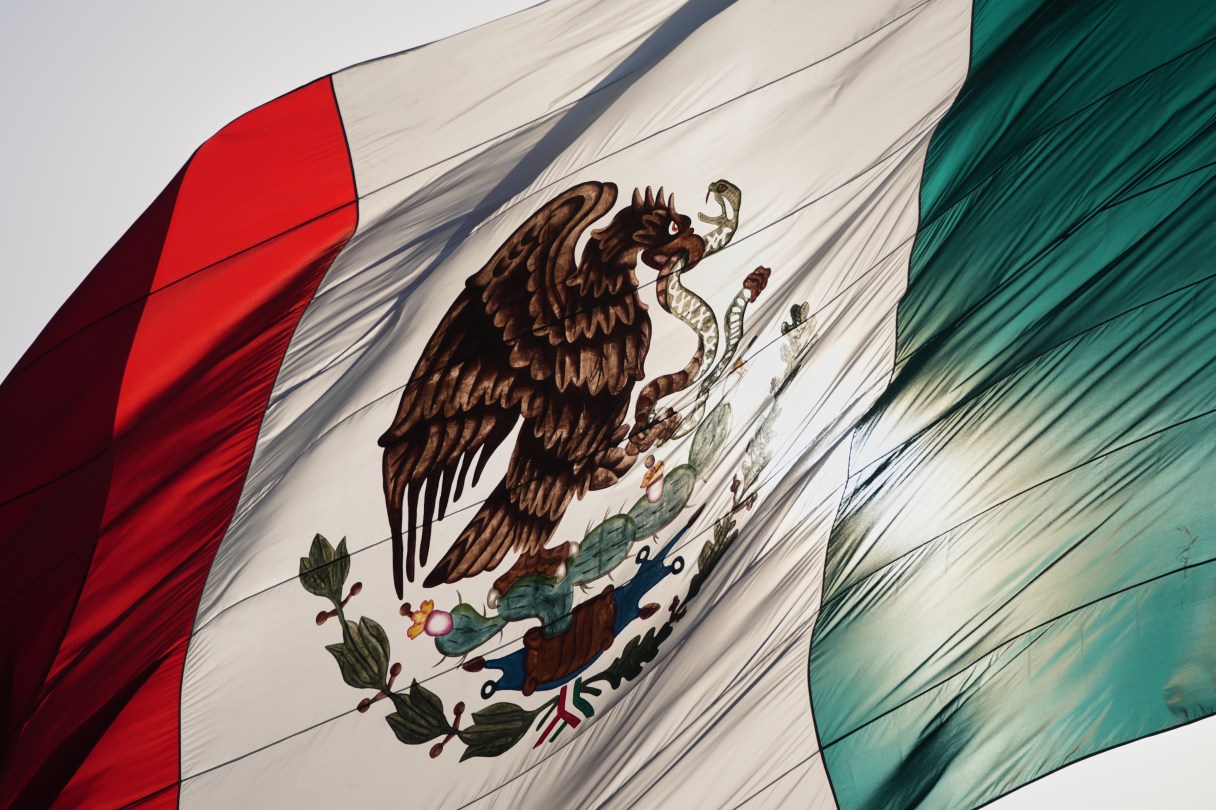
MEXICO CITY (AP) — The almighty eagle perched on a cactus while devouring a serpent on Mexico’s flag hints at the myth behind the foundation of the country’s capital.
It’s a divine sign in an ancient legend, according to which the god Huitzilopochtli asked a group called the Mexica to leave their homeland in search of a place to establish a new city.
It took some 175 years before they spotted the sacred omen and established the city of Tenochtitlan in 1325 where Mexico City stands today.
How the eagle, the cactus and the serpent became an emblem and endured through the European conquest is the focus of a new exhibition. “A coat of arms, an emblem, a symbol of identity,” runs through Dec. 15 at the Old City Hall in downtown Mexico City.
The exhibit is among the government’s activities marking the 700th anniversary of the founding of the Mexica capital.