
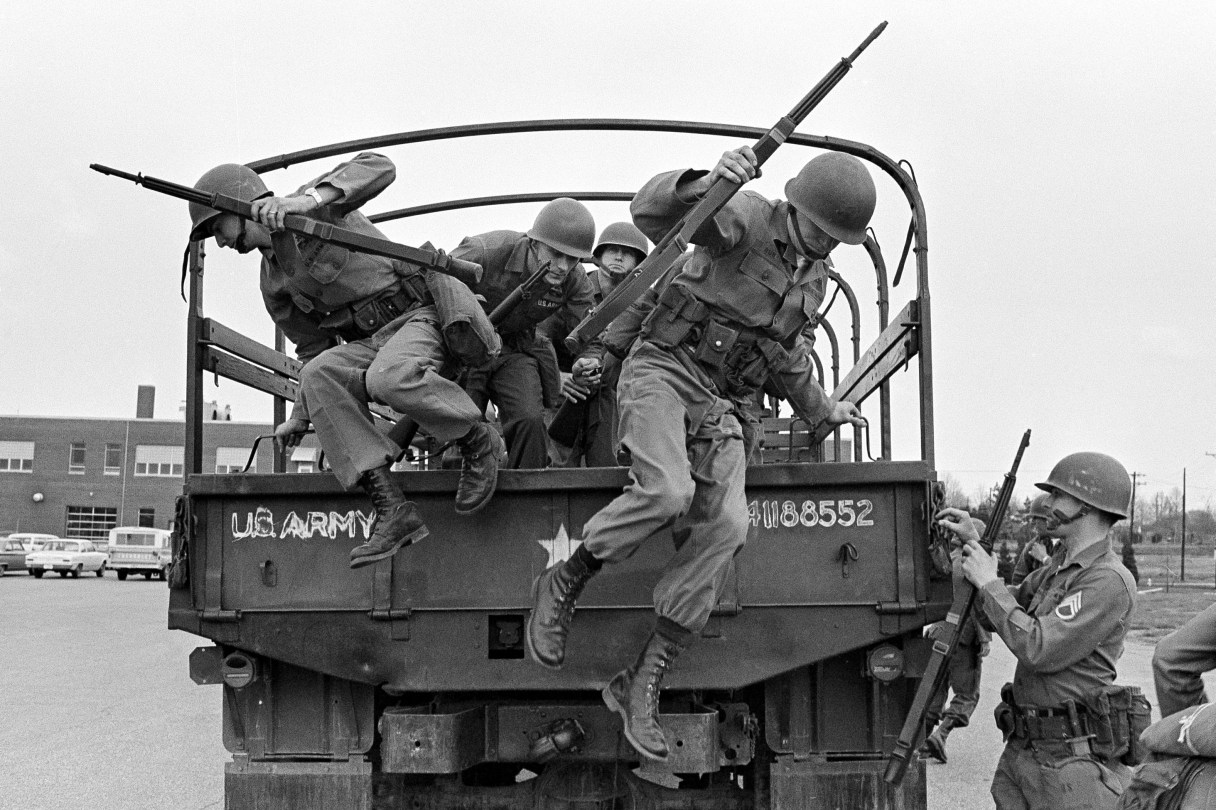
MEMPHIS, Tenn. (AP) — As National Guard troops arrive in Memphis, the memory of thousands of them with bayonetted rifles and tanks in 1968 is still fresh for Joe Calhoun. Back then, he marched in the streets with sanitation workers and the Rev. Martin Luther King Jr.
King had come to support some 1,300 predominantly Black sanitation workers striking to protest inhumane treatment after a malfunctioning garbage truck killed two laborers. King led a demonstration in late March, but it turned violent when police and protesters clashed and an officer fatally shot a 16-year-old. The National Guard quickly lined the streets in response.
“You felt very uncomfortable just going about your daily routine, especially at night,” Calhoun said. “They were stopping cars and randomly picking people out.”
Al Lewis, then 14, still recalls a week later when Walter Cronkite said on television that King had been shot and killed in his city. Almost immediately, gunfire erupted in a cacophony Lewis said he had not heard in such volume other than on New Year’s. The National Guard quickly returned, and he saw military vehicles and troops downtown during the day and Guard members on neighborhood night patrols.
President Donald Trump announced last month that the National Guard would be deployed to combat crime in Memphis alongside authorities from a slew of federal agencies. Republican Gov. Bill Lee, who supports the effort, said the troops would be deputized by the U.S. Marshals Service to “play a critical support role” for local law enforcement. Guard members won’t have tanks, according to the city.