
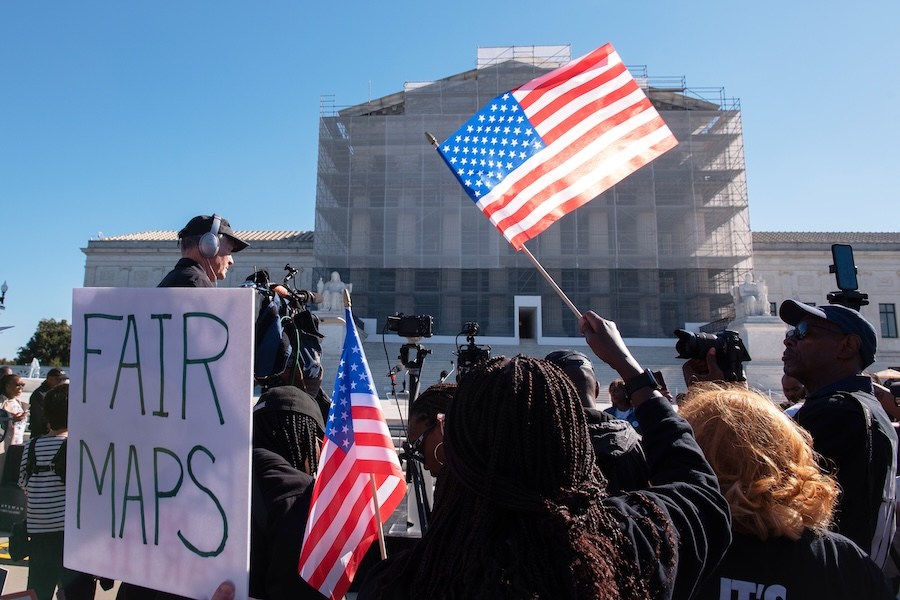
WASHINGTON (AP) — The Supreme Court on Wednesday appeared ready to gut a key tool of the Voting Rights Act that has helped root out racial discrimination in voting for more than a half century, a change that would boost Republican electoral prospects, particularly across the South.
During 2 1/2 hours of arguments, the court’s six conservative justices seemed inclined to effectively strike down a Black majority congressional district in Louisiana because it relied too heavily on race.
Such an outcome would mark a fundamental change in the 1965 voting rights law, the centerpiece legislation of the Civil Rights Movement, that succeeded in opening the ballot box to Black Americans and reducing persistent discrimination in voting.
A ruling for Louisiana could open the door for legislatures to redraw congressional maps in southern states, helping Republican electoral prospects by eliminating majority Black and Latino districts that tend to favor Democrats. Legislatures already are free to draw extremely partisan districts, subject only to review by state courts, because of a 2019 Supreme Court decision.
Just two years ago, the court, by a 5-4 vote, affirmed a ruling that found a likely violation of Section 2 of the Voting Rights Act in a similar case over Alabama’s political boundaries. Chief Justice John Roberts and Justice Brett Kavanaugh joined their three more liberal colleagues in the outcome.