
Thursday, November 12, 2026Nov 12

Study: Alabama’s moral turpitude laws contribute to racial disenfranchisement disparities

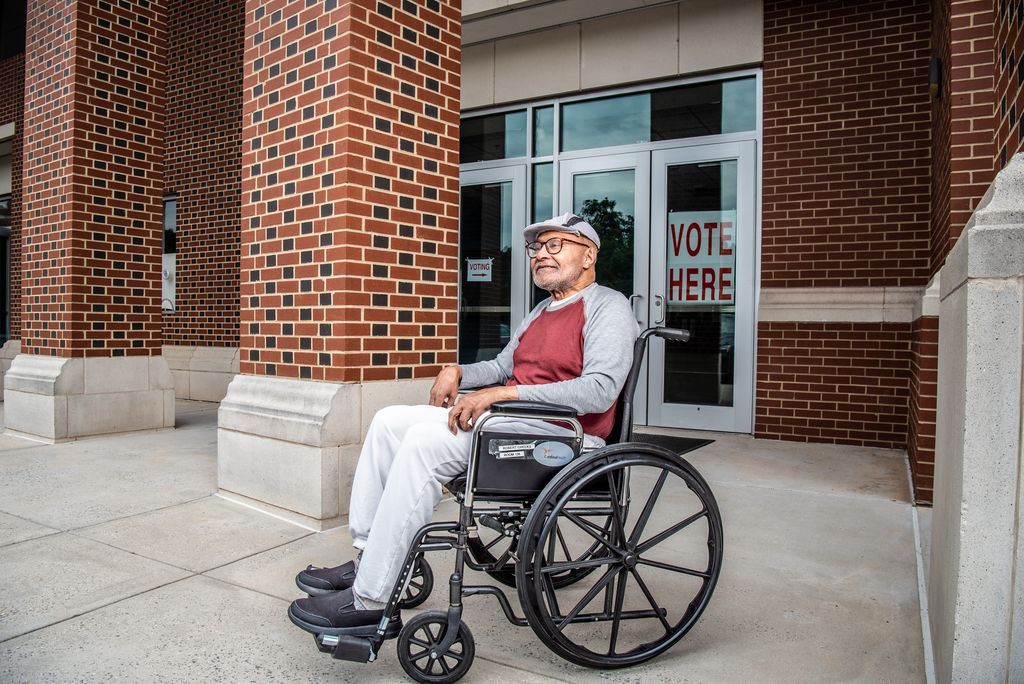
Robert Cheeks sits outside a polling place in Birmingham on Aug. 26, 2025, after casting a ballot for the first time in his life. Cheeks, 82, spent 40 years in prison after receiving a mandatory life sentence for a felony conviction. A new report found that Black Alabamians were four times more likely to be disenfranchised than whites, and suggested disparate application of felony disenfranchisement laws played a role. (Andi Rice for Alabama Reflector)
Robert Cheeks sits outside a polling place in Birmingham on Aug. 26, 2025, after casting a ballot for the first time in his life. Cheeks, 82, spent 40 years in prison after receiving a mandatory life sentence for a felony conviction. A new report found that Black Alabamians were four times more likely to be disenfranchised than whites, and suggested disparate application of felony disenfranchisement laws played a role. (Andi Rice for Alabama Reflector) Robert Cheeks sits outside a polling place in Birmingham on Aug. 26, 2025, after casting a ballot for the first time in his life. Cheeks, 82, spent 40 years in prison after receiving a mandatory life sentence for a felony conviction. A new report found that Black Alabamians were four times more likely to be disenfranchised than whites, and suggested disparate application of felony disenfranchisement laws played a role. (Andi Rice for Alabama Reflector)

BIRMINGHAM — Robert Cheeks cast a ballot in Birmingham’s municipal elections last week and received a standing ovation from poll workers.

It was the first time that Cheeks, 82, had voted. Until the most recent election, his criminal history barred him from participating in the electoral process.

“I had never voted before, and it was always my wish to vote,” he said after he cast his ballot. “I had the opportunity, encouraged, to vote, and I said I want to exercise my right as a citizen in the state, and I wanted to vote because I had never voted before.”

For Black Alabamians like Cheeks who have criminal convictions, getting the right to vote restored can be difficult, according to a new report from Return My Vote, an organization that assists people with criminal convictions with regaining their right to vote.

The study, “Alabama’s Moral Turpitude Law Disproportionately Strips Black Citizens of Their Voting Rights,” found that Black Alabamians were four times more likely to lose their right to vote than white Alabamians.