
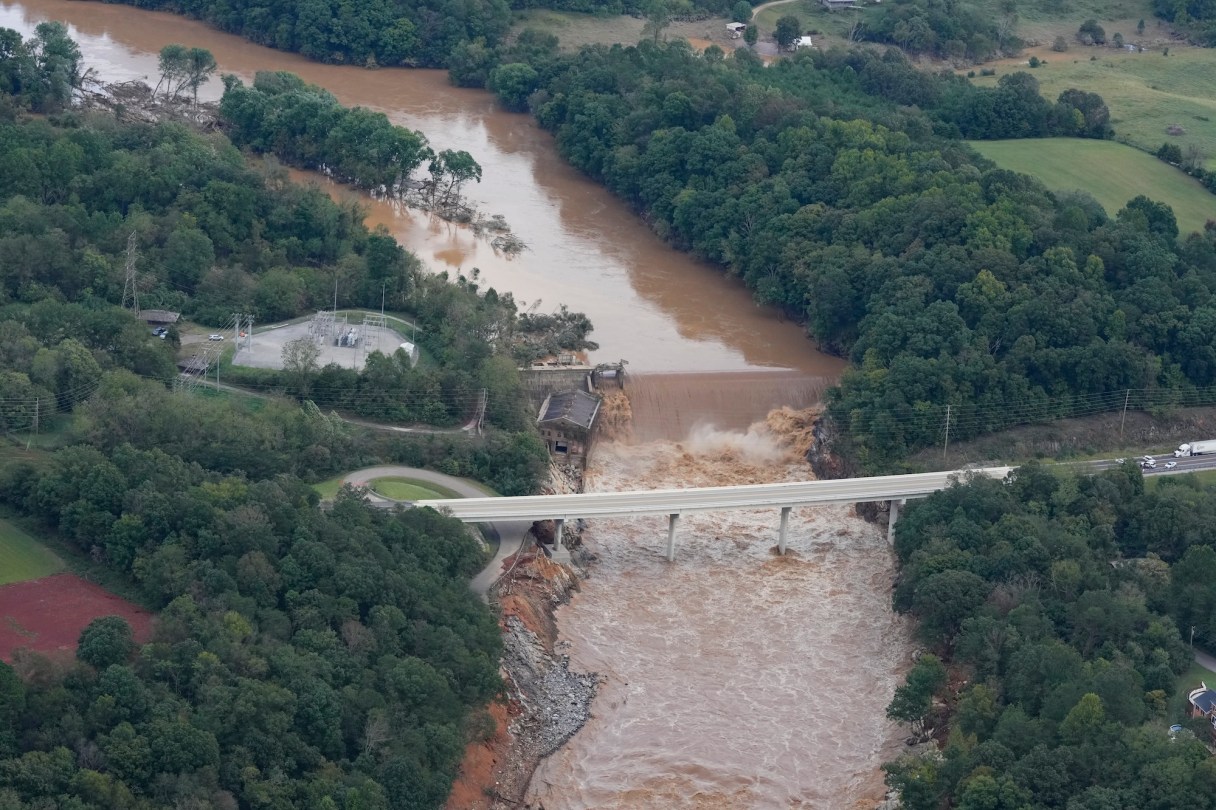

In the dark of night on Sept. 27, 2024, crews at the Tennessee Valley Authority completely lost sight of Nolichucky Dam under floodwaters raging down from the Smoky Mountains.
Hurricane Helene had turned into a tropical storm and stalled over the mountains in West North Carolina, unleashing devastation in the deadliest hurricane on the mainland U.S. since Katrina in 2005.
Later analysis showed more than 1.3 million gallons poured over the 111-year-old dam near Greeneville, Tennessee, every second. That’s nearly twice the amount of water that flows per second over Niagara Falls.
(READ MORE: TVA marks year since dams saved $186M of damage in Chattanooga)
TVA officials made a call they’d never made before. They issued a “condition red,” alerting the public that one of their 49 dams could catastrophically collapse.