
Thursday, November 12, 2026Nov 12

Times Opinion: RFK Jr.’s vaccine skepticism is entering a new phase

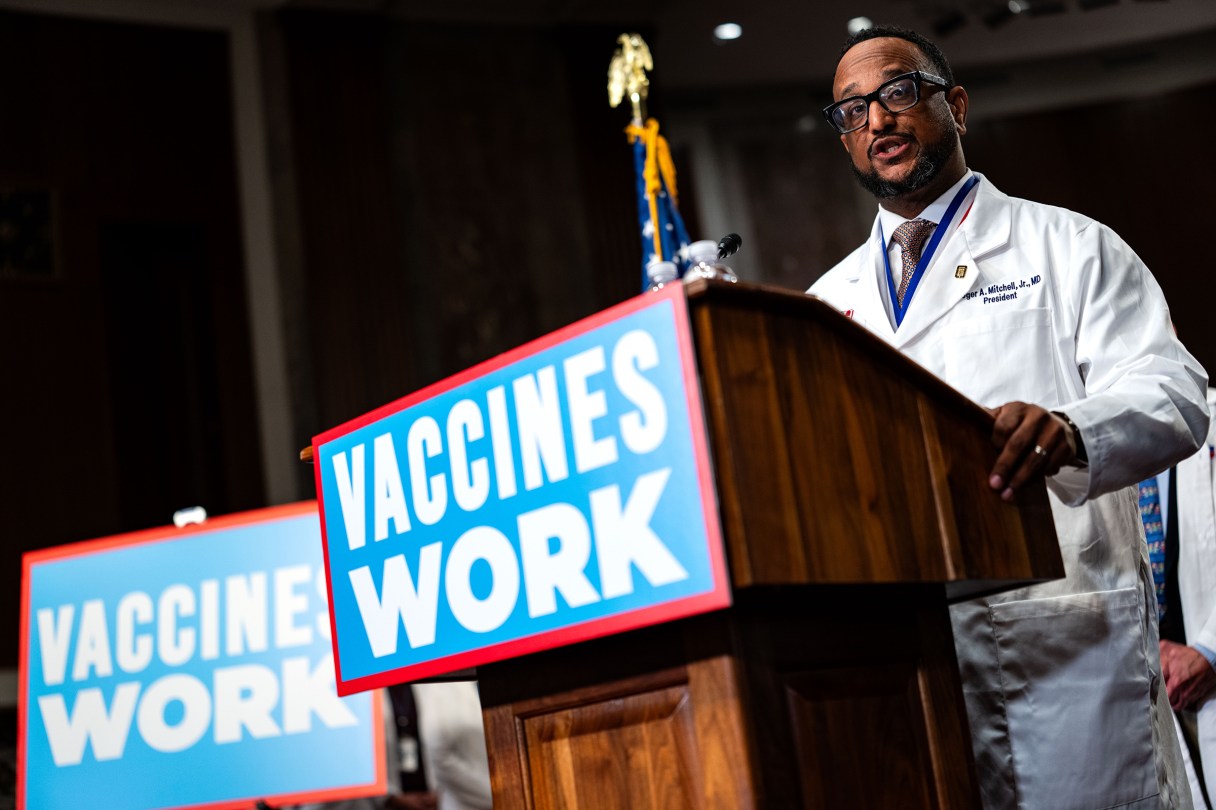
Photo by Kent Nishimura via Getty Images/TNS / Dr. Roger Mitchell, of the National Medical Association, speaks during a news conference on vaccine safety and efficacy with Sen. Bernie Sanders (I-VT), along with doctors and public health experts on Capitol Hill on Sept. 9, 2025, in Washington, D.C. Sanders, the top Democrat on the Senate Health, Education, Labor and Pensions Committee, spoke about the importance of vaccines, following a recent heated Senate Finance Committee hearing in which Health and Human Services Secretary Robert F. Kennedy Jr. defended his vaccine policies, clashed with Democrats and faced scrutiny for forcing out the new director of the Centers for Disease Control and Prevention.
Photo by Kent Nishimura via Getty Images/TNS / Dr. Roger Mitchell, of the National Medical Association, speaks during a news conference on vaccine safety and efficacy with Sen. Bernie Sanders (I-VT), along with doctors and public health experts on Capitol Hill on Sept. 9, 2025, in Washington, D.C. Sanders, the top Democrat on the Senate Health, Education, Labor and Pensions Committee, spoke about the importance of vaccines, following a recent heated Senate Finance Committee hearing in which Health and Human Services Secretary Robert F. Kennedy Jr. defended his vaccine policies, clashed with Democrats and faced scrutiny for forcing out the new director of the Centers for Disease Control and Prevention. Photo by Kent Nishimura via Getty Images/TNS / Dr. Roger Mitchell, of the National Medical Association, speaks during a news conference on vaccine safety and efficacy with Sen. Bernie Sanders (I-VT), along with doctors and public health experts on Capitol Hill on Sept. 9, 2025, in Washington, D.C. Sanders, the top Democrat on the Senate Health, Education, Labor and Pensions Committee, spoke about the importance of vaccines, following a recent heated Senate Finance Committee hearing in which Health and Human Services Secretary Robert F. Kennedy Jr. defended his vaccine policies, clashed with Democrats and faced scrutiny for forcing out the new director of the Centers for Disease Control and Prevention.

The stability of the U.S. vaccine market rests on an obscure $4 billion fund known as the National Vaccine Injury Compensation Program. Health and Human Services Secretary Robert F. Kennedy Jr., long a critic of the fund, now appears intent on dismantling it.

Vaccine production can be a fickle business. Unlike other pharmaceuticals, designed for the sick, vaccines are meant for healthy people. To meet high safety standards, trials are large and development is costly. But whereas drugmakers typically can price their products to offset such expenses, vaccines are expected to be virtually free for huge populations and often are given just once.

Unexpectedly high costs — say, a spate of litigation — can easily put a manufacturer out of business. In the 1970s and ’80s, that’s precisely what happened. Claims (since debunked) were circulating that the pertussis component of the DTP vaccine caused brain damage. Panic led to a surge of lawsuits, companies couldn’t get liability insurance and production became uneconomical. By the mid-1980s, just a single pertussis vaccine manufacturer remained.

Congress rightly worried about shortages. The pertussis vaccine protects against whooping cough, an infection that killed thousands of children annually before a shot became widely available in the 1940s. To stem a pending crisis, lawmakers created the VICP in 1986.

The VICP protects manufacturers of certain vaccines from most liability claims. In exchange, families who’ve suffered an established list of post-vaccination side effects — such as anaphylaxis or encephalitis — get compensated without lengthy and uncertain litigation. The process is run through a special court and is funded by a 75-cent excise tax per vaccine dose.