
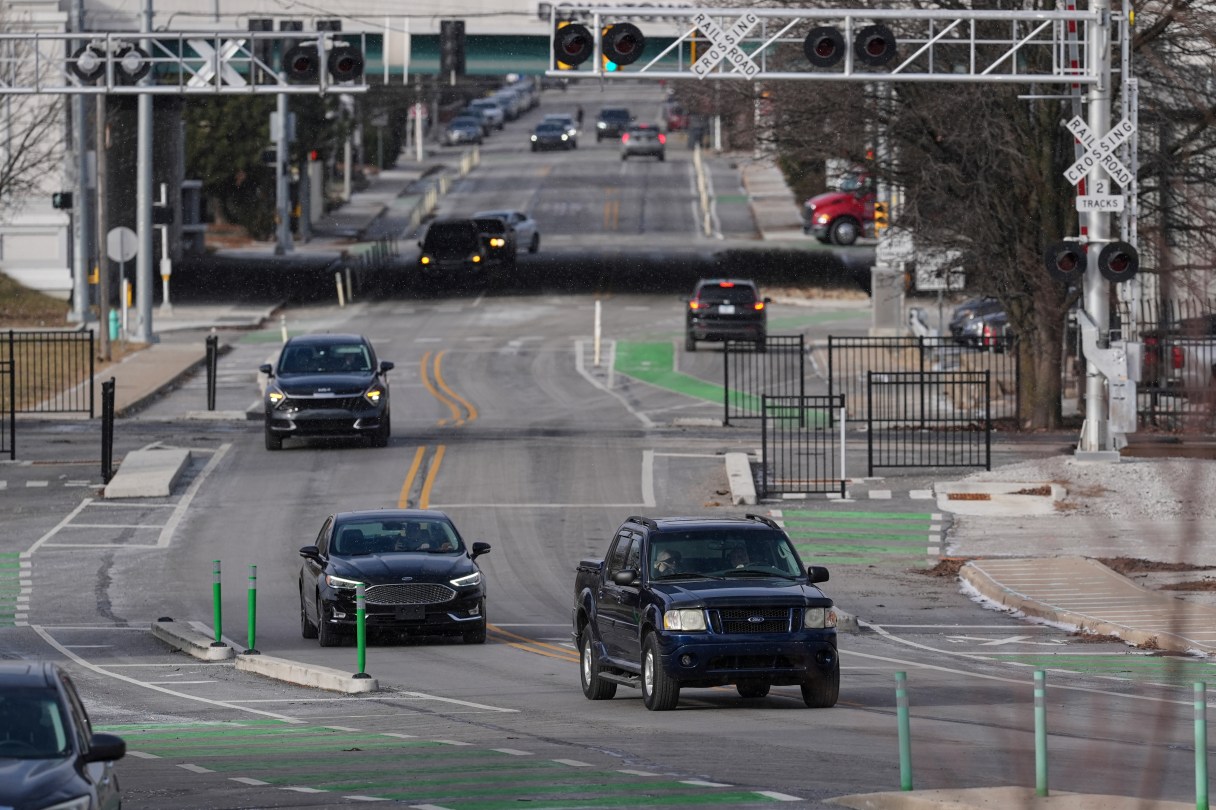
Excessive speeding was so common on parallel one-way streets passing a massive electronics plant that Indianapolis residents used to refer to the pair as a “racetrack” akin to the city’s famous Motor Speedway a few miles west.
Originally two-way thoroughfares, Michigan and New York streets switched to opposite one-way routes in the 1970s to help thousands of RCA workers swiftly travel to and from their shifts building televisions or pressing vinyl records. But after the RCA plant closed in 1995, the suddenly barren roads grew even more enticing for lead-footed drivers — until last year, when city officials finally converted them back to two-way streets.
“The opening and conversion of those streets has just been transformative for how people think about that corridor,” said James Taylor, who runs a nearby community center.
Embracing the oft-repeated slogan that “paint is cheap,” transportation planners across the U.S. — particularly in midsize cities — have been turning their unidirectional streets back to multidirectional ones. They view the step as one of the easiest ways to improve safety and make downtowns more alluring to shoppers, restaurant patrons and would-be residents.
A street design U-turn