
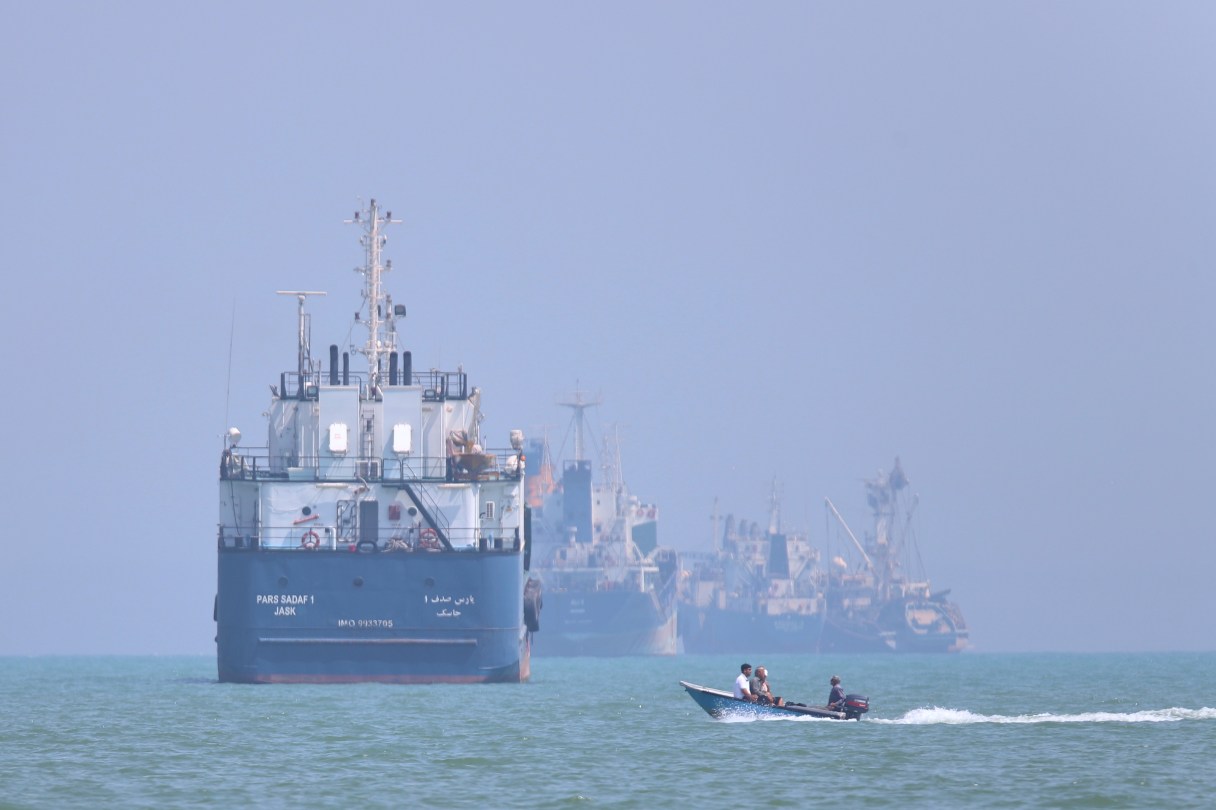
Iran’s Kharg Island, home to a terminal through which the country exports most of its oil, has emerged as a focus of the war launched in late February by the United States and Israel.
Strikes on oil infrastructure on Kharg — or a ground invasion — would severely curb Iran’s oil exports, a key source of revenue for the Islamic Republic. An assault would also mark a major escalation that could provoke even heavier retaliatory attacks on Gulf Arab infrastructure and further drive up oil prices. The skyrocketing cost of fuel is already threatening the world economy.
U.S. President Donald Trump said strikes in mid-March “obliterated” Kharg’s military assets but did not target the island’s oil infrastructure. He warned that if Iran continued disrupting traffic through the Strait of Hormuz, he would reconsider the decision to spare energy targets on the island.
Then on Thursday, Trump said in a social media post that the U.S. would “assume total control” of Iran’s oil and gas industries, including the Kharg Island terminal, in the “not too distant future.”
Trump later said he called off new military strikes on Iran, just hours after saying the U.S. would hit Iran “VERY HARD TONIGHT.” He suggested that progress had been made in talks to extend the fragile ceasefire.