
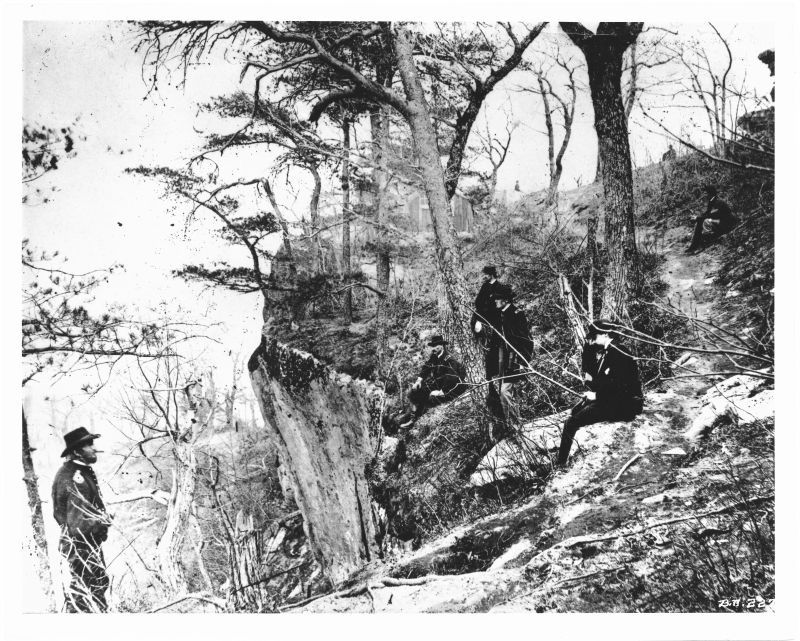
Not even a century removed from the Revolutionary War that secured U.S. independence from the British crown, this fledgling nation went to war with itself — and Chattanooga would become a critical battleground in the conflict.
With the westward expansion of the U.S. in the early 1800s came the issue of whether the institution of slavery would also expand into new territories. Following the end of the war with Mexico in 1848, the U.S. stretched to the Pacific Ocean, acquiring land that would eventually become the states of Texas, California, Nevada, Utah, most of New Mexico and Arizona and parts of Colorado and Wyoming, according to the Library of Congress. While the Wilmot Proviso introduced in Congress in 1848 aimed to ban slavery in the acquired territories, it instead set “a match to the political powder keg of slavery,” according to the 2025-26 Tennessee Blue Book.
By the mid-1800s, slavery had become a dominant national political issue, according to the state Blue Book, an annual tome on Tennessee government and history. In Tennessee, the 1850s had been a decade of economic prosperity, confirming to some “the superiority of the Southern agrarian system — slavery and all,” the Blue Book said.
In 1860, Abraham Lincoln was elected president, and his Republican party opposed the expansion of slavery. Enslaved people made up nearly a quarter of Tennessee’s population, the Blue Book said.